When applications suffer performance degradation often the root cause of the issue is a database problem. In this guide we’ll show you 7 ways to troubleshoot your Azure SQL database performance issues using metrics and insights from the eG Enterprise monitoring solution.
PostgreSQL is an open-source relational database that is highly flexible and reliable and offers a varied set of features. Even though it is a complex database, it provides great integrity and performance. Also, you can deploy it on multiple platforms, including a light version for websites and smartphones. Because you can deploy Postgres in different ways, it comes out of the box with only some basic performance tuning based on the environment you’re deploying on.
SQL Server Monitoring has become an essential part of modern-day applications since a major chunk of these applications rely heavily on a database. It is therefore important to monitor your metrics and make the best out of your database services. SQL Server Monitoring offers plenty of metrics to choose from. We will be breaking down the five key categories that an SQL server provides for a comprehensive view of their functionality.
In the analytics domain, fast and reliable storage is an important aspect for businesses to handle a large amount of data. There are different types of data storage including RDBMS, NoSQL, data lake, data warehouse, and graph database. Among these, the most widely used is RDBMS that powers various systems and applications of companies of all sizes. RDBMS is easy to use and straightforward to understand thanks to its table-based (or column-based) data format.
According to results from the Stack Overflow Developer Survey 2022, nearly half (46%) of respondents say they use MySQL, making it the most widely-adopted database technology among developers today. This popularity is due in no small part to MySQL’s unique features that help it handily meet the needs of modern applications, from small software projects to business-critical systems.
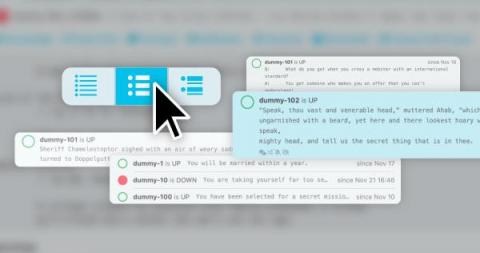
With Icinga DB Web you can now customise Icinga Web’s list views to your needs. While in one scenario you might be more interested to see as many objects as possible at a glance, in another scenario detail attributes of only a few objects will be more important to you. Yet, in the first case, you would even be distracted by more detailed information.
N+1 queries are the most common problems among developers. N+1 database query problems occur when you have to call the database for N items, and those N items have again N additional data fields which are not in the same table, and those extra N data fields are required for the use case. Generally, this issue is handled at the time of database designing, but every problem cannot be solved efficiently by one solution, some need to be solved by brute force.
Are you curious about the difference between open-source Redis and Redis enterprise? Of course, Redis Enterprise is a hosted service that runs Redis db on behalf of its customers, while open-source Redis is available for anyone to use. However, there's also a key difference between open source and enterprise in how the clusters are implemented. In order to understand the difference, we need to know what Redis Clusters are.
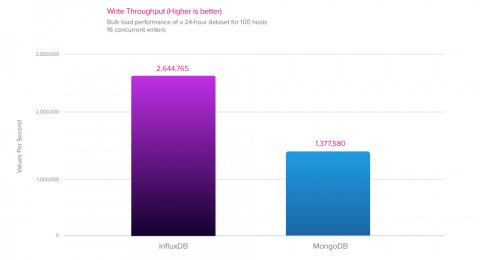
At InfluxData, one of the common questions we regularly get asked by developers and architects alike the last few months is, “How does InfluxDB compare to MongoDB for time series workloads?” This question might be prompted for a few reasons. First, if they’re starting a brand new project and doing the due diligence of evaluating a few solutions head-to-head, it can be helpful in creating their comparison grid.
Microsoft Azure Cloud offers broadly 3 different options to deploy SQL on Azure: Choosing the right Azure deployment option for you depends on your requirements and the level of effort you want to put into managing your SQL server.
Understand the two dimensions of scaling for database query and ingest workloads, and how sharding can make scaling elastic — or not. Scaling throughput and performance are critical design topics for all distributed databases, and sharding is usually a part of the solution. However, a design that increases throughput does not always help with performance and vice versa. Even when a design supports both, scaling them up and down at the same time is not always easy.
In this article, we are going to look at how to monitor Redis performance using Prometheus. This will allow Redis Administrators to centrally manage all of their Redis clusters without setting up any additional infrastructure for monitoring. To follow the steps in this blog, sign up for the MetricFire free trial, where you can use Graphite and Grafana directly on our platform.
Monitoring distributed systems like MongoDB is very important to ensure optimal performance and constant health. But even the best monitoring tool will not be efficient without fully understanding the metrics it gathers and presents, what they represent, how to interpret them, and what they affect. That’s why it is crucial not only to collect the metrics but also to understand them.
In the last few years, the usage of databases that charge by request, query, or insert—rather than by provisioned compute infrastructure (e.g., CPU, RAM, etc.)—has grown significantly. They’re popular for a lot of the same reasons that serverless compute functions are, as the cost will scale with your usage. No one is using your site? No problem: you’re not charged.
At ObservabilityCON in New York City today, we announced a new open source backend for continuous profiling data: Grafana Phlare. We are excited to share this horizontally scalable, highly available database with the open source community — along with a new flame graph panel for visualizing profiling data in Grafana — to help you use continuous profiling to understand your application performance and optimize your infrastructure spend.
This post is part 1 of a 3-part series about monitoring MongoDB performance with the WiredTiger storage engine. Part 2 explains the different ways to collect MongoDB metrics, and Part 3 details how to monitor its performance with Datadog. If you are using the MMAPv1 storage engine, visit the companion article “Monitoring MongoDB performance metrics (MMAP)”.