Operations | Monitoring | ITSM | DevOps | Cloud

The latest News and Information on Cloud monitoring, security and related technologies.

How Serverless Applications Will Change Your Business

In 2008, Netflix was struck by a disaster. A fast-growing global streaming service was well on its way to transform the entertainment industry when the management faced a problem exposed by a data center failure. Even though it was a single issue, it shut the entire service down, depriving the company of millions in profits and effectively ending the shipments of DVDs (they were still a thing in 2008).

How to Monitor AWS S3

In the first part of our AWS S3 series, we discussed what AWS S3 buckets are, the difference between S3 and EC2s, advantages of AWS S3 object storage, and AWS S3 API integration. In this next post, we’ll be covering AWS S3 Monitoring, including the importance of leveraging data and monitoring metrics, and how Sumo Logic provides insight into your infrastructure with S3 logs.

Accelerating Your Deployment of the SolarWinds Orion Platform to Microsoft Azure

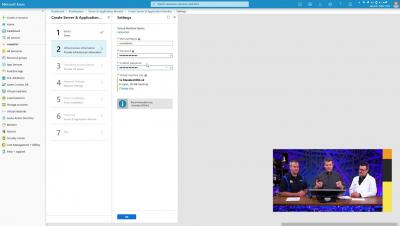
The SolarWinds Orion Platform and its modules are now Azure Certified applications and available in the Microsoft Azure Marketplace. During this video you'll see how to find SolarWinds within the Azure Marketplace, and how easy and fast it is to automate the deployment of the Orion Platform onto Azure virtual machines.

15 hours writing CloudFormation reduced to 15 minutes with Stackery

ServerlessConf NY this past October was an important milestone for those of us tracking how software is built on cloud services. . We’ve seen the serverless talks evolve from “what is serverless” to “I built a weird thing” to “We built a new business” to “We refactored a legacy app and kickstarted our feature velocity.” We’ll come back to those last two soon, , but I want to highlight some points from one in particular by Tim Wagner.

Announcing CloudSploit for Azure

Today, CloudSploit is excited to share that our cloud security auditing solution is now publicly available for Microsoft Azure IaaS accounts. This release includes all the hallmarks of CloudSploit’s existing service for Amazon Web Services: an open source core scanning engine, PCI and HIPAA compliance program mappings, detailed security reports including recommended remediation information, links to official Azure documentation, and full support for all 42 Azure regions.

Monitoring Google Cloud Platform with Stackdriver and Logz.io

We’re happy to announce a new integration with Google Stackdriver, allowing users to easily ship data from Google Cloud Platform into Logz.io via Google Pub/Sub! Early adopters of Google Cloud may recall that they were pretty much in the dark as far as logging their projects was concerned. Sure, they could access their virtual machines and manually grep log files but that was pretty much it. With this new integration, we can import logs from Stackdriver into Logz.io.

The Hidden Costs of Big Data on AWS

IDC predicts a ten-fold increase in data by 2025, which should surprise just about no one. We are all producing more and more data every day—more data than ever before, with no slowdown in sight. Recently we joined forces with our friends over at CHAOSSEARCH to deliver a webinar on the topic of Big Data Done Right—How to Spend Less While You Store & Analyze More. In this webcast, we discussed some best practices around big data storage, transfer, and access.

Monitoring AWS FSx with LogicMonitor

Amazon FSx is a fast, highly available cloud file system service. Compared to traditional file systems, AWS FSx offers improved performance along with simplified management and security. The use of this service removes the headaches of provisioning hardware and maintaining backups, and combines the familiarity of your preferred filesystems with the reliability of AWS.

Hybrid Cloud Monitoring: Defining a Strategy

When we are faced with the challenge of hybrid cloud monitoring, the golden dream of a single monitoring platform is reawakened in us. It would be ideal to have a tool that would allow us to see in a single screenshot what is happening throughout our platform, including those resources that we have decided to establish in the cloud, in other words, it should not discriminate between private and public networks.