The latest News and Information on Containers, Kubernetes, Docker and related technologies.
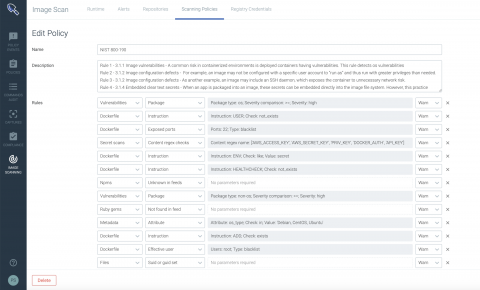
In September 2017, the National Institute of Standards and Technology (NIST) released Special Publication (SP) 800-190, Application Container Security Guide. NIST SP 800-190 explains the security concerns associated with container technologies and recommendations for the image details and container runtime security. It provides prescriptive details for various sections including image, registry, orchestrator, container and host OS countermeasures.
Containers have rapidly become a necessary part of the modern data center. Containers can be built on any of a number of operating system foundations — so how do you choose one over another?
With over 48,000 stars on GitHub, more than 75,000 commits, and with major contributors like Google and Red Hat, Kubernetes has rapidly taken over the container ecosystem to become the true leader of container orchestration platforms. Kubernetes offers great features like rolling and rollback of deployments, container health checks, automatic container recovery, container auto-scaling based on metrics, service load balancing, service discovery (great for microservice architectures), and more.
This post demonstrates a *basic* example of how to build a deep learning model with Keras, serve it as REST API with Flask, and deploy it using Docker and Kubernetes. This is NOT a robust, production example. This is a quick guide for anyone out there who has heard about Kubernetes but hasn’t tried it out yet. To that end, I use Google Cloud for every step of this process.
Google Cloud Run is a new compute platform for running stateless containers without having to manage the underlying infrastructure. You can choose between a fully managed version of Cloud Run, or run container workloads in your existing Google Kubernetes Engine (GKE) clusters with Cloud Run on GKE.
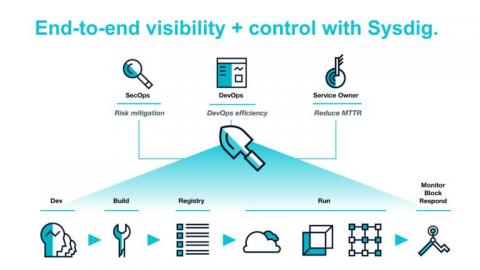
Today we’re announcing version 2.0 of the Sysdig Cloud-Native Visibility + Security platform. It provides a more powerful and significantly simpler way for enterprises to see the health, risk, and performance of their cloud-native environments in a single unified view.
Today Google announced Anthos, a new cloud service with the ability to manage Kubernetes clusters across multiple cloud providers, including AWS and Azure. This is super exciting news for Rancher. In Google Anthos, we see great alignment with Rancher’s vision. We believe Kubernetes will become the standardized infrastructure provided by all public and private clouds, and an enterprise Kubernetes platform must deliver multi-cluster, multi-cloud management.
Find out how Cloudsmith + Helm combine to provide you with world-class support for the Kubernetes (k8s) ecosystem. Get your own private Helm repository today.