Kubernetes, also known as K8s, is a container-orchestration platform for automating deployment, scaling, and operations of applications running inside the containers across clusters of hosts. Google open-sourced the Kubernetes project in 2014. According to a recent CNCF survey, Kubernetes is the most popular container management tool among large enterprises, used by 83% of respondents. Containers are a good way to bundle and run applications.
Contact our Kubernetes team We’re now well into 2021, and as we plan ahead for our roadmap and activities around Kubernetes for the year, it helps to look back and reflect on everything that took place for Canonical in the K8s space within the year that passed. Kubernetes has always been a crucial part of Canonical’s vision and contribution to the IT world.
Welcome to another monthly update on what’s new from Sysdig. Our team continues to work hard to bring great new features to all of our customers, automatically and for free!
Today’s announcement of Longhorn 1.1, a Cloud Native Computing Foundation (CNCF) Sandbox project, is exciting news for users of Rancher, SUSE’s Kubernetes management platform, and the Kubernetes community. Longhorn is an enterprise-grade, cloud native container storage solution that went GA in June 2020. Since then, adoption has increased by 235 percent.
In this episode of DevOps Radio, Shipa’s CEO and Founder Bruno Andrade joins host Brian Dawson to discuss his thoughts on the future of Kubernetes. DevOps Radio is a CloudBees-sponsored podcast series. Hosting experts from around the industry, the show dives into what it takes to successfully develop, deliver and deploy software in today’s ever-changing business environment. From DevOps to Docker, each episode features real-world insights and a few stories, tips, industry scoop and more.
When making changes to applications these days, it’s hard to understand and predict the impact of those changes before you deploy. API connections are multiplying, and with new cloud platforms such as containers/serverless, it only add to the complexity. Some people have trouble remembering whether they closed the garage door or turned off the coffee maker. Can you remember all the details of your latest API contract change? Let alone who would be impacted and needed to be notified?
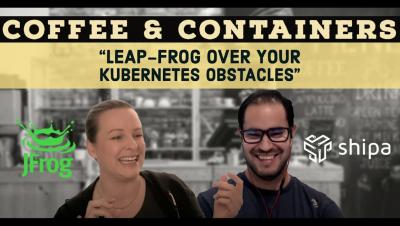
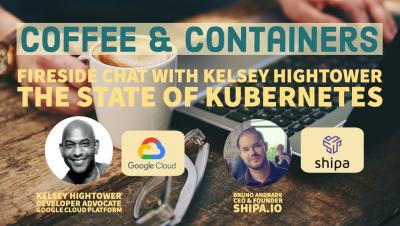
On October 22, 2020, Shipa launched a new web series called “Coffee & Containers.” C&C was conceived as a place for practitioners and IT leaders to learn and collaborate on all things microservices, cloud-native, containers, Kubernetes, etc. We were very proud to launch this series with Kelsey Hightower, Thought Leader and Developer Advocate at Google Cloud Platform, and Bruno Andrade, Founder and CEO of Shipa.io.
While the Docker buzz has faded a bit, replaced by new words like “Kubernetes” and “Serverless”, there is no arguing that Docker is the default toolchain for developers looking to get started with Linux containers, as it is fairly ubiquitous and tightly integrated with a variety of platforms.
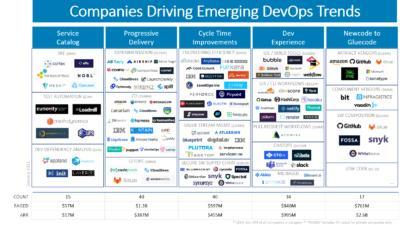
Nowadays developers are in the driver’s seat regarding a lot of decisions for the tools they use. In this update from Tyler Jewell, he covers what he sees are the Top 5 trends that will take place this year. While it’s a bit of a crowded chart, he plots the companies that he sees driving these trends. If you drill into the Service Catalog trend, Jewell sees a couple of different groups working on ways to help developers deal with the deluge of Services (aka APIs).
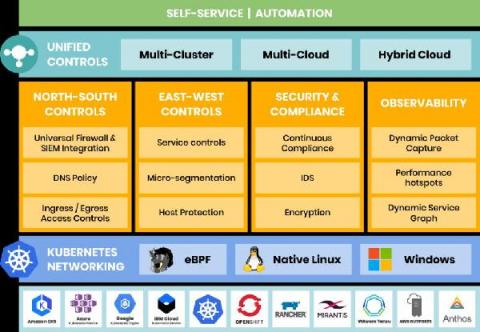
As we enter a new year, it’s an appropriate time to reflect on our achievements at Tigera and how much Calico Enterprise has evolved over the past year as the industry’s leading Security and Observability solution for Kubernetes Networking and Microservices.
Are you in two minds when it comes to learning new programming languages? Probably you may feel the same when you first heard about Rust programming language. Good things require some effort and here's what I have to say after using Rust programming language in production for a 6-month duration – It is great and Simply superb! Let's get the clear practical experience picture with Rust at Qovery.
In this blog, we will compare and contrast Falco vs. AuditD from a Host Intrusion Detection (HIDS) perspective. AuditD is a native feature to the Linux kernel that collects certain types of system activity to facilitate incident investigation. Falco is the CNCF open-source project for runtime threat detection for containers and Kubernetes. We will dig deeper into the technical details and cover the installation, detection, resource consumption, and integration between both products.
Shipa (https://www.shipa.io), the full lifecycle application-centric framework for Kubernetes and multi-cluster portability, just got better! Version 1.2 is now available, and we are excited to share these key new features and improvements with the Shipa community.
Shipa’s application management framework, integrated into OKE, provides an out-of-the-box way for organizations to build, deploy and operate the full life-cycle of Kubernetes applications. With Shipa and OKE, organizations can make up for lost time and start getting value out of Kubernetes immediately. In this webcast, you will learn how Shipa and OKE.
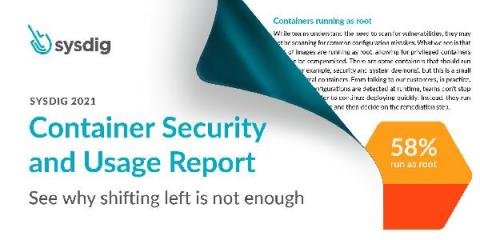
The fourth annual Sysdig container security and usage report looks at how global Sysdig customers of all sizes and industries are using and securing container environments. By examining how and when organizations are implementing security in the development lifecycle, we have been able to uncover some interesting data points in this year’s report. For example, we can see that 74% of organizations are scanning container images in the build process.
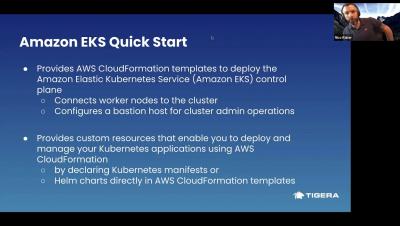
As an AWS Advanced Technology Partner with AWS Containers Competency, Tigera is thrilled to announce that Calico and Calico Enterprise are both now available as AWS Quick Starts. If you’re unfamiliar with the concept, an AWS Quick Start is a ready-to-use accelerator that fast-tracks deployments of key cloud workloads for AWS customers.
Ketch (https://www.theketch.io) is an open-source application delivery framework for Kubernetes. YAML is a human-readable data-serialization language. It is commonly used for configuration files and in applications where data is being stored or transmitted. Customized YAML files are used by many for the complicated task of deploying to Kubernetes.
Today, Red Hat announced its intent to acquire Stackrox. This is a very exciting development in the world of cloud-native security! First and foremost, congratulations to Stackrox, an early participant in the container security space. This acquisition is a great outcome for Stackrox given their nascent scale and on-premises offering.
Among all the new features and services that AWS announced during the re:Invent 2020, my favorites were definitely the AWS Lambda updates. And there were many! For example, your code execution is no longer rounded up to the nearest 100ms of duration for billing — you are now billed on a per millisecond. On top of that, AWS increased the Lambda’s memory capacity to 10 GB, and correspondingly the CPU capacity up to 6 vCPUs.
Now that we know the advantages of leveraging Ketch over other tools such as Helm to ease the deployment of our applications (BLOG: Helm vs. Ketch when Deploying Applications), a good next step is for us to understand how we can tie Ketch to our CI pipeline and have an automated deployment process. For this example, we will leverage Ketch, GitHub Actions, and a Kubernetes cluster on Google Kubernetes Engine (GKE).
In this tutorial, we will discuss InfluxDB and its Python client. We will deploy InfluxDB inside a Kubernetes cluster and then use the InfluxDB Python client to send data to InfluxDB.