Operations | Monitoring | ITSM | DevOps | Cloud

Kubernetes Architecture Part 1: Reasons to Choose Kubernetes

This Kubernetes Architecture series covers the main components used in Kubernetes and provides an introduction to Kubernetes architecture. After reading these blogs, you’ll have a much deeper understanding of the main reasons for choosing Kubernetes as well as the main components that are involved when you start running applications on Kubernetes. This blog series covers the following topics.

Kubernetes Security: Secrets from the Trenches

Kubernetes is a popular open-source container orchestration platform. It is highly configurable and feature-rich, but it also requires a deep understanding of containerization. When you are running Kubernetes in production, you need to account for cluster monitoring and logging, governance, and security. In this article, you will learn about Kubernetes security, including pro tips to help you handle architecture concerns, dependencies, and container vulnerabilities.
Mastering Kubernetes Networking with Cilium

In a recent meetup I hosted alongside Kunal Kushwaha, we discussed Cilium, an eBPF-powered open-source cloud-native networking solution that offers security, observability, scalability, and superior performance. Throughout this blog I will explore how the increased usage of Kubernetes has led to the need for advanced networking, security, and observability solutions. This will allow us to take a closer look at how Cilium can benefit Kubernetes users.
Starting Your Open-Source Journey

Are you a newbie developer looking to level up your skills and make a difference in the tech community? Join us for a fun and interactive webinar on how to start contributing to open-source projects! Komodor’s Head of Open-Source, Andrei Pokhilko, will guide you through the basics of open-source, show you how to find the right projects for you, and provide tips on how to make your contributions stand out.

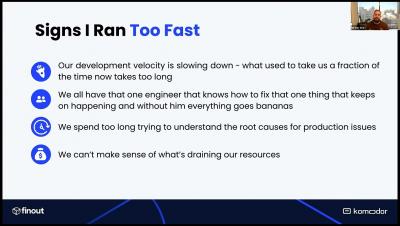
The True Cost of Moving Fast & Breaking Things - An Engineering Perspective

Building a prosperous business in a cloud environment is complex, to say the least. Millions of dev hours went to waste (not to mention tens of millions of dollars) because organizations just wanted to “run fast” and deliver value - there is a price tag however, a big one. And you’re paying for it! Building a multi-tenant efficient and stable cloud environment that can work at scale without breaking and wasting resources is almost impossible.

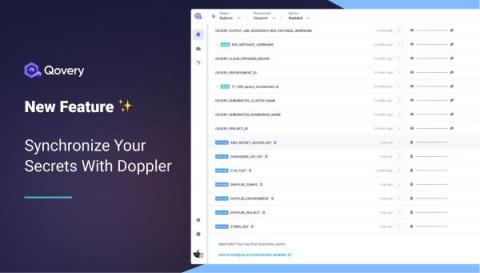
The Doppler Integration is Finally Here: Sync your Secrets With Qovery Seamlessly

I couldn't be more excited to share a groundbreaking update with all of you today. We've been burning the midnight oil, tinkering with codes and algorithms, and today we're unveiling the result of our hard work - the integration of Qovery with Doppler is officially here! If you're unfamiliar, Doppler is more than just a secret management system. It's an innovative tool that enables developers to synchronize their secrets and credentials across a multitude of platforms.

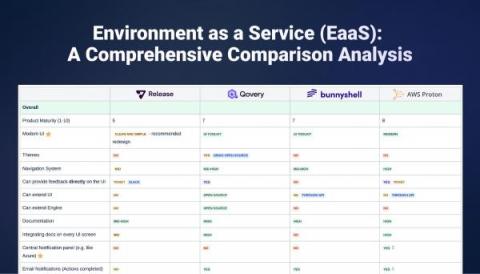
Environment as a Service (EaaS): A Comprehensive Comparison Analysis

Choosing the right solution to manage your application & environment infrastructure is crucial. As the demand for environments as a service (EaaS) continues to increase, more and more platforms are emerging, making it difficult to decide which one to choose. In a recent comparative analysis of environment-as-a-service (EaaS) solutions on the market, Qovery was one of four solutions evaluated, alongside Release, Bunnyshell, and AWS Proton. The study was conducted by Pablo E.

Streamlining Delivery with Shipping Containers

In today's globalized world, the efficient transportation of goods plays a crucial role in the success of businesses. Shipping containers have emerged as a game-changer in the logistics industry, revolutionizing the way goods are delivered worldwide. This blog post explores the advantages of shipping containers and how they have transformed the delivery process.

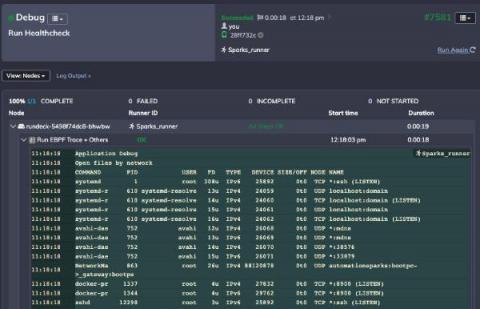
Debug State Capture for Traditional Infrastructure & Apps

In our previous blogs on Capturing Application State and using Ephemeral Containers for Debugging Kubernetes, we discussed the value of being able to deploy specific tools to gather diagnostics for later analysis, while also providing the responder to the incident the means to resolve infrastructure or application issues.

Secure containerised Ceph with Ubuntu container images

As we announced at Cephalocon 2023 in Amsterdam, Canonical has started to make container images for Ceph available. We received lots of questions at the booth about what it means to the average Ceph user who has or wants to deploy Ceph on Ubuntu. In this blog post, we will cover the benefits to users who are running containerised Ceph on Ubuntu, and specifically how these images can provide an improved security posture.

Did Your Datadog Bill Explode?

Custom metrics is a key component for many companies. Stock available in warehouses, shopping cart status, number of products sold, and operational status for industrial machines are some of the many KPIs that companies need for their own business tracking purposes. When it comes to custom metrics and observability platforms costs, many companies are struggling to find a good balance between availability, performance, reliability, and costs.

Achieving High Availability (HA) Redis Kubernetes clusters with Calico Clustermesh in Microsoft AKS

According to the recent Datadog report on real world container usage, Redis is among the top 5 technologies used in containerized workloads running on Kubernetes. Redis database is deployed across multi-region clusters to be Highly Available(HA) to a microservices application.

How to use Argo CD to configure Kubernetes Monitoring in Grafana Cloud

Since Kubernetes Monitoring launched in Grafana Cloud last year, we have introduced highly customizable dashboards and powerful analytics features. We’ve also focused on how to make monitoring and managing resource utilization within your fleet easier and more efficient. But what’s an easy way to add resources to your cluster while using Kubernetes Monitoring?

How Qovery Helps Piana Reduce Time to Market and Increase Developer Velocity by 200%

A few days ago, I spent about an hour with James Heng (Co-Founder & CTO of Piana) about their journey from the foundation of Piana to being a growing Fintech startup. As you will see in the article, unlike many of our customers, they started with Qovery from the very beginning. In this article, you might be surprised at how fast they were able to have a stable and scalable infrastructure.

Continuous Delivery Pipeline for Kubernetes Using Spinnaker

Kubernetes is now the de-facto standard for container orchestration. With more and more organizations adopting Kubernetes, it is essential that we get our fundamental ops-infra in place before any migration. In this post, we will learn about leveraging Jenkins and Spinnaker to roll out new versions of your application across different Kubernetes clusters.

Feature Spotlight: Kubernetes Dependency Maps and Real-Time Topology

This blog dives into detail about one of StackState’s most unique and powerful features, Kubernetes dependency maps. Dependency maps are Kubernetes service and infrastructure maps, enhanced with real-time topology, that show dependencies between all components at any moment in time.

Exploring cAdvisor for Common Use Cases

Container technologies have revolutionized the field of software development. By using containers, you can bundle together an application's source code with its libraries, dependencies, and configurations, ensuring that it runs predictably and reliably on different machines. But how can you be sure that your containers are running smoothly once deployed? That's where container monitoring tools like cAdvisor come in. Below, we'll go over what cAdvisor is and the different use cases for cAdvisor.

Ephemeral Environments vs Ephemeral Services: Weighing the Pros and Cons

In today's fast-paced software development world, Ephemeral Environments have emerged as a game-changer. These temporary, mirror-like copies of production environments are invaluable tools for testing code changes, debugging, and various development tasks. They offer developers a safe haven to experiment and test without impacting the stability of the production environment. One of the primary benefits of Ephemeral Environments is their fidelity to the production environment.

Bad Guys and How They Hack It - Oliver Pinson Roxburgh | Civo Navigate NA 2023

Oliver Pinson Roxburgh from @defensedotcom gave attendees an insight into the world of hacking and taught them how to think like a hacker. Oliver shared stories that illustrated the challenges and techniques used by hackers before attendees were invited to participate in a hack challenge, where they could try to identify an "impossible hack" for a chance to win a prize.

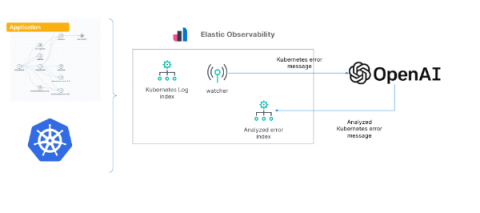
Gain insights into Kubernetes errors with Elastic Observability logs and OpenAI

As we’ve shown in previous blogs, Elastic® provides a way to ingest and manage telemetry from the Kubernetes cluster and the application running on it. Elastic provides out-of-the-box dashboards to help with tracking metrics, log management and analytics, APM functionality (which also supports native OpenTelemetry), and the ability to analyze everything with AIOps features and machine learning (ML).

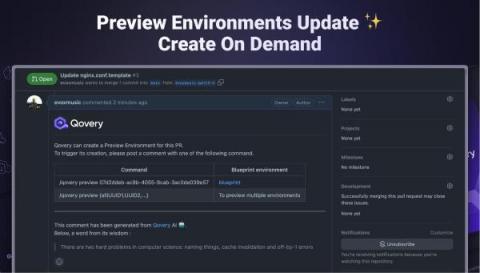
Manually Trigger Preview Environments with Create On Demand Feature

At Qovery, we strive to continuously improve our product to meet the ever-evolving needs of our users, making it more convenient and functional. We're proud to announce a groundbreaking update to our Preview Environment feature that we believe will transform the way engineering teams test their features. Buckle up for a journey into a world where creating production-like environments becomes a breeze!

Challenges of observing Kubernetes: Understanding a complex and dynamic system

As technology evolves in the enterprise, oftentimes the processes and tools used to manage it must also evolve. The increased adoption of Kubernetes has become a major inflection point for those of us in the monitoring and management side of the IT operations world. What has worked for decades (traditional infrastructure monitoring) has to be adjusted to the complexity and ephemeral nature of modern distributed systems where Kubernetes has a prime role.

From Containers to Kubernetes: A Roadmap for Migrating Your Applications Successfully

Kubernetes is essential to modern application development and runtime. As a powerful container orchestration platform, its benefits include improved scalability, portability, and automation, all of which contribute to more resilient applications and cost savings. More and more organizations are adopting Kubernetes to develop applications that can scale, recover from failures, and quickly adapt to changing business requirements.

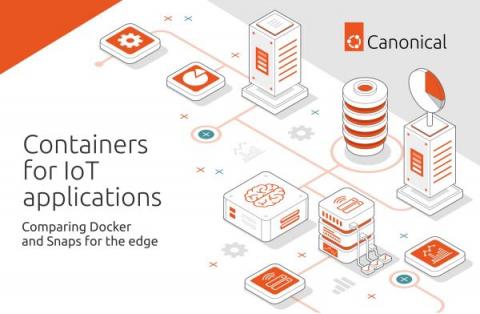
Docker vs Snaps: a side by side comparison

The Docker project was initiated by dotCloud, a platform-as-a-service (PaaS) company that created Docker to run their internal infrastructure. Slowly, Docker became more successful than any of their other products, so dotCloud rebranded as Docker Inc. Docker provides easy-to-use tooling and grew into an entire ecosystem for container management.

Lessons Learned from 3 years Inside CNCF - Cheryl Hung | Civo Navigate NA 2023

Cheryl Hung examines the latest trends in infrastructure, focusing on the growing adoption of ARM architecture in cloud computing and its role in the evolving ecosystem. She delves into her work in the software ecosystem to simplify and promote ARM adoption in the cloud. Highlighting the complexities of migrating workloads from x86 to ARM and the importance of Kubernetes, Cheryl emphasizes the value of community, networking, and learning from others in the industry.

Level Up Your Development with DevPod: Open-Source Tool - Civo.com

Discover DevPod, the game-changing open-source tool that takes developer environments to the next level. In this video, we delve into how DevPod empowers developers with reproducible environments, enhanced control, and flexibility. Watch now to see how DevPod revolutionizes your coding workflow and unlocks a new level of productivity.

Kubernetes Design Patterns For Optimal Observability

Technology is a fast-moving commodity. Trends, thoughts, techniques, and tools evolve rapidly in the software technology space. This rapid change is particularly felt in the software the engineers in the cloud-native space make use of to build, deploy, and operate their applications. One particular area where we see rapid evolution in the past few years/months is Observability.

Maximizing Your Cloud Budget: How to Drastically Reduce Your Cloud Costs with Qovery

We've been receiving a lot of requests from our amazing customers who are eager to learn more about optimizing their cloud costs with Qovery. It's clear that this is a hot topic, and we couldn't resist the opportunity to help you out. That's why we've organized a special live event just for you! In today's recap, we'll dive into why cloud cost optimization matters and share our best tips on how you can make the most of it using Qovery and our fantastic partners.

Chaos Engineering 2023 with Chaos Mesh

We've seen a tremendous transition in the architecture of our systems over the years, from basic, linear systems to increasingly sophisticated, non-linear systems. We've moved away from monolithic programs, where a single person could comprehend the entire operation of a system, and toward a distributed world dominated by a microservices design.

How We Get Almost Bankrupted Because Of A Documentation Typo

Picture this: it's September 2022, and we at Qovery are happily chugging along, serving nearly 20,000 developers around the globe with our self-service infrastructure platform. Everything's coming up roses until one day, a tiny typo in our API documentation threatened to turn our world upside down.

Chaos Engineering 2023 with Chaos Mesh - Saiyam Pathak | KubeCon + CloudNativeCon Europe 2023

In this video, Saiyan Pathak discusses the importance of chaos engineering in building resilient systems, with a special focus on the Chaos Mesh project. As systems transition from monolithic to distributed and cloud-native architectures, traditional testing methods fall short. Chaos engineering fills this gap by facilitating real-world failure experiments, thereby ensuring system reliability. Read our blog on Chaos Engineering 2023 with Chaos Mesh -►

Container Management - Decoding Kubernetes Management Platforms Part 1

This is the first article of a series of two covering the advantages and disadvantages of hosted and non-hosted Kubernetes management platforms. First, let’s introduce hosted what is hosted Kubernetes management platform (KMP) and provide a broader view of hosted KMPs.

Container Management - Decoding Kubernetes Management Platforms Part 2

This article is the second in a series covering Kubernetes Management Platforms (KMPs). In the first article, we analyzed hosted KMPs, exploring their potential benefits and customer base. This blog will examine non-hosted KMPs and the organizational customer profiles that can benefit the most from this solution. After the first article, you may think that hosted KMPs are the way to go, but there are many things to consider before deciding.

How container networking works at Upsun

At Upsun, we run containers. Lots and lots of containers. On hundreds of virtual machines rented from various IaaS providers. These containers run your software. They also team up with other containers that run other software that your software depends upon (such as databases or caches). This is naturally an extremely complex system, and today we'll take a look at how we wire (most of) it up.

SUSE Awarded 16 Badges in G2 Spring 2023 Report

Spring is here and so are the latest G2 Badges! I’m happy to share that G2 has awarded 15 badges to SUSE in its 2023 spring report, including the overarching ‘Users Love Us’ badge (again). G2, the world’s largest and most trusted tech marketplace, recognized Rancher, SLE Desktop, SLE Real Time, SLES and SUSE Manager as High Performers and Momentum Leaders. G2 also awarded the openSUSE Tumbleweed Linux distribution.

Reducing the cost of cloud: Tips for reducing your spend at any cloud provider

Spiraling costs are causing organizations to look for ways to reduce their monthly spend – hidden charges and unexpected bills are surprises that CFOs can no longer afford. With current costs from hyperscaler cloud providers skyrocketing, many are now asking whether going cloud-native is the right move for them. There are, however, a number of tips and tricks that you can action today that will help you reduce your cloud bill at any provider.

Overcoming Kubernetes Monitoring Challenges with Observability

At Logz.io, we’re seeing a very fast pace of adoption for Kubernetes–at this point, it’s even outpacing cloud adoption, with companies running on-prem fully adopting Kubernetes in production. Why are companies going in this direction? Kubernetes provides additional layers of abstraction, which helps create business agility and flexibility for deploying critical applications. At the same time, those abstraction layers create additional complexity for observability.

Live Event - Cloud Costs Optimization

Qovery is a platform delivering Environments as a Service in your Cloud, where you can build, deploy and test in production-like environments. Qovery turns app deployment and environment provisioning on AWS a breeze. Developers can instantly spin up production-like environments and start shipping in seconds. Join Romaric (CEO at Qovery) to see how you can optimize your cloud costs with the help of Qovery and its partnerships.

Tigera named as one of Forbes America's Best Startup Employers in 2023

We are proud to announce that we have been named one of America’s Best Startup Employers 2023 by Forbes! The Forbes list of America’s Best Startup Employers 2023 was compiled by evaluating 2,600 companies with at least 50 employees in the United States. All of the companies considered were founded between 2013 and 2020, from the ground up, and were not spin-offs of existing businesses. Just like other Forbes lists, businesses cannot pay to be considered.

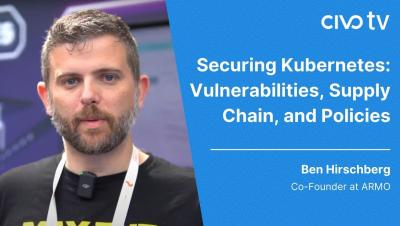
Securing Kubernetes at KubeCon: Vulnerabilities, Supply Chain, and Policies

Ben Hirschberg, co-founder of Armo and Kubescape maintainer, discusses the major security discussions at KubeCon, including focusing on the right vulnerabilities, addressing supply chain issues, and automating policy creation from application behavior.

How Civo has contributed to open source

Over the years, open source has become a way of working that allows people to modify and share designs to inspect, alter, and enhance source code. This has led to a range of benefits for users of open source, such as having more control over software, better security, more stability, and an inspired community. Last year, Mark Boost, CEO at Civo, spoke with OpenUK as part of their yearly report to discover the UK’s journey with open source.

Top metrics for Elasticsearch monitoring with Prometheus

Starting the journey for Elasticsearch monitoring is crucial to get the right visibility and transparency over its behavior. Elasticsearch is the most used search and analytics engine. It provides both scalability and redundancy to provide a high-availability search. As of 2023, more than sixty thousand companies of all sizes and backgrounds are using it as their search solution to track a diverse range of data, like analytics, logging, or business information.

8 Key Benefits of Qovery According to G2 User Review

Are you on the lookout for a platform that can make your deployment process a breeze, provide cost-effective solutions, and save you time and effort in managing infrastructure? Well, Qovery is the answer to all your problems! In this article, we'll discuss in detail eight of the many strengths of Qovery that make it a top choice for engineering teams, the twist? it’s all according to our customer’s reviews on G2!

Empowering DevOps: Simplifying Kubernetes with Platform Engineering | Civo TV

Dive into the world of platform engineering at KubeCon with Daniel Higuero, CTO at Napptive, where we discuss simplifying Kubernetes interactions, creating developer platforms with GitOps and security, and future trends, including observability and cost management.

Monitoring Kubernetes clusters activity with Azure Managed Grafana and Calico

Cloud computing revolutionized how a business can establish its digital presence. Nowadays, by leveraging cloud features such as scalability, elasticity, and convenience, businesses can deploy, grow, or test an environment in every corner of the world without worrying about building the required infrastructure.

Boosting Resilience with Chaos Engineering: Litmus 3.0 & Beyond | Civo TV

Prithvi Raj explores the world of chaos engineering and discusses its security, comparisons between open-source projects, and the latest Litmus 3.0 release. Discover how chaos engineering is not just about inducing failures, but also an essential aspect of building resilient systems across all stages of development.

Dinesh, CTO of Civo KubeCon First Impressions & Civo Update | Civo TV

Listen to Dinesh, CTO of Civo, as he shares his first impressions of KubeCon and discusses Civo's mission to reimagine cloud-native services by offering fast and simple access to Kubernetes. Discover their new Kubeflow product for efficient machine learning workloads, their Managed Civo Stack, and the upcoming Civo Navigate conference.

Upgrading Your Rancher Downstream Clusters to Kubernetes v1.25

The PodSecurityPolicy API, initially deprecated in Kubernetes v1.21, was entirely removed in Kubernetes v1.25. Because the API was removed, you cannot create, edit or query PodSecurityPolicy resources in a Kubernetes v1.25 cluster. Also, because its admission controller was removed, your clusters can no longer enforce any PodSecurityPolicy rules that were created in Kubernetes v1.24 and prior.

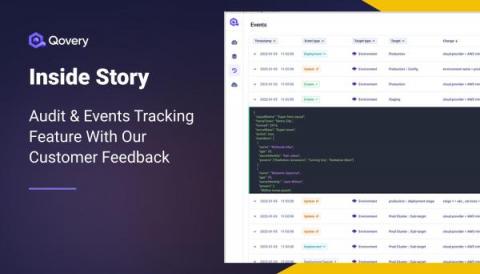
Inside Story: Audit & Events Tracking Feature With Our Customer Feedback

At Qovery, we are dedicated to providing the best experience possible to our users when it comes to managing their cloud infrastructure. We believe that building features with our customers is essential to our success. That's why we worked closely with our customers to develop our new feature, Audit & Events Tracking.

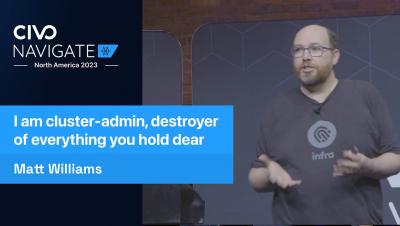
Keynote with Steve Wozniak | Civo Navigate NA 2023

Kicking off Civo Navigate NA 2023, Mark Boost (CEO) and Dinesh Majrekar (CTO) had the chance to sit down on stage with Steve Wozniak and talk about the future of tech and his time at Apple. Woz also shared his thoughts on Tesla and Lucid Electric Cars, from past experiences he and his wife Janet Hill had, before moving on to talk about his time in college (both the University of Colorado Boulder and the University of California, Berkeley).

Highlights from KubeCon + CloudNativeCon 2023

KubeCon + CloudNativeCon is the premier event that focuses on cloud-native technologies and Kubernetes. This year’s European edition took place in person and was completely sold out, with 10,000 attendees. Datadog joined the event as a platinum sponsor, and several of our engineers delivered talks on various topics, ranging from etcd to image signing and verification. In this post, we’ll share more details on these talks, along with our takeaways from the event.

The Kubernetes Alternative You've Been Looking For

If you’re in DevOps, you know the word ‘Kubernetes’. While saying that mouthful of a word (generally shortened to k8s in text) would have gotten you a weird look and someone asking if you need to lie down before 2017, it’s been sacrilegious to even consider starting a project without architecting your solution on top of it in the last few years.

Debugging Kubernetes with Automated Runbooks & Ephemeral Containers

In our previous blog, we discussed the difficulty in capturing all relevant diagnostics during an incident before a “band-aid” fix is applied. The most common, concrete example of this is an application running in a container and the container is redeployed—perhaps to a prior version or the same version—simply to solve the immediate issue.

Docker Secrets: An Introductory Guide with Examples

Securing sensitive data is crucial for any application, but managing this data can be complex and error-prone. Docker secrets provide a reliable and secure way to handle sensitive information like passwords, API keys, and certificates in your Docker environment. In this introductory guide, we’ll explore what Docker secrets are, how to use them with practical examples, and share some best practices to help you safeguard your sensitive data effectively.