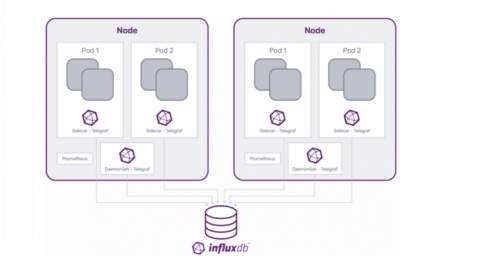
Troubleshooting container connectivity issues and performance hotspots in Kubernetes clusters can be a frustrating exercise in a dynamic environment where hundreds, possibly thousands of pods are continually being created and destroyed.
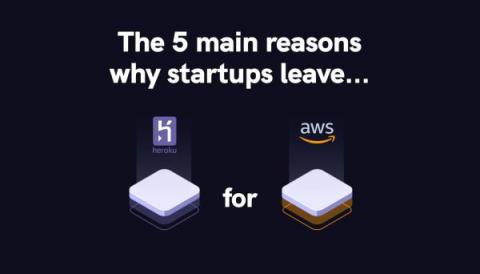
As a developer, using Heroku (a Platform as a service (PaaS)) helps get our applications up and running quickly. Without worrying about servers, scaling, backup, network, and so many underground details. Heroku is the perfect solution to start a project. But as the project grows, the needs become more complex, and moving from Heroku to Amazon Web Services (AWS) becomes more and more a no-brainer choice (discover why so many CTOs decide to move from Heroku to AWS).
2021 has been an interesting year for the Kubernetes and cloud native ecosystem. Due to the pandemic, cloud adoption saw a big spike in adoption. As the year wraps up soon, we wanted to reflect on the top findings from the Kubernetes and cloud native operations report and we have a cool infographic for you. The new version of the report for 2022 is due some time in January so stay tuned!
TLDR; Pleco is a service that automatically removes Cloud managed services and Kubernetes resources based on tags with TTL. When using cloud provider services, whether using UI or Terraform, you usually have to create many resources (users, VPCs, virtual machines, clusters, etc...) to host and expose an application to the outside world. When using Terraform, sometimes, the deployment will not go as planned.
If you’re looking for an alternative to Docker Desktop or to integrate Docker into your Multipass workflow, this how-to is for you. Multipass can host a docker engine inside an Ubuntu VM in a manner similar to Docker Desktop. That Docker instance can be controlled either directly from the VM, or remotely from the host machine with no additional software required. This allows you to run Docker locally on your Windows or Mac machine directly from your host terminal.
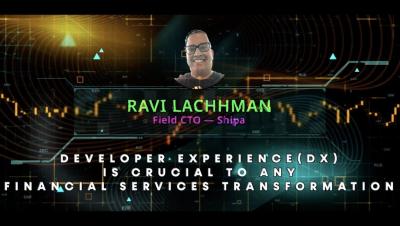
Looking at where major DevOps trends are headed, a common theme across many tools and practices is improving the Developer Experience or DX. One paradigm of thinking is that if you improve your internal customer experience, then your external customers will benefit too. However, up until now, the Developer Experience has been quite siloed and segregated for a multitude of reasons, such as scaling or having best-of-breed technologies to support individual concerns. Presentation on DX.
The high demand to deliver software that is both highly available and able to meet customer requests has, in part, led to the adoption of microservice architecture, a software architecture pattern that makes it easier to deploy applications as self-contained entities called containers. These containers are nothing but processes that run as long as the application in them is running.
Fairwinds Insights is Kubernetes governance and security software that enables DevOps teams to monitor and prevent configuration problems in their infrastructure and applications. Not only does Fairwinds simplify Kubernetes complexity, but it also reduces risk by surfacing security and reliability issues in your Kubernetes clusters.
Cloud platforms are not new — they have been around for a few years. And containers have been around even longer. Together, they have changed the way we think about software. Since the creation of these technologies, we have focused on platforms and apps. And who could blame anyone? Containers and Kubernetes let us do things that were unheard of only a few years ago.
Here we are with the final “What’s new in Sysdig” monthly newsletter of the year. First of all, Merry Christmas, メリークリスマス, Buon Natale, 성탄을 축하드려요, С рождеством!, Vrolijk kerstfeest, Feliz Navidad! Whatever you may be celebrating, we wish you a wonderful holiday season from all of us at Sysdig!
2021 has been a crazy year for the Qovery team. When I look back, 1 year ago we were 4 in the team, now we are 15! We expect to double the size of the team for 2022 while keeping our developer DNA. 2022 looks bright, and we strive to make the cloud simple for everyone.

Yes, you read that right – in the comfort of your own laptop, as in, the entire environment running inside your laptop! Why? Well, read on. It’s a bit of a long one, but there is a lot of my learning that I would like to share. I often find that Calico Open Source users ask me about BGP, and whether they need to use it, with a little trepidation. BGP carries an air of mystique for many IT engineers, for two reasons.
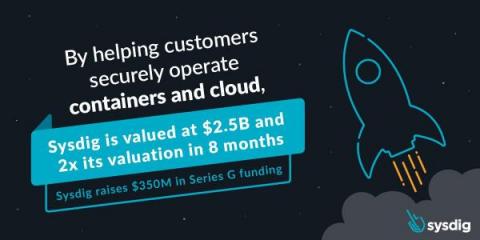
I am excited to announce today that we have raised an additional $350M at a valuation of $2.5B, more than doubling our valuation and bringing our cumulative funding since inception to ~$750M. This funding reflects investor conviction in our ability to be the dominant cloud and container security platform, and brings us closer to our vision of helping every organization to confidently run modern, cloud-native applications.
In this article, you will learn a bit about how you can deploy an app in IaC way to Kubernetes using Shipa and Azure Pipelines. Shipa is a unique product that solves one of the main issues that developers face while developing Cloud Native applications on Kubernetes. The underlying issue of learning Kubernetes in a faster phase is a difficult task for most of the new developers, that is where Shipa comes to the rescue.
A while ago, we wrote about using GitHub Actions to enable a developer-friendly CD process for Kubernetes. The goal was to show how DevOps or Platform Engineers could give developers an easy way to define and deploy their applications themselves with the target of implementing a self-service model.
2022 is right around the corner, and it’s not just time to prepare for christmas, play video games, buy presents, or share anti-christmas memes. It’s time to start making some predictions for bare metal Kubernetes! Take a minute and let’s think about it. Developers have advent of code so they’re busy right now. Sysadmins and devops can play games like predicting what’s going to happen next year for bare metal Kubernetes.
Heroku is a cloud-based platform that helps companies build, deliver, monitor, and scale applications with high velocity. Heroku's popularity is due to its simplicity, usability, elegance, and focus on the developer experience. Developers find Heroku helpful as they can get their application ready and running with only minimal focus on configuring infrastructure. Heroku scores on easiness in architecting apps, deploying them to flexible cloud infrastructure, and scaling them as required.
So you’ve heard of Kubernetes, and you’ve decided it’s time to dive into what everyone’s talking about. Or maybe you’ve worked with it a little, but you’d like to level up.
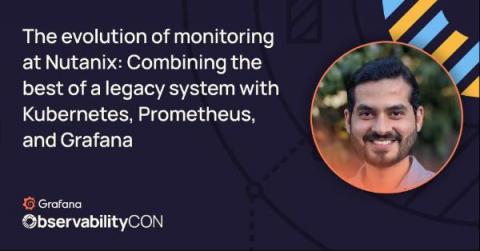
According to a 2020 CNCF survey, the use of containers in production has been rapidly increasing for the past several years. Nutanix, a global leader in cloud software and a pioneer in hyperconverged infrastructure solutions, is part of that trend.
Much has been written over the years about DevOps and, maybe a bit more recently, about Platform Engineering. Both jobs focus heavily on designing, building, maintaining, extending, and automating underlying infrastructure components (e.g., Kubernetes, monitoring, security, pipelines, etc.), so their end-users, often developers, can consume it as an integrated platform.
Traditionally, provisioning an infrastructure meant a team of field engineers, system admins, storage admins, backup admins, and an application team would all provision and maintain an on-premises data center. Although this system works, it has a few flaws—slow deployment, high cost of setup and maintenance, limited automation, human error, inconsistency, and the underutilization of resources during off-peak periods.
Calico is the industry standard for Kubernetes networking and security. It offers a proven platform for your workloads across a huge range of environments, including cloud, hybrid, and on-premises. Calico has had a high-quality, production-ready, performant, eBPF data plane option for some time! However, although many users are deploying it in production and benefitting, we still sometimes see users who don’t know that Calico has an eBPF data plane or feel confident deploying it, and.
Shipa in your organization/team can help usher in the next generation of engineering efficiency and developer experience. Though like any platform, there requires some wiring to bind Shipa to infrastructure. In this modern example, can plug into your IaC strategy in creating Kubernetes clusters then auto-wires all of the needed Shipa pieces at cluster creation time.
When administering your Kubernetes cluster, you will likely run into a situation where you need to delete pods from one of your nodes. You may need to debug issues with the node itself, upgrade the node, or simply scale down your cluster. Deleting pods from a node is not very difficult, however there are specific steps you should take to minimize disruption for your application.
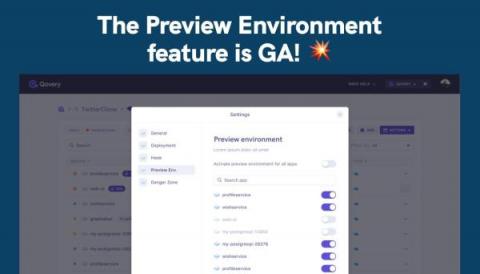
I am super excited to announce that our Preview Environment feature is GA (Globally Available) for everyone 🥳.
Last month saw the first ever Civo Hackathon take place and we saw individuals and teams from across the globe submit some really exciting, innovative projects. We've also launched a new Partner Program designed to help your fledgling business grow and scale with ease. Continue reading to find out more.
Monitoring is a critical aspect of cloud computing. At any time, you need to know what’s working, what isn’t, and have the ability to respond to changes occurring in a given environment. Effective monitoring begins with the ability to collect performance data from across an ecosystem and present it in a useful way. So the easier it is to manage monitoring data across an ecosystem, the more effective those monitoring solutions are and the more efficient that ecosystem is.
Yesterday was my worst day for a very long time. We spent so much time promoting our Qovery Engine to the open-source community and getting those ~3800 stars. I woke up and discovered that we had lost all the stars and forks from our repository. But what happened?
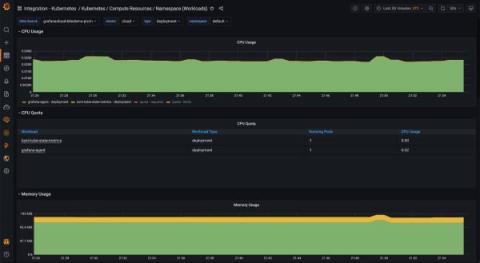
Back in May, we announced the Kubernetes integration to help users easily monitor and alert on core Kubernetes cluster metrics using the Grafana Agent, our lightweight observability data collector optimized for sending metric, log, and trace data to Grafana Cloud. The integration allows Grafana Cloud users to monitor and alert on Kubernetes cluster metrics. Since the original release, we’ve added new features and enhancements to help our users go even further.
Last June, Tigera announced a first for Kubernetes: supporting open-source WireGuard for encrypting data in transit within your cluster. We never like to sit still, so we have been working hard on some exciting new features for this technology, the first of which is support for WireGuard on AKS using the Azure CNI. First a short recap about what WireGuard is, and how we use it in Calico.
One more “ops” phoneme like DevOps is ChatOps; or conversation-based development/operations. ChatOps has been growing in popularity as communication platforms such as Slack is ingrained in our day-to-day engineering lives. A team lead once told me “if it didn’t happen in Slack, it didn’t happen” showing the emphasis of communication platforms as a system of record.
Systems and platforms continue to grow more complex and distributed. The march towards distributed microservices has been accelerated with Kubernetes; arm yourself with a Kubernetes manifest and up your replica count and like magic, you have more than one endpoint for your workload. In the Kubernetes ecosystem, there has been a lot of investment on the infrastructure side of the house for example in making sure clusters are performant and have the ability to scale.