What's New in Sysdig - November 2023
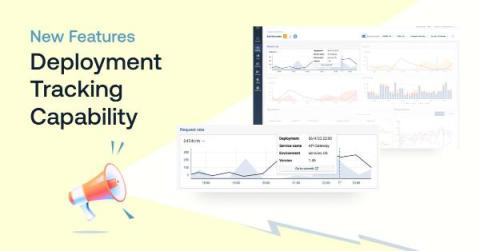
“What’s New in Sysdig” is back with the November 2023 edition! My name is Dimitris Vassilopoulos, based in London, United Kingdom, and I’m excited to share our latest feature releases with you!


“What’s New in Sysdig” is back with the November 2023 edition! My name is Dimitris Vassilopoulos, based in London, United Kingdom, and I’m excited to share our latest feature releases with you!
Containers are nearly ubiquitous in software these days. Outside of abstractions like fully managed services (RDS, Dynamo, Cloud SQL), everything engineering teams are responsible for, mostly, land in containers. For many, deciding what platform to run those containers on is a burning question. Choosing the wrong container management solution can be a real headache.
Today Sysdig has been recognized for achieving the Amazon Elastic Kubernetes Service (Amazon EKS) Ready designation from Amazon Web Services (AWS). This specialization recognizes that the Sysdig cloud-native application protection platform (CNAPP) is validated by AWS Partner Solutions Architects to integrate with Amazon EKS and Amazon EKS Anywhere. Amazon EKS Ready Partners like Sysdig offer AWS customers the ability to customize the Kubernetes solution to fit their business needs.
DevOps isn’t just a methodology; it’s a culture that fosters collaboration, automation, and continuous improvement within an organization. Conducting a successful DevOps assessment is crucial for understanding where your team stands in its DevOps journey and identifying areas for enhancement. To ensure a comprehensive evaluation, focus on these four pillars.
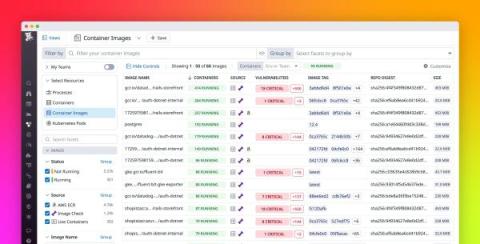
Containers are powerful tools for scaling and deploying your applications, but with so many components pulled from different sources, there’s a greater potential for issues within them to go undetected. As a result, you need to monitor every layer of your containerized environments for vulnerabilities and performance problems—from your application to your container images.
Let’s be honest, working with Kubernetes (K8s) has never been the easiest tech to work with. As a seasoned Kubernetes professional, I find myself constantly looking for ways to set up collecting data from my clusters, only to find out that there is a new, more complicated way to get the data I’m looking for.
Containers and Kubernetes has become the cornerstone of modern DevOps practices. As organizations strive for agility, scalability, and seamless collaboration between development and operations teams, the adoption of Containers and Kubernetes has emerged as a transformative force. This blog explores the pivotal role these technologies play in the DevOps journey, unlocking new possibilities and efficiencies for software delivery.
Here at Logz.io, we realize Kubernetes is the most common infrastructure component that organizations are running on to keep their applications going. In return, we’ve made a big investment to support Kubernetes properly and give customers the tools they need to investigate and troubleshoot any issues that arise.
In the world of modern Kubernetes, things have come a long way from the days of a single cluster handling one app. Now, it's common to see setups that span multiple clusters across different clouds. Initially, managing those clusters was a complicated operation with many moving parts. Using tools such as SUSE Rancher, RedHat OpenShift or AWS EKS, made managing multiple clusters somewhat easier.
Microsoft Azure provides an all-encompassing service that allows you to host Docker containers on the Azure Container Registry (ACR), deploy to a production-ready Kubernetes cluster via the Azure Kubernetes Service (AKS), and more. Using CircleCI, you can automatically deploy updates to your application, providing a safer and more efficient CI/CD process for managing your software. This article shows you how to automate deployments for a.Net application to Azure Kubernetes.
The software engineering world has become a place where compute, storage, and availability have become the cornerstones of scale. As an industry and as individuals, we should stop to take a closer look at scaling the most important of all resources… our people. In this post I’ve modeled a team with 6 engineers, 2 Sr, 3 Mid, and 1 Jr. This team is getting 450 “units” of work done ( where a unit is just some measure of throughput ) per interval (2 months).
If you’re using containers to deploy your software, it is important to be aware of potential vulnerabilities within your container images. These may be introduced through dependencies in your built image, or perhaps through dependencies within the base image(s) used to build your image.
I'm Konner, a Strategic Sales Executive here at Cycle.io. With a background rooted in DevOps and CI/CD, I've dedicated over three years to engaging with developers and the DevOps community, consistently learning and gaining insights from each conversation.
If you missed KubeCon North America 2023 in Chicago, or you were there and spent more time in the “hallway tracks,” you may have missed some of the big news that came out of the show. We covered the big happenings in the open source cloud native and observability realm in the latest episode of OpenObservability Talks!
I went to my first Kubecon ever this last week. If you’re not familiar with Kubecon, it is a convention that is around Kubernetes, a Cloud Native Community Foundation (CNCF) open source project. With this being my first Kubecon ever, it was an adventure all around building community, education, kindness, and of course, a love for Kubernetes technology.
In the dynamic landscape of software development, the adoption of DevOps has become a cornerstone for organizations aiming to deliver high-quality products at a rapid pace. DevOps, a fusion of development and operations, emphasizes collaboration, communication, and automation throughout the entire software development lifecycle.
As another year at KubeCon + CloudNativeCon (CNC) draws to a close, the latest installment in Chicago might be one of our favorite ones so far! With talks having an ever greater focus on the impact of sustainability and inclusion within the community, we loved getting involved in the conversation about how we can make the cloud a better solution for all.
Maintaining a consistent environment from development to production is one of those challenges that's always easier said than done. It used to be that a small hiccup—like a version mismatch or a misconfigured setting—could have you scrambling to figure out why everything worked perfectly on your local machine but started falling apart elsewhere.
Stop me if you’ve heard this one before: you just pushed and deployed your latest change to production, and it’s rolling out to your Kubernetes cluster. You sip your coffee as you wrap up some documentation when a ping in the ops channel catches your eye—a sales engineer is complaining that the demo environment is slow. Probably nothing to worry about, not like your changes had anything to do with that… but, minutes later, more alerts start to fire off.
Kubernetes, often abbreviated as K8s, has revolutionised the way we manage containerized applications. It provides a robust platform for orchestrating and managing containers at scale. One of the key features that sets Kubernetes apart is its powerful metadata system, which includes labels and annotations. In this blog post, we’ll take a comprehensive look at how labels and annotations work in Kubernetes and how you can leverage them to enhance the management of your applications.
Greetings! My name is Matt Krauser and I’m a Strategic Sales Executive here at Cycle. After participating in nearly a hundred demos of the platform, I wanted to step back from my day to day grind and share a little about my experience thus far. My goal in writing this is to compare Cycle and Kubernetes, discuss the primary pain points I hear from prospects and K8s users on a daily basis, and explain how Cycle can alleviate these challenges.
When things go wrong, we’d all love the ability to go back in time, return things to the way they were, and fix whatever issues pop up at the start so they never happen in the first place. This is no different when maintaining complex microservices-based architectures. With any complex system, things are bound to go wrong from time to time.
At Grafana Labs we meet our users where they are. We run our services in every major cloud provider, so they can have what they need, where they need it. But of course, different providers offer different services — and different challenges. When we first landed on AWS in 2022 and began using Amazon Elastic Kubernetes Service (Amazon EKS), we went with Cluster Autoscaler (CA) as our autoscaling tool of choice.
Docker is a platform as a service for deploying applications in Docker containers. Containers are software "packages" that bundle together an application's source code with its libraries, configurations, and dependencies, helping software run more consistently and reliably on different machines. To start using Docker containers, you need to be familiar with Docker networking. Below, we'll answer the question: "What is a Docker network host?".
As a developer, when I first stepped into the wonderful world Kubernetes, I was amazed at the endless configuration possibilities it offered for containerized apps. It felt like I was handed the most multifaceted tool for all my deployment needs.
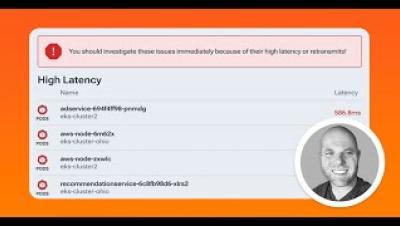
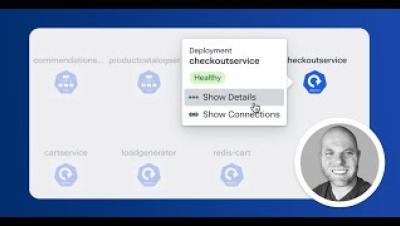
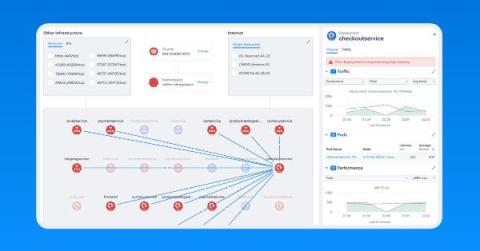
Kentik Kube provides network insight into Kubernetes workloads, revealing K8s traffic routes through an organization’s data centers, clouds, and the internet.
The Rancher by SUSE team has been dedicated to fortifying the Rancher platform to be the most interoperable and adaptable platform for our customers and the wider community over the past year. In late 2022, we introduced the ‘Extensions Catalog.’, and earlier this year at KubeCon Europe in Amsterdam, we revealed our Rancher UI Extensions framework. Continuing this momentum, we are thrilled to announce the release of Rancher 2.8 and Rancher Prime 2.0.
We are delighted to announce the release of Rancher Desktop 1.11.0! This update comes with new features, Snapshots and the Container Dashboard, along with other important bug fixes.
Kubernetes is an open-source container orchestration platform that automates the deployment, scaling, and management of containerized applications. It allows you to create and manage clusters of machines, called Kubernetes clusters, to run your applications in a scalable and highly available manner. Kubernetes clusters provide a distributed and scalable platform for running containerized workloads.
We continue our exploration of the fascinating world of Kubernetes, logs, and metrics. In our previous installment, we delved into the intricate tale of Cribl Edge and its role in unraveling the mysteries of logging and metrics in Kubernetes environments with the Cribl Edge native sources for Kubernetes Metrics and Logs. Today, we’re picking up where we left off, shining a spotlight on a new and powerful tool that has the potential to demystify this complex ecosystem further.
In the world of Kubernetes, where applications are encapsulated within containers and seamlessly distributed across diverse clusters of computers, the enigmatic Kubernetes scheduler takes centre stage. Think of it as the orchestra conductor of your Kubernetes cluster, orchestrating a symphony of resources to ensure seamless operations. This unassuming yet powerful component leverages a sophisticated algorithm to perform the intricate dance of optimizing resource allocation.
Containerization has significantly improved the way we deploy and manage applications over the past years. It has enabled agility, scalability, and efficiency in modern software development. However, the dynamic nature of containers requires robust monitoring solutions to ensure optimal performance and reliability. In this article, we will discuss the top 10 container monitoring tools that are essential for anyone navigating the containerized landscape.
In the earlier days of the internet, organizations faced resource allocation challenges when running applications on physical servers. They initially resorted to running individual applications on separate physical servers, which was costly and not scalable. As the internet continued to evolve, organizations sought more efficient ways to manage their applications and workloads.
Incompatible hardware is a common cause of application failures for distributed teams. Most teams depend on containerization tools like Docker to prevent these failures. But is there any way to automate the deployment of Docker images more efficiently and intuitively? In this article, I will show you how simple it is to do this by combining CircleCI and Microsoft Azure to build a CI/CD pipeline for a Dockerized Spring Boot project.
In this year’s report, we see how organizations are using containers not just to solve their day-to-day infrastructure needs. Rather, customers are exploring the next technology frontier of containers by building next-generation applications, enhancing developer productivity, and optimizing costs.
For many developers and engineers, Kubernetes is the de facto choice for container orchestration. That’s primarily because of its efficiency in handling and scaling container workloads. However, the complexity of managing nodes in a Kubernetes cluster can cause recurring headaches for even the most experienced and skilled IT teams. This is where `kubectl cordon` comes into play.
KubeCon + CloudNativeCon North America 2023 is just around the corner, and the OSS and cloud native community is eagerly anticipating the event, which will take place November 6 - 9 in Chicago.
The journey to selecting a container platform is a fun and exciting time in any organization. Container technology abstracts away so many problems from cloud 1.0 VM based approach, and puts engineering teams back in the distributed drivers seat. As containers continue to mature and adoption becomes ubiquitous, there are many lessons to learn and ideas to consider before inevitably choosing Cycle. Let's take a look at Cycle alongside the other types of container platforms.
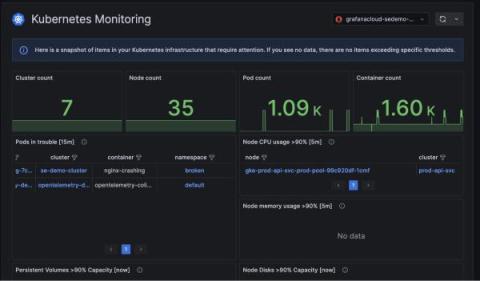
Kubernetes has become the de facto standard for container orchestration, enabling organizations to deploy, scale, and manage containerized applications with ease. However, ensuring the reliability, performance, and security of applications running in a Kubernetes environment requires robust monitoring and observability solutions.
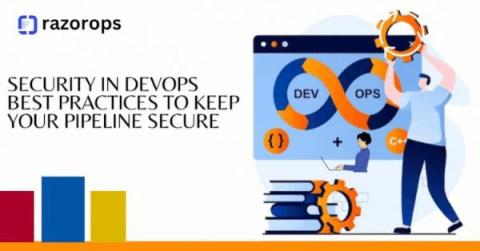
Software development, DevOps practices have become a cornerstone for organizations looking to streamline their processes and deliver high-quality software. While the agility and efficiency DevOps brings to the table are undeniable, it’s essential to remember that security should never be compromised in the pursuit of speed. In fact, it should be an integral part of the entire DevOps lifecycle.
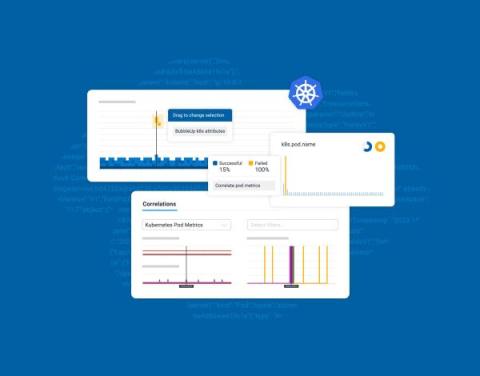
In our continuous journey to support teams grappling with the complexities of Kubernetes environments, we’re thrilled to announce the launch of Honeycomb for Kubernetes, a dedicated solution designed to bridge the growing divide between infrastructure/platform teams and application developers. This is available to all plans (including Free!) at no additional cost.