"What were the hot topics of discussion at KubeCon?" - Civo TV
Here's what the community thought was the hot topic of discussion at KubeCon + CloudNativeCon NA 2022.


Users live in the sunlit world of what they believe to be reality. But, there is, unseen by most, an underworld. A place that is just as real, but not as brightly lit. The Kernel Parameter side (apologies to George Romero). Kernel parameters aren’t really that scary in actuality, but they can be a dark and cobweb-filled corner of the Linux world. Kernel parameters are the means by which we can pass parameters to the Linux (or Unix-like) kernel to control how that it behaves.
October has, as usual, been a busy month, and Sysdig announced many new features. In Sysdig Monitor, we announced the release of four new Advisories and Yaml config support for Advisor. In Sysdig Secure, we released Severity filtering in Insights, Pod and Node activity view in Insight and four new Falco rules added to the Rules Library. Each of these are discussed in detail below.
The Kubewarden development team is happy to announce the release of the Kubewarden 1.3 stack. In addition to the usual amount of small fixes, this release focused on the following themes. If you’re not familiar with Kubewarden, it is a policy engine for Kubernetes. Its mission is to simplify the adoption of policy-as-code.
In the second part of our “Kubernetes interview questions” series, we have outlined ten questions to help those that want to take their Kubernetes knowledge to the next level. Read on to learn more about the difference between Kubernetes and Docker Swarm. We’ll also be covering how an organization can keep costs low using Kubernetes. If you missed part one, check it out here.
My father worked with some of the very first computers ever imported to Italy. It was a time when a technician was a temple of excellence built on three pillars: on-the-field experience, a bag of technical manuals, and a fully-stocked toolbox. It was not uncommon that missing the right manual or the correct replacement part turned into a day-long trip from the customers’ site to headquarters and back.
Container runner, a new container-friendly self-hosted runner, is now available for all CircleCI users. Self-hosted runners are a popular solution for customers with unique compute or security requirements. Container runner reduces the barrier to entry for using self-hosted runners within a containerized environment and makes it easier for central DevOps teams to manage running containerized CI/CD jobs behind a firewall at scale.
The Harvester team is pleased to announce the next release of our open source hyperconverged infrastructure product. For those unfamiliar with how Harvester works, I invite you to check out this blog from our 1.0 launch that explains it further. This next version of Harvester adds several new and important features to help our users get more value out of Harvester. It reflects the efforts of many people, both at SUSE and in the open source community, who have contributed to the product thus far.
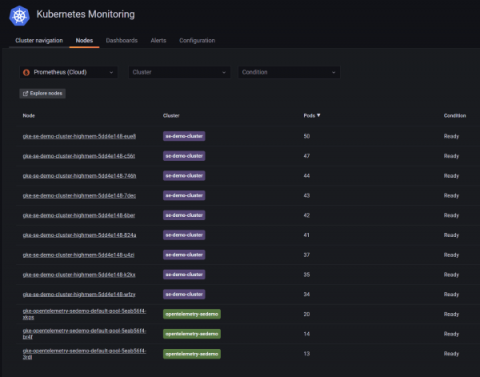
The spine is essential to perform every activity, like crawling, walking, or swimming. Just as the spine is necessary to enable these functions, your Kubernetes infrastructure needs a backbone to be efficient and effective. So if Kubernetes clusters act as the spine of your architecture, then Kubernetes nodes are like the vertebrae — they make up a Kubernetes cluster in the same way the vertebrae form the spinal column.
We are proud to introduce SUSE Edge 2.0, which will empower customers to accelerate and scale edge infrastructures and transform edge operations.
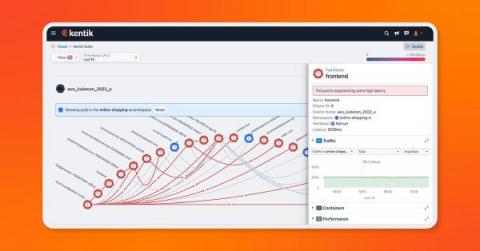
We’re excited to announce our beta launch of Kentik Kube, an industry-first solution that reveals how K8s traffic routes through an organization’s data center, cloud, and the internet. With this launch, Kentik can observe the entire network — on prem, in the cloud, on physical hardware or virtual machines, and anywhere in between.
Ask any cloud software team using Kubernetes (and most do); this powerful container orchestration technology is transformative, yet often truly challenging. There’s no question that Kubernetes has become the de-facto infrastructure for nearly any organization these days seeking to achieve business agility, developer autonomy and an internal structure that supports both the scale and simplicity required to maintain a full CI/CD and DevOps approach.
We are thrilled to announce you can now scan your environment variables for secrets with the new env-variable-secrets-scanner-policy in Kubewarden! This policy rejects a Pod or workload resources such as Deployments, ReplicaSets, DaemonSets , ReplicationControllers, Jobs, CronJobs etc. if a secret is found in the environment variable within a container, init container or ephemeral container. Secrets that are leaked in plain text or base64 encoded variables are detected.
Today, I am happy to see the public release of Helm-Dashboard, Komodor’s second open-source project, after ValidKube, and my first since joining the team as Head of Open Source. It’s a compelling challenge to try and solve the pain points of Helm users, but more than anything it’s a labor of love. So it is with love that we’re now sharing this project with the community, and I’m excited to imagine where it will go from here.
Here at Civo, we have created over 50 free video guides and tutorials to help you navigate Kubernetes: from understanding the basic need for and function of containers, to launching and scaling your first clusters. You can start learning everything you need to know to get started with Kubernetes today with our nine modules which were created by in-house experts at Civo!
With 96% of organizations either using or evaluating Kubernetes and over 7 million developers using Kubernetes around the world, according to a recent CNCF report, it’s safe to say that Kubernetes is eating up the world and has become the de-facto orchestrating system of cloud-native applications. The benefits of adopting K8s are obvious in terms of efficiency, agility, and scalability.
GitOps modernizes software management and operations by allowing developers to declaratively manage infrastructure and code using a single source of truth, usually a Git repository. Many development teams and organizations have adopted GitOps procedures to improve the creation and delivery of software applications. For a GitOps initiative to work, an orchestration system like Kubernetes is crucial.
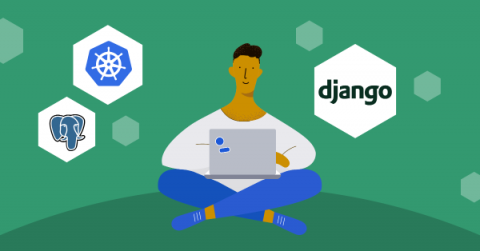
Do you have an application built with Django and PostgreSQL that you’d like to run on Kubernetes? If so, you’re in luck! In this tutorial, you’ll learn how to orchestrate your Django application with Kubernetes. Since we’re working with multiple microservices, it can be difficult to ensure all parts work together. This tutorial will demystify all that.
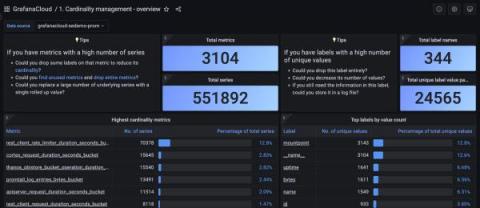
Over the last few months, a common and recurring theme in our conversations with users has been about managing observability costs, which is increasing at a rate faster than the footprint of the applications and infrastructure being monitored. As enterprises lean into cloud native architectures and the popularity of Prometheus continues to grow, it is not surprising that metrics cardinality (a cartesian combination of metrics and labels) also grows.
When you want to direct your observability data in a uniform fashion, you want to run an OpenTelemetry collector. If you have a Kubernetes cluster handy, that’s a useful place to run it. Helm is a quick way to get it running in Kubernetes; it encapsulates all the YAML object definitions that you need. OpenTelemetry publishes a Helm chart for the collector. When you install the OpenTelemetry collector with Helm, you’ll give it some configuration.
Organizations around the globe recognize the importance of digital transformation to respond to the demands of the modern world. Organizations can advance their business by adapting technology, processes and tools. By doing so, they can increase flexibility, efficiency, security and improve customer experiences to boost success and gain competitive advantage. However, digital transformation is not always easy.
Containerization is a type of virtualization in which a software application or service is packaged with all the components necessary for it to run in any computing environment. Containers work hand in hand with modern cloud native development practices by making applications more portable, efficient, and scalable.
The real beauty of this modern, cloud-fueled, DevOps-driven world that we are living in is that it’s so highly composable. In so many ways, we’ve been freed from the limitations and structures of the previous annals of software and technology history to build things the way that we want to, and however we choose to do so.
Kubernetes has broken down barriers as the cornerstone of cloud-native application infrastructure in recent years. In addition, cloud vendors offer flexibility, speedy operations, high availability, SLAs (service-level agreement) that guarantee your service availability, and a large catalog of embedded services. But as organizations mature in their Kubernetes journey, monitoring and optimizing costs is the next stage in their cloud-native transformation.
Cloud Service Providers (CSPs) offer an ever-expanding array of instance types, ensuring that for any given workload there exists the perfect hosting option that matches the exact needs of that app or business service. But with this expansion comes an ever-increasing challenge to match the workloads to the offerings – there are many things to consider.
Nowadays, the software development paradigm is based on containerizing applications to deploy on pods to let Kubernetes manage it. Containerized applications can then allow Kubernetes to manage its deployment, replication, high availability, metrics and other capabilities so that the application can focus on doing what it was designed to do. This technology is used for projects and by customers all over the globe.
Containers have long been used in the transportation industry. Cranes pick up containers and shift them onto trucks and ships for transportation. Container technology is handled in a similar vein in the software world. A container is a new and efficient way of deploying applications. A container is a lightweight unit of software that includes application code and all its dependencies such as binary code, libraries, and configuration files for easy deployment across different computing environments.
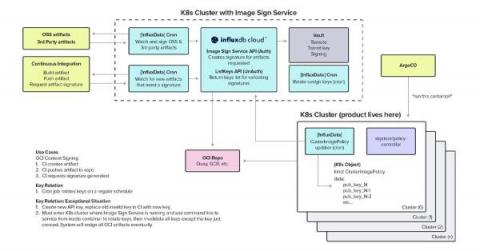
One of InfluxData’s main products is InfluxDB Cloud. It’s a cloud-native, SaaS platform for accessing InfluxDB in a serverless, scalable fashion. InfluxDB Cloud is available in all major public clouds. InfluxDB Cloud was built from the ground up to support auto-scaling and handling different types of workloads. Under the hood, InfluxDB Cloud is a Kubernetes-based application consisting of a fleet of micro-services that runs in a multi-cloud, multi-region setup.
Companies are increasingly adopting managed Kubernetes services, such as Microsoft Azure Kubernetes Service (AKS), to build container-based applications. Leveraging a managed Kubernetes service is a quick and easy way to deploy an enterprise-grade Kubernetes cluster, offload mundane operations such as provisioning new nodes, upgrading the OS/Kubernetes, and scaling resources according to business needs.
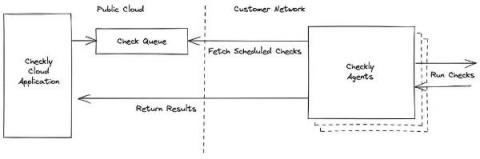
Checkly private locations enable you to run browser and API checks from within your own infrastructure. This requires one or more Checkly agents installed in your environment where they can reach your applications and our Checkly management API. You need to ensure you have enough agents installed in order to run the number of checks configured in the location. We have a guide to planning for redundancy and scaling in our documentation.
Logs are a critical aspect of any production workload, as they give you insight into what is happening in your system and tell you which components may be having issues. The traditional method of looking at logs involves basic Linux commands like tail, less, or sometimes cat.
In this previous article, we talked about how to monitor the Istio service mesh in Kubernetes with the out-of-the-box observability stack. This time, we will walk you through monitoring the Istio service mesh with Sysdig Monitor and how to troubleshoot issues. Istio service mesh provides special characteristics and functionalities for microservices running on Kubernetes.
Kubernetes made it much easier to deploy and scale containerized applications, but it also introduced new challenges for IT teams trying to keep tabs on these newly distributed systems. Ops teams need proper visibility into their Kubernetes clusters so they can track performance metrics, audit changes to deployed environments, and retrieve logs that help debug application crashes.
In computing, virtualization is the creation of a virtual — as opposed to a physical — version of computer hardware platforms, storage devices, and network resources. Virtualization creates virtual resources from physical resources, like hard drives, central processing units (CPUs), and graphic processing units (GPUs). By virtualizing resources, you can combine a network of resources into what appears to users as one object.
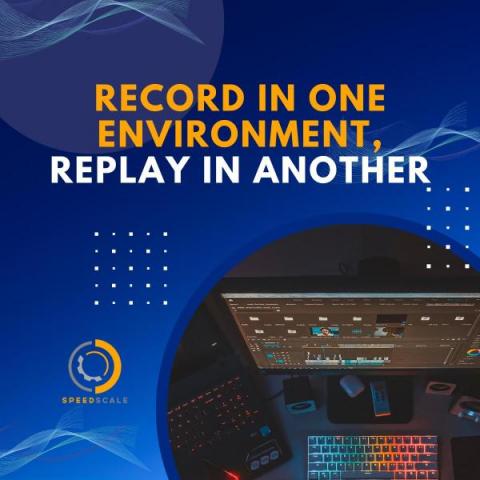
Have you ever experienced the problem where your code is broken in production, but everything runs correctly in your dev environment? This can be really challenging because you have limited information once something is in production, and you can't easily make changes and try different code. Speedscale production data simulation lets you securely capture the production application traffic, normalize the data, and replay it directly in your dev environment. There are a lot of challenges with trying to replicate the production environment in non-prod.
StackState is an out-of-the-box solution to observe your entire Kubernetes stack, identify problems, automatically highlight the changes that cause them and provide the full context you need for efficient and effective troubleshooting. Our clear and affordable pricing makes it easy to get started today.
A recent global survey demonstrates the importance of open source tools and technologies to IT professionals and their organizations. In Foundry’s MarketPulse Survey for SUSE, 2022, more than 600 IT professionals from enterprises around the world shared their experience and opinions on cloud native technology and open source. The results? Sixty-three percent of those surveyed said it was highly important for their organizations to choose open source tools and technologies.
A new version of Rancher Desktop with a troubleshooting diagnostics feature and several other improvements has just been released!
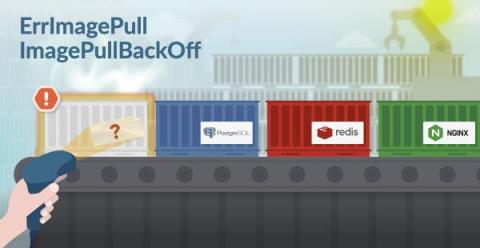
Pod statuses like ImagePullBackOff or ErrImagePull are common when working with containers. ErrImagePull is an error happening when the image specified for a container can’t be retrieved or pulled. ImagePullBackOff is the waiting grace period while the image pull is fixed. In this article, we will take a look at.
Since the beginning, our community has been at the forefront of what we do. Over the years, we have been able to highlight the knowledge and talent of our community by showcasing tutorials submitted to us via Write For Us. As we reach the end of 2022, we wanted to highlight some of our top guides from the Civo community that were published throughout the year.
Continuous Delivery (CD) frameworks for Kubernetes, like the one created by Rancher with Fleet, are quite robust and easy to implement. Still, there are some rough edges you should pay attention to. Jobs deployment is one of those scenarios where things may not be straightforward, so you may need to stop and think about the best way to process them. We’ll explain here the challenges you may face and will give some tips about how to overcome them.
Productive, scalable, and cost-effective, cloud infrastructure empowers innovation and faster deliverables. It’s a no-brainer why organizations are migrating to the cloud and containerizing their applications. As businesses scale their cloud infrastructure, they cannot be bottlenecked by security concerns. One way to release these bottlenecks and free up resources is by using automation.
Epinio is a Kubernetes-powered application development engine. Adding Epinio to your cluster creates your own platform-as-a-service (PaaS) solution in which you can deploy apps without setting up infrastructure yourself. Epinio abstracts away the complexity of Kubernetes so you can get back to writing code. Apps are launched by pushing their source directly to the platform, eliminating complex CD pipelines and Kubernetes YAML files.
Containers have fast become one of the most efficient ways of virtually deploying applications, offering more agility than a virtual machine (VM) can typically provide. Both containers and VMs are great tools for managing resources and application deployment, but what is the difference between the two, and how do we manage containers?
In September, we announced that Steve Wozniak will be joining us at Civo Navigate to discuss his time at Apple and share his thoughts on the future of technology. Grab your tickets for Civo Navigate today! We also hosted the Cloud Native Community meetup in Florida where we had talks from Mark Boost, CEO at Civo, Kunal Kushwaha, Dev Rel Manager at Civo, and a guest speaker from Defense.com speaking about security.
As Kubernetes monitoring continues to standardize on Prometheus as a form factor, more and more developers are becoming familiar with Prometheus’ built-in query language, PromQL. Besides being bundled with Prometheus, PromQL is popular for being a simple yet expressive language for querying time series data. It’s been fully adopted by the community, with lots of great query repositories, sample playbooks, and trainings for PromQL available online.