Operations | Monitoring | ITSM | DevOps | Cloud

The latest News and Information on DevOps, CI/CD, Automation and related technologies.

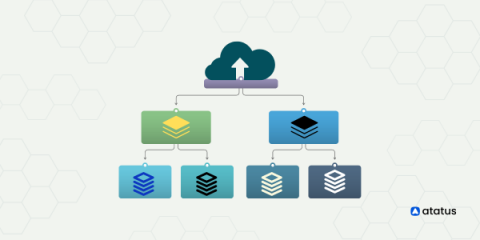
Database Sharding: What is it, and How it Works?

Today’s world runs on data. We are constantly improving our solutions thanks to the plethora of data available to us in the public domain. Our society has seen a behavioral change when it comes to formulating remedies. We are increasingly adopting data-driven decisions, and rightly so. Now, talking about this whole data logic, where do you think this enormous amount of data gets stored? Well, the answer is a database!
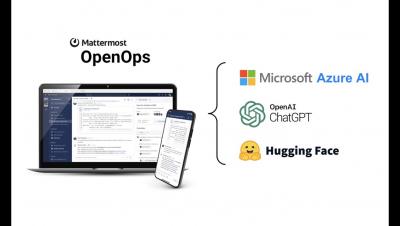
Introducing the Mattermost OpenOps sandbox for GenAI

OpenOps is an open source, AI-enhanced chat collaboration sandbox to accelerate the responsible evaluation of generative AI models applied to real-world workflows. Use OpenOps to connect a local Mattermost instance with Microsoft Azure AI, OpenAI, and LLMs from Hugging Face and explore AI with full data control in a multi-user pilot for your team.

The Cost of Upgrading Hundreds of Kubernetes Clusters

At Qovery, we manage hundreds of Kubernetes clusters for our customers on different Cloud Providers. For most non-operational people, it’s hard to understand what it means behind the scene, the amount of work it represents, pitfalls we can encounter, and associated complexity. Our customers are coming for several reasons, but they’re all happy to have Qovery management on the Kubernetes maintenance and upgrade stack. On our side, it’s too many clusters to manage them manually.

Benefits of GitOps in IT app development

Benefits of GitOps in IT monitoring The GitOps model has gained popularity as a software development approach. It enables IT teams to deliver higher-quality software faster and more efficiently. By streamlining and automating the development process, GitOps provides substantial productivity improvements while ensuring comprehensive observability for monitoring and control.

Azure Incident Management with Escalation Policy

These days, businesses heavily rely on cloud services like Microsoft Azure to power their operations. While Azure provides robust infrastructure and services, occasional issues and incidents can still occur. Serverless360 provides enhanced capabilities to monitor and manage Azure incidents in a system. But to ensure seamless operations and timely resolution of problems, it is crucial to have a well-defined escalation policy in place for Azure Incident Management..

Monitoring with Graphite: Architecture and Concepts

In this article, we provide a concise guide to help you get started with Graphite quickly and efficiently. We cover the basic concepts, architectural considerations, and metrics aggregation of Graphite. We also explain the data feeding methods, metrics format, and storage using Graphite's file-based database. Additionally, we discuss visualization options, including Graphite-Web and Grafana.

Canonical Joins Eclipse Adoptium Working Group to Strengthen Commitment to Open Source Java Runtimes

Canonical, the company behind Ubuntu, is thrilled to announce its membership of the Eclipse Adoptium Working Group. As an esteemed project under the Eclipse Foundation, the Adoptium Working Group brings together renowned OpenJDK builders and distributors such as Alibaba, Azul, Huawei, IBM, Microsoft, Red Hat, Rivos, and, most recently, Google.

Densify Named a Market Leader in GigaOm Radar Report for Cloud Resource Optimization

June 27, 2023 We were excited to learn last week that GigaOm named Densify as both a Leader and an “Outperformer” in its new report “Radar for Cloud Resource Optimization”. This was particularly meaningful to us for a few reasons.

Top 8 Tools to Build Your Own PaaS

Building your own PaaS (Platform as a Service) can revolutionize the way you deploy and manage applications. One of the key advantages of a custom PaaS solution is its ability to streamline the complete application life cycle. With a well-designed PaaS environment, developers can easily package their applications, define dependencies, and deploy them seamlessly across various cloud environments. This simplifies the deployment process, reduces time-to-market, and ensures consistent application delivery.