Operations | Monitoring | ITSM | DevOps | Cloud

The latest News and Information on DevOps, CI/CD, Automation and related technologies.

Why test data management is becoming increasingly important to the C-suite

We recently sat down with James Phillips, CIO at Rev.io, to talk about test data management (TDM) and the growing attention it’s getting from the C-suite. It’s been prompted by the recognition that provisioning test and development environments with realistic production-like data improves the quality of code being developed, reduces errors, and deliver new features to customers faster.

What is an IDE?

An IDE (integrated development environment) is software that combines all the functions needed for development in one place. Without an IDE, developers would need to use both a text editor to enter code and a separate compiler to make the program understandable to the computer. An IDE combines these features into one tool, making development more efficient.

NoSQL Databases: The ultimate Guide

Today, many companies generate and store huge amounts of data. To give you an idea, decades ago, the size of the Internet was measured in Terabytes (TB) and now it is measured in Zettabytes (ZB). Relational databases were designed to meet the storage and information management needs of the time. Today we have a new scenario where social networks, IoT devices and Edge Computing generate millions of unstructured and highly variable data.

Linux CPU Utilization - How To Check Linux CPU Usage

CPU utilization is a crucial metric for measuring system performance and identifying potential bottlenecks in Linux systems. This article explores the concept of CPU utilization, factors contributing to high CPU usage, and various command-line tools and graphical utilities for monitoring and troubleshooting CPU utilization in Linux environments.

Optimizing On-Call for Incident Management: Preventing Team Burnout with Rootly On-Call

Rootly On-Call streamlines incident management with automated scheduling, noise reduction, and centralized documentation. It mitigates on-call fatigue with features like flexible overrides, shift visibility, and shadow rotations, enhancing team well-being and preventing burnout.

Fault Injection in your release automation

One of the real successes of the Agile Software development movement has been the push to have regular, frequent deployments. This has manifested as build and deployment automation and the general adoption of CI/CD. As engineers automate more processes of their software release lifecycle, an important question is how to automate Quality Assurance, which includes resilience testing and, more specifically, Fault Injection.

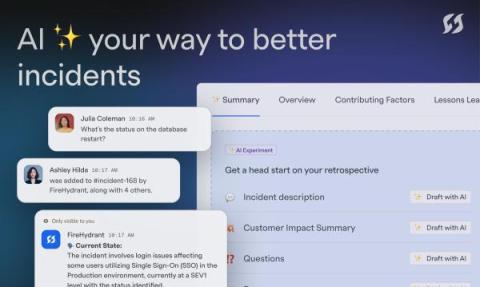
FireHydrant is now AI-powered for faster, smarter incidents

Over the last five years we’ve seen our customers run 583,954 incidents more efficiently thanks to a shared workspace, powerful Runbook automations, and auto-captured data. Yet despite a great deal of progress, incident efficiency hasn’t achieved peak potential. We talk to a lot of folks that are still stuck in the muck: new responders struggle to get up to speed quickly, incident commanders wade through post-incident drudgery, and knowledge silos prevent comprehensive improvements.