Operations | Monitoring | ITSM | DevOps | Cloud

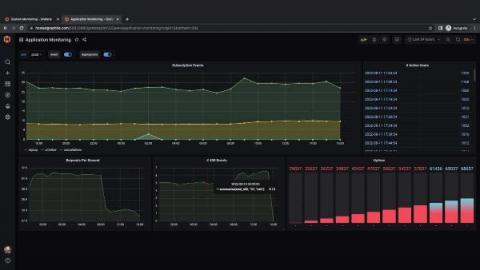
Using An Infrastructure Monitoring Dashboard

As businesses embrace more cloud-native technologies and IT infrastructure becomes more dispersed, they must connect their business goals and end-user experience with the availability and performance of their IT infrastructure. This change necessitates infrastructure monitoring to assure compatibility with cloud environments, operating systems, storage, servers, virtualized systems, and other components.
Improving Digital Experience isn't just for Customers. Your Employees Matter, too.

Let’s face it: when it comes to Digital Experience monitoring, the customer is always the first thing organizations focus on. They are the ones who give the organization their reason to exist, and their satisfaction determines the organization’s future. The link between revenue and good Customer Experience is obvious, so it’s a hot topic of interest and often the top priority – as it probably should be.

Why and how to use Rust on Ubuntu

Rust has been the language most loved by developers for the last 8 years and it is seeing increased adoption by software companies of all sizes. However, its many high-level rules and abstractions create a steep initial learning curve which can leave the impression that Rust is the preserve of a select few but this couldn’t be any further from the truth. Let’s examine why Rust is often a great choice and take a look at how to get started with it on Ubuntu.

Cribl Search Adds 500% More Searchable Datasets

It’s been about 8 months since we first launched Cribl Search. For our early adopters, it’s been a game changer, and with each monthly release, we continue to innovate — expanding access to new datasets and adding new functionalities. If Crib Search is new to you, here is a quick recap. Cribl Search flips the observability data search paradigm on its head. You no longer have to collect, ingest, and index your data before you can search it.

Accelerate Your Cloud Journey with Azure Storage Global Accelerator!

Are you ready to supercharge your cloud experience and take your applications to new heights? Look no further! Azure Storage Global Accelerator is here to rev up your cloud journey like never before. If you’ve ever felt like your data needed a boost to reach its destination faster, then this innovative service from Microsoft Azure is exactly what you need.

Up to 70% metrics storage savings with TSDS enabled integrations in Elastic Observability

The latest versions of Elastic Observability’s most popular observability integrations now use the storage cost-efficient time series index mode for metrics by default. Kubernetes, Nginx, System, AWS, Azure, RabbitMQ, Redis, and more popular Elastic Observability integrations are time series data stream (TSDS) enabled integrations.

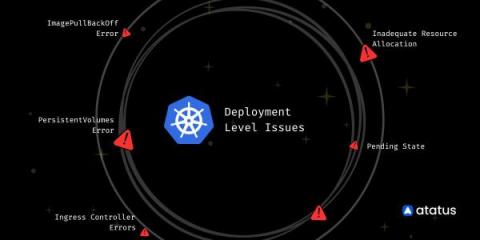
Troubleshooting Kubernetes Deployment at Every Level!

Kubernetes has emerged as the de facto standard for container orchestration, with its ability to automate deployment, scaling, and management of containerized applications. However, even with the best practices and expertise, Kubernetes deployment can sometimes be a complex and challenging process. It involves multiple layers of infrastructure, including the application, Kubernetes cluster, nodes, network, and storage, and each layer can have its own set of issues and challenges.

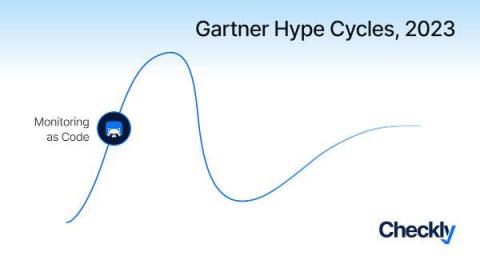
Gartner recognizes Monitoring as Code as emerging practice

I’m thrilled to announce that Gartner added Monitoring as Code (MaC) as an emerging practice into their Hype Cycles for Monitoring and Observability and Site Reliability Engineering. We are extremely hyped about this recognition and being listed as a vendor innovating in that space. Since we founded Checkly, our vision has been that monitoring should be set up as code and live in your repository; it must be open-source based and feel natural for developers.