Operations | Monitoring | ITSM | DevOps | Cloud

The latest News and Information on IT Networks and related technologies.

How to Scale with DX UIM's Monitoring Configuration Service, Part 1: Introduction

For today’s IT operations teams, the stakes keep getting higher and demands only intensify. The services these teams are responsible for managing play an increasingly critical role in the prospects of the business, which means optimizing service levels is an absolute imperative. Meanwhile, the environments in play only seem to keep getting larger, more complex, and more dynamic. Given these factors, monitoring is a task that keeps getting more vital and more difficult.

Announcing HAProxy Data Plane API 2.6

In HAProxy Data Plane API version 2.6, we continued the effort of expanding support for HAProxy configuration keywords, as this has been the priority with this release cycle, and it will be in the next one too to meet our goal of achieving complete feature parity with both the HAProxy configuration and Runtime API. This will enable you to use HAProxy Data Plane API for configuring HAProxy without any gaps in functionality.

Phil Gervasi on Network Observability and Cisco Live | Network AF Episode 20

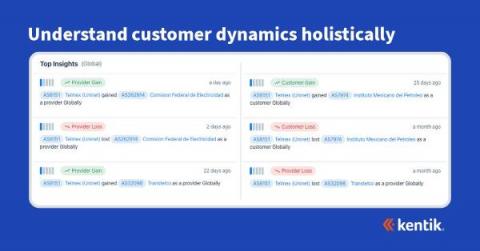
Phil Gervasi, Kentik's Head of Technical Evangelism stops by Network AF today to speak with host Avi Freedman about all things network observability and to recap their experiences at Cisco Live. Phil was a network engineer for 15 years before switching to marketing and finding his way into technical evangelism. In this conversation the two focus on building a foundation for data mining and collecting information that could better inform network intelligence and insights from observability platforms like Kentik.

Voice Network Fraud: How to Fight Back with Automated Threat Prevention

Telecommunications fraud is estimated to be a $39 billion a year problem according to the Communications Fraud Control Association. Despite that, less than 50% of enterprises* have implemented any sort of strategy to address fraud in their voice infrastructure. Firewalls and SBCs are not enough to provide a secure voice network. Enterprises need a more complete approach to network security—one that encompasses the unique vulnerabilities of real-time communications systems—to preempt issues and protect the organization as a whole.