Operations | Monitoring | ITSM | DevOps | Cloud

The latest News and Information on Containers, Kubernetes, Docker and related technologies.

7 reasons Civo's UK sovereign cloud secures regulated workloads

Sovereignty is one of those words that gets stretched until it means almost nothing. Vendors apply it to any infrastructure with a UK data center, regardless of who owns the parent company or which jurisdiction's courts govern the contract. For a developer running a personal project, that ambiguity is probably fine. For a fintech under FCA oversight, an NHS trust processing patient data, or a legal firm handling privileged communications, it isn't.

How to deploy PostgresSQL on Kubernetes

Kubernetes is a container orchestration platform that automates the deployment, scaling, and management of containerized applications, abstracting many of the manual steps of rolling upgrades and scaling. When building cloud-native applications in a Kubernetes environment, you’ll often need to deploy database applications like a PostgreSQL database so that your applications can leverage their features within the cluster.

Your Most Expensive Kubernetes Costs Have Been Hiding In The Wrong Bucket

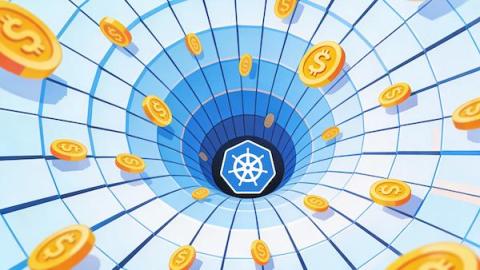
If your organization is running AI or machine learning workloads on Kubernetes, the bill is real. GPU instances are among the most expensive resources in cloud infrastructure, where a single high-end node can run $30 to $40 per hour, and a multi-day training job on a cluster can cost tens of thousands before anyone looks up from their terminal. What most engineering and FinOps teams haven’t been able to do (until now) is connect that spend to the workloads that caused it.

Managing Kubernetes deployment YAML across multi-cloud enterprise fleets

At enterprise scale, managing provider-specific Kubernetes YAML across multiple clouds creates crippling configuration drift and operational toil. By adopting an agentic Kubernetes management platform, infrastructure teams abstract cloud-specific configurations (like ingress controllers and storage classes) into a single, declarative intent that automatically reconciles across 1,000+ clusters.

Konstruct product updates: Hosted control planes and multi-cloud

March signified a very important period for the Konstruct team, where we were able to focus on something we’ve heard consistently from teams: reduce the time to value without compromising control. In the previous post, we walked through how Konstruct 0.1–0.3 established the core platform model, introduced templates, and expanded GitOps into something that can represent both infrastructure and applications. With 0.4, we’re taking a more opinionated step forward.

#055 - From Enterprise Java to Kubernetes and AI-Driven Infrastructure with Dan Hicks (Boomi)

Dan breaks down the fundamental similarities and stark differences between application development and platform engineering. He shares the unexpected hurdles he faced during his transition, from complex networking and CoreDNS latency to the harsh realities exposed by chaos testing in cloud environments.

2026 CMA investigation: What it means for the cloud industry

The UK’s Competition and Markets Authority (CMA) has now set out its latest actions under the Digital Markets Competition Regime (DMCR), following its multi-year Cloud Services Market Investigation. While the regulator has now expanded its focus into business software ecosystems, we must not lose sight of the core issue: the entrenched dominance within the UK's cloud infrastructure.

Kubecost Vs. OpenCost: What's The Difference? (Updated 2026)

Kubernetes (K8s) adoption has exploded over the past few years. But it hasn’t been easy to monitor, manage, and optimize K8s costs. To provide greater cost visibility into Kubernetes clusters and environments, Kubecost launched in 2019 and was acquired by IBM in 2024, while OpenCost debuted in 2022. OpenCost has several founding contributors. But Kubecost developed the cost allocation engine that the OpenCost implementation uses.