Operations | Monitoring | ITSM | DevOps | Cloud

The latest News and Information on Cloud monitoring, security and related technologies.

Your AI Economics Pulse for October 2026

Across a same-store panel of 422 CloudZero customer organizations, AI reached 3.02% of the median company's cloud bill in September 2026, up 37 basis points from 2.66% in August, the largest monthly gain since we began tracking. The 75th percentile rose to 12.55%. The share of organizations spending at least $1,000 a month on AI barely moved, to 68.0%. Companies already spending drove the growth. Last month we called the median the least informative number in this report. September proved us wrong.
Shipped: Period-by-period costs in Explorer, no spreadsheet required

Finance teams reconcile cloud spend period by period. They want each month, week, or day in its own column, so they can scan across a row and see how a service or team changed over time. Explorer’s Aggregate view already answers “what changed and by how much.” But when the question is “what did we spend in June, July, and August, line by line,” that summary needs to become a grid.

Kimi API pricing in 2026: the K3 ladder, the August retirement, and what Moonshot really charges

Kimi API pricing, per million tokens: the flagship Kimi K3 costs $3 input and $15 output with a $0.30 cache-hit rate and 1M context. Kimi K2.6 and the coding-tuned K2.7 Code both run $0.95/$4.00 on 256K context. Kimi K2.5 and the legacy V1 family were retired August 31, 2026.

Cut your debug time by reproducing production on demand

If a bug only shows up under real production conditions, the fastest path to a fix is removing the guesswork about those conditions, not layering on more debugging tools. This guide walks through what changes when every branch gets its own preview environment, a full clone of production available on demand, and what that actually looks like day to day.

The October 8, 2026 Google Cloud Storage Outage

Google Cloud Storage in us-central1 (Iowa) had elevated latency and error rates on upload and write operations on October 8, 2026, and a smaller subset of reads was also affected, according to Google's incident page. Google records the start at 11:00 UTC and the end at 23:30 UTC the same day - 12 hours 30 minutes. The outage report - fetched on October 12, 2026 - includes a preliminary incident report as of this writing.

What Is High Availability? How It Works and How Many Nines You Actually Need

High availability (HA) is a system’s ability to keep serving users when individual components fail, from a single server up to a whole cloud region or provider. It is measured in nines: 99.9% allows about 8 hours 46 minutes of downtime a year, 99.99% about 52 minutes, and 99.999% about 5 minutes 15 seconds. HA works by removing single points of failure through redundancy, health checks, automatic failover, and replicated data.

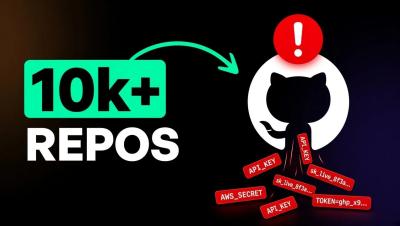
7 Layers of Agent Security (1 in 6 repos has leaked credentials)

I scanned 10,705 public GitHub repos for leaked credentials. After removing obvious placeholders, 3,543 still had something that looked like a key, and 1,680 held almost 7,000 credentials in recognizable formats like Stripe keys. If you're new to coding with agents (or you've been a dev for decades), this is the setup I'd want you to have before you ship anything public.