Operations | Monitoring | ITSM | DevOps | Cloud

5 Signs Your In-House Ops Team Has Hit Its Ceiling (And What to Do Next)

Every small ops team reaches a point where the work outgrows the people. Tickets arrive faster than they close, the pager goes off at 2 a.m. for the third time this week, and the roadmap quietly slips another quarter. Leadership sees missed deadlines. The team sees a system with no slack left in it. The hard part is spotting the ceiling before it turns into attrition or an outage. This article covers five warning signs that a team is stretched too thin, then shows how to decide what to keep in-house and what to hand off.

3W Philanthropic Ventures on Why Digital Wealth Calls for More Coordinated Legacy Planning

A founder holds equity in a startup that could redefine an industry. An artist's most valuable works exist solely as digital files. A family's generational wealth is increasingly tied to royalty streams from online content or intellectual property with no traditional market. These scenarios are no longer hypothetical; they are the new reality of wealth. As more fortunes are built and held in digital businesses, alternative assets, and technology-driven ventures, the established frameworks for legacy and philanthropic planning are being tested.

Holiday readiness: run your first load test with skills

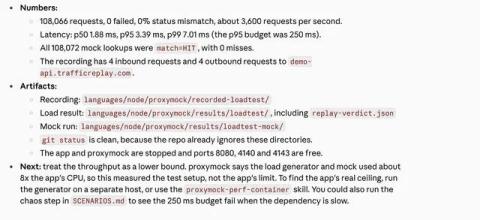
Before you can answer whether checkout will survive Black Friday, you need a test you can rerun. In this demo, we used a coding agent and the Speedscale skills to record a Node app, mock its downstream API, and run a 30-second load test with 10 virtual users. That’s a small first step in holiday readiness. It gives you a working test and a result to inspect, with time left to fix what you find before a code freeze.

pgvector for RAG: When you don't need a dedicated vector database

Dedicated vector databases have become such a standard part of the RAG conversation that teams often add one before they have proved they need it. According to studies, over 70% of companies using LLMs are using vector databases and RAG to customize their models. That shows how quickly the pattern has become normal. However, it does not mean every RAG application needs a separate retrieval system. If your application already runs on PostgreSQL, pgvector may be enough.

Restoring Compliance After Missed SAP Patch Cycles

Avantra restores SAP compliance after missed patch cycles by measuring the real gap on every system, automating the catch-up in risk order, and monitoring continuously afterward. A missed cycle can leave SAP operations out of compliance or exposed to documented vulnerabilities, and until each system is assessed, the impact is unknown. Getting “back to good” requires three steps: The patching itself is rarely the hard part.
Sponsored Post

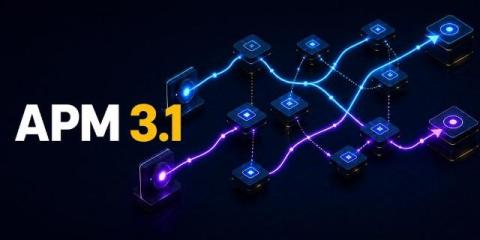
Raygun APM Agent 3.1: async traces that stay with the right request

Raygun APM Agent 3.1 introduces more accurate asynchronous request tracing for Windows, Linux, and Azure App Service. Version 3.0 rebuilt the foundation of the Agent, profiler, installers, and release pipeline. Version 3.1 builds on that work with a focused improvement for ASP.NET Core: automatic request correlation that follows asynchronous execution without requiring developers to instrument their application. The result is a more accurate trace, with less duplication and a clearer view of the work performed for each web request.

On SQLAlchemy 2.1.0 or 2.1.1, Fixing an N+1 Could Change Your Results

The standard fix for an N+1 query in SQLAlchemy is to eager load the relationship with selectinload(). On SQLAlchemy 2.1.0 and 2.1.1, that fix can change your results. A regression in those two releases makes selectinload() ignore part of the join condition on some many-to-many relationships. The query gets faster, and it also returns related rows that the relationship was defined to exclude. It’s fixed in 2.1.2, released October 2.

New features: ilert AI SRE GA, ilert CLI, Compass and more

ilert AI SRE is now generally available. Alongside it, this quarter brings Compass, a lifecycle assistant that surfaces the next move during an incident, a dedicated space for postmortems, rich incident cards in Microsoft Teams and Google Chat, on-call schedules that follow support hours and holidays, a new CLI, and dark mode. Here's everything that shipped.

Shadow AI: How to Find And Control The AI Tools Your Company Didn't Approve

Shadow AI on company computers often starts with an AI agent that an employee installed on their own, signed in with a personal subscription and connected to internal systems through a Model Context Protocol (MCP) server. Shadow AI is one branch of shadow IT, with a shorter path from install to impact: these tools set up quickly, act on files and systems, and work under whatever account the employee chose. This guide skips the long definitions and goes to the practical part.