Operations | Monitoring | ITSM | DevOps | Cloud

The latest News and Information on Log Management, Log Analytics and related technologies.

Debunking Myths About Cyberattack Complexity in 2022

Stoking fears about the threat landscape is a popular approach, and one that I don’t particularly care for. Many will tell you that the threat landscape is constantly changing, that threats are getting more complex, and that actors are getting more sophisticated. “The whole world is getting more difficult and scarier, so buy our stuff!” There’s a ton of media sensationalism too, with the popular image of the hacker sitting at a computer, wearing a dark hoodie.

How Cribl Stream Helps Enterprises Handle UDP Syslog Challenges

Syslog is a very common method for transmitting data from network devices and open systems servers data to analytics platforms like Elastic and Splunk. As adaptable as syslog is, it still has significant constraints, which is a pain for most companies that lack the resources to scale their capability needed for syslog.

Greater Self-Service Private Apps on Cloud with New AppInspect Tags

We're excited to announce that starting with the new Splunk Cloud Product 9.0.2205 release, it's easier to create, manage and use private apps. Although Splunk is great by itself, we can all agree that the real value of Splunk comes from all the applications that Developers, SplunkTrust folks and Splunkers build.

New capabilities: Sumo Logic expands Real User Monitoring (RUM)

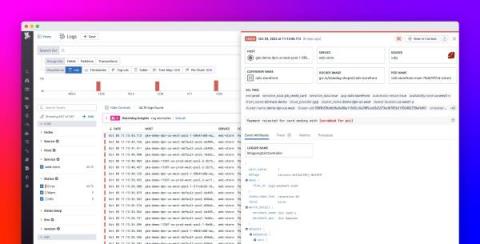
Monitoring the digital experience of users is a must-have these days. Ensuring the end clients are satisfied is difficult though. People are not keen to provide feedback; they just change the vendor without explanation. It is, therefore, crucial to build enough observability into a front-end application (a web page or a mobile UI) so it can tell the story of how well the user perceived the interaction within the application.

Scaling Syslog: The Challenge That Never Goes Away

At this point, you already know how powerful syslog is (and if you don’t, check out “Introduction to Syslog”). But here’s the thing: Scaling your systems to consume high volume syslog is like fighting zombies. Weird unexpected behavior and no easy solutions. Before you fight zombies, though, you have to understand them. So, here are the challenges for scaling syslog one by one.

Synthetics 8.4.0 - Elastic Observability

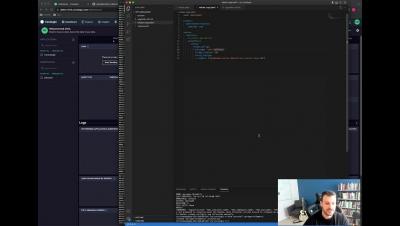
Elastic 8.4.0 was released in August. In this video we cover what's new in 8.4.0 Observability, and go through demos of the newest features in monitor management, data retention, and the public beta. Join Synthetics Tech Lead Andrew Cholakian, and Synthetics Engineer Justin Kambic for the latest in Elastic Synthetics.

Online Learning: a Novel Approach to Applying Machine Learning in Splunk

Most classical, batch-oriented machine learning systems follow the paradigm of “fit and apply”. In an earlier blog post, I discussed a few patterns on how to better organize data pipelines and machine learning workflows in Splunk. In this blog, we’ll review how you can organize your machine learning model in a new way: online learning.

Database Decision-Making for Observability, from Simple to Complex

A goal of open-source observability is unifying several different signals to provide the observability everyone wants. It’s always interesting to speak to people on this journey, and how they try to provide it through open-source projects, and the challenges they can face. I was thrilled to host Pranay Prateek on the most recent episode of the OpenObservability Talks podcast.

Distributed Tracing Observability in Microservices

Have you ever tried to find a bug in a multi-layered architecture? Although this might sound like a simple enough task, it can quickly become a nightmare if the system doesn’t have proper monitoring. And the more distributed your system is, the more complex it becomes to analyze the root cause of a problem. That’s precisely why observability is key in distributed systems. Observability can be thought of as the advanced version of application monitoring.

Improve your application monitoring by reducing overhead of managing and updating alert rules

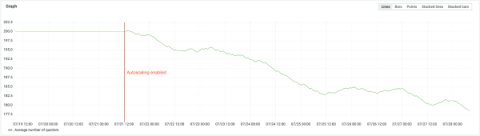
Just about every organization today relies on key applications running on complex multi-cloud environments to transact business and enable users to work. It is critical to ensure that those applications are running optimally. A solid monitoring and alerting system is required to know when an issue needs attention. But having a robust monitoring system is not enough.