Operations | Monitoring | ITSM | DevOps | Cloud

AI Needs Better Inputs: Why Observability Is Becoming the Foundation of Enterprise AI Maturity

Organizations across industries are accelerating their investments in AI for operations, yet the path to meaningful impact is proving far more complex than early expectations suggested. Analysts at Gartner, Forrester, Deloitte, and McKinsey continue to highlight the same structural barrier. AI cannot produce accurate predictions or safe automation when the operational data feeding it is fragmented, incomplete, or inconsistent.

Solving the Ticket Noise Problem: What We Learned from Our ServiceNow Webinar

On March 18th, we hosted a session focused on a challenge that continues to undermine even the most mature IT operations teams: ticket noise. It’s easy to dismiss noise as just “too many alerts”. But as we explored in the webinar, the real issue runs deeper. Ticket noise is a symptom of something more fundamental — a lack of correlation, context, and shared visibility across the stack.

Observability Is Now a Boardroom Priority Even If Nobody Wants to Say It Out Loud

Executives rarely state the full truth publicly, but inside boardrooms the conversation has changed. Observability, once viewed as a technical capability deep within operations, has become a strategic requirement for understanding business performance. Leaders may not always use the term itself, yet they focus intensely on the outcomes it promises. Their environments have grown too fast, too fragmented, and too interdependent for traditional visibility approaches to keep pace.

Why This Fortune 500 Chose Agentic AI Over Traditional AIOps

What does real enterprise-ready Agentic AI look like in production? In this video, we break down how a Fortune 500 enterprise used Fabrix.ai’s Agentic AI platform to detect, diagnose, and resolve a critical application issue in just 5 minutes—without moving their data or replacing existing tools. If you're exploring Agentic AI, AIOps, or enterprise automation, this is a must-watch.

Resolve's Agents of IT podcast - Ep. 15 - Nora Osman, CEO of Norvana

What separates average IT support from truly exceptional service? In this episode of Agents of IT, Ari Stowe sits down with Nora Osman, CEO of Norvana, to unpack how the best organizations are transforming service delivery by combining AI, automation, and human empathy. Nora shares real-world lessons from leading large-scale service transformations, including how a simple shift in perspective turned a struggling service desk into a high-performing customer experience engine. Her approach is clear. Technology alone is not enough. You need context, empathy, and purpose.


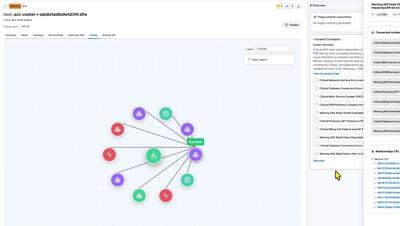
Incident correlation: Cross-domain visibility. Smarter triage. Faster L1 teams.

IT incidents are rarely isolated. A network disruption can trigger degradations in infrastructure, which can ripple and cause application errors and end up causing a flood of user complaints. When an L1 operator looks at a single incident, they see only part of the story. Outside their immediate scope, other incidents are actively occurring that are either directly related or impacted by the same underlying cause. Without broader visibility, there is no way to know.

The Hidden Tax of Complexity: Why Modern Environments Cost More Than Leaders Realize

Enterprises rarely notice the moment complexity begins to reshape their environment. Growth initiatives move forward. New cloud services are adopted. Modernization programs introduce new architectures. Business units implement tools that solve immediate problems. Acquisitions add their own ecosystems. Each change is logical in isolation. The cumulative effect becomes something else entirely.
Sponsored Post

The AI Readiness Paradox: The Agentic Value Gap And The Agentic Operational Model

The disconnect between enterprise confidence and AI capability is real. MIT reports fewer than 5% of enterprises have achieved measurable ROI from AI, yet Cisco claims 13% feel ready. The gap isn’t about AI technology—it’s about organizational rigidity and change management. More importantly, most studies focus on business intelligence rather than operational use cases, which are far less risky and more measurable.

Resolve's Zero Ticket Minute - Ep. 15 #agenticai #itautomation #aiautomation

Agentic AI can act, decide, and resolve on its own. Powerful, but it comes with real risk. Without the right guardrails, autonomy can lead to data exposure, compliance issues, and unintended actions at scale. This episode shows how to keep control with governed, deterministic automation.

Resolve Reels - Ep. 1 - The Agentic API Caller

What if you could go from request to result, instantly? No workflows to build. No APIs to chain. Just describe what you need. Resolve handles the rest. It selects the APIs, orchestrates the steps, and delivers the outcome in real time. This is agentic automation in action. Welcome to the Autonomous Enterprise. Watch now and see it in action#AgenticAI.

The Cognitive Ceiling: Why Modern Environments Outgrew Human Interpretation

For more than a decade, organizations invested in tools and telemetry with the belief that more visibility would create more control. Monitoring expanded across cloud, application, network, and infrastructure layers. Observability platforms entered the mainstream. Automation tools promised faster detection and improved coordination. Yet despite these advancements, incidents are not easier to understand. War rooms still fill with conflicting interpretations. Signals generate more questions than answers.

How agentic ITOps overcomes observability tool gaps

As enterprise ITOps teams monitor increasingly complex, cloud-based, containerized systems, traditional observability practices are struggling to keep up. As IT infrastructure complexity increases, the typical response is to layer on more monitoring, logging, and instrumentation.

How agentic AI for ITOps overcomes observability tool gaps

As enterprise ITOps teams monitor increasingly complex, cloud-based, containerized systems, traditional observability practices are struggling to keep up. As IT infrastructure complexity increases, the typical response is to layer on more monitoring, logging, and instrumentation.

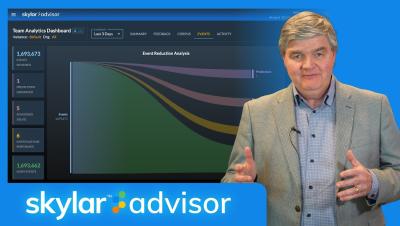
How Does Skylar Advisor Cut Alert Noise?

What if you could start your day without hundreds of alerts? Skylar Advisor transforms noisy event streams into a short list of prioritized advisories by grouping related alerts and signals together. It shows what is happening in your environment, explains why it matters, and provides clear next steps so instead of chasing alerts, IT teams get guidance focused on real operational impact.

How GDIT Automated Early Response to Preserve Critical Event Context

In this video, Jason Boig, Solutions Engineer at GDIT, shares how his team uses ScienceLogic to streamline network infrastructure monitoring and improve response times. Instead of relying on manual processes after an alert is triggered, ScienceLogic helps automate the initial response and capture critical data the moment an event occurs. This ensures nothing is lost as conditions change and gives teams immediate visibility into issues.

The Hidden Crisis in Modern IT: Interpretation Risk

Technology leaders spent the past decade investing heavily in visibility. They expanded monitoring footprints, adopted cloud-native observability tools, integrated analytics dashboards, and layered on automation intended to streamline detection. Every addition promised deeper insight. Every initiative aimed to bring clarity to increasingly complex environments. Yet operations feel more chaotic, not less. Outages move faster. Incidents cross more boundaries. Signals appear without context.

Episode 8 - The Rise of Autonomous Teams

In this episode of The Intelligent Enterprise, host Tom Stoneman takes us inside the evolving use-cases for AI across different enterprises. Digitate recently conducted a survey of over 600 IT decision makers from across North America. The aim was to get a better sense of how AI tools are being implemented across workplaces — and the results are fascinating.

Cloud Observability Is Broken - Hybrid Operations Need a New Intelligence Model

Cloud adoption was supposed to simplify operations. Infrastructure would become programmable, scalability would become elastic, and distributed architectures would enable resilience at global scale. In practice, cloud has delivered extraordinary flexibility, but it has also introduced a level of operational complexity that traditional observability approaches were never designed to handle.

Why Generic AI Fails in Ops: What Trustworthy Actually Requires

Enterprise operations reached a point where complexity outpaced human interpretation and outgrew the capabilities of generic AI. As environments became more distributed and interdependent, every incident, anomaly, and degradation produced ripple effects across systems that require context, lineage, and reasoning. Yet most AI models were not built for this reality. They were trained for general knowledge tasks, not the deeply connected operational truths that define enterprise performance.

Resolve's Agents of IT podcast - S2Ep5 - Ari's Hot Takes #itautomation #claude #aiautomation #ai

In this episode of Agents of IT, Ari Stowe and Ian Coppock unpack the recent Claude outage and what it reveals about our growing dependence on AI at work. From developers suddenly returning to Stack Overflow to the infrastructure challenges behind AI scaling, the conversation explores what happens when AI becomes critical enterprise infrastructure. They also discuss how organizations should prepare for AI outages, why “stampede adoption” is the new reality of AI releases, and what resilient, multi-agent architectures could look like going forward.

Bring Clarity and Confidence Back to Ops: How Trustworthy Guidance Sets a New Standard

For years, enterprises have chased the promise of artificial intelligence as a remedy for growing operational complexity. It seemed logical that if environments were expanding faster than teams could keep up, smarter models could fill the gap. But early deployments of generic AI proved a difficult truth. Intelligence alone does not create operational clarity. It does not guarantee safety.

Episode 6 - The evolution from automation to autonomy

Tom and Akhilesh unpack why automation alone will never deliver autonomy, and why intelligence means anticipating change rather than constantly reacting to it. They explore the role of people in enterprise transformation, the limits of technology without trust and context, and why the most powerful use of AI is freeing humans to focus on what they do best. Plus, Akhilesh makes the case for ping pong as a surprisingly effective way to reset when the pressure is on.

Full-Stack Observability Is Becoming a Business Imperative

As enterprises accelerate digital transformation, technology performance has become inseparable from business performance. Customer experiences, revenue streams, and operational efficiency increasingly depend on the reliability of complex, distributed systems. In this environment, full-stack observability is no longer a technical aspiration — it is a strategic necessity.

Enabling Proactive ITOps with Skylar Advisor

By continuously connecting signals across your IT environment, Skylar Advisor turns operational complexity into clear, prioritized guidance. It highlights potential impact, explains why it matters, and delivers clear next steps so IT teams can act early and stay ahead of alerts before they turn into issues.

The Speed of Clarity: How Grounded Context Transforms Triage and Strengthens Operational Decision-Making

Modern operations move at a pace that leaves little room for ambiguity. When an incident emerges, teams must determine what is happening and how best to respond. Yet triage often slows under the weight of fragmented data, noisy alerts, and limited shared understanding across engineering groups. These conditions stretch routine issues into drawn-out investigations and delay action exactly when teams need to move with purpose.