Operations | Monitoring | ITSM | DevOps | Cloud

APM for Banks and Fintech: Ensuring Stability in High-Transaction Apps

The financial services industry is undergoing a major transformation. According to the McKinsey & Company 2025 Global Payments Report, digital payments continue to dominate, generating approximately $2.5 trillion in revenue from around $2.0 quadrillion in value flows across 3.6 trillion transactions worldwide. In another survey conducted by JP Morgan says that, more than 30 percent of financial professionals reported that faster payments are having a positive impact on their organizations in 2025.

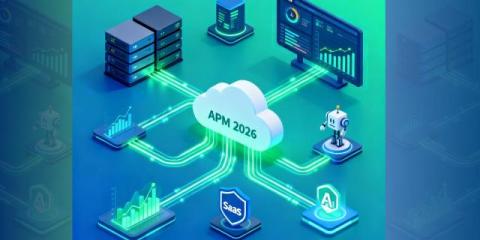
APM in 2026: The New Standard for Business Reliability and Growth

Global IT spending is expected to reach a record $6.08 trillion by 2026, with software investments growing by 15.2%. This shows how critical application performance has become for businesses today. For almost 80% of companies, even one hour of downtime can cost more than $300,000. In a world where every digital experience affects your revenue and brand reputation, keeping your applications performing well is no longer optional.

Datadog vs Grafana (2025) - Costs, Use Cases, and Key Differences

When engineering teams evaluate observability tools, the "Datadog vs. Grafana" debate is one of the most common. The choice is difficult because they represent two fundamentally different philosophies. Datadog is a comprehensive, all-in-one, managed SaaS platform. It offers a "buy" solution where you get a unified experience for metrics, logs, and traces out of the box. Grafana is an open-source, highly flexible visualization layer.

Scaling Java Web Applications: Choosing Between Microsoft Windows and Linux OS

Java is one of the most widely used platforms for supporting web applications. According to RedMonk and TIOBE rankings, Java has consistently remained in the top 4 most popular programming languages worldwide, with millions of developers actively using it. Industry-standard application servers such as WebLogic, WebSphere, Tomcat, and JBoss all run on Java and power a large share of enterprise workloads and Java web applications.

Transform and Migrate Logs with Datadog Custom Processor

See how Datadog’s new Custom Processor in Observability Pipelines helps you transform and migrate logs from platforms like Splunk and Sumo Logic with precision and control. This demo walks through real examples of using VRL (Vector Remap Language) to enrich log data, rewrite timestamps, apply quotas, and securely process archives.

Redefining Frontend Observability with Datadog RUM

Discover how Datadog is redefining frontend observability with Real User Monitoring (RUM). In this demo, see how RUM helps teams detect, investigate, and resolve frontend issues that directly impact user experience and business outcomes. With RUM Without Limits, you get full visibility into every user session, giving you an accurate and comprehensive view of your users’ experiences. Monitor performance, track errors, and understand how your application behaves in real time.

Monitoring Chaos Experiments with New Relic Probe in Harness

New Relic probes in Harness Chaos Engineering let you automatically validate system performance against defined SLOs during chaos experiments, transforming subjective testing into objective, metrics-driven resilience validation. By querying New Relic metrics in real-time and comparing results against your success criteria, you can programmatically verify that your systems maintain acceptable performance levels even under failure conditions.

External Request Monitoring: The Silent Pillar Every APM Needs

The global market for application performance monitoring (APM) is growing fast. Market research shows the industry is expected to rise from about USD 7.52 billion in 2023 to nearly USD 19.62 billion by 2030, with a compound annual growth rate (CAGR) of around 15.1%. This rapid expansion reflects how digital transformation, hybrid cloud adoption, and third-party integrations are reshaping performance monitoring needs. It’s no longer enough to track just internal code paths and database queries.

Why Your APM Needs Observability - Metrics, Logs, and Traces Explained

Modern software applications are increasingly complex. Microservices, cloud infrastructure, and distributed architectures make it challenging for developers, DevOps engineers, and SREs to maintain high performance and a seamless user experience. Traditional Application Performance Monitoring (APM) provides critical insights into how applications perform, but alone, it often leaves blind spots when it comes to diagnosing issues or understanding the full system behavior.

10 Proven APM Best Practices to Reducing Latency and Improving Response Time

Speed defines user loyalty. Recent market research indicates that organizations adopting advanced application performance monitoring (APM) tools are achieving measurable gains in user engagement, retention, and revenue. “ A 2025 performance study found that businesses tracking latency and response time proactively reduced customer churn by up to 30%. ” As applications expand across distributed architectures, microservices, and cloud environments, performance gaps become harder to diagnose.

Top 11 Ruby APM Tools for 2025: A Performance-Driven Selection

Observability has become a core part of running Ruby applications at scale. Knowing how your app performs — from request latency to background job execution — helps catch slowdowns early and improve reliability. This blog walks through some of the most useful APM tools for Ruby in 2025. Each section highlights what the tool does well, where it fits best, and what kind of visibility it brings to your application's performance.

Datadog Cloud Cost Management: Make cost a key metric for engineers

See how Datadog Cloud Cost Management puts cost and efficiency KPIs directly in front of engineers in their daily workflows. In this short demo, you’ll learn how to: Datadog unifies cost, performance, and business metrics in one platform, so FinOps, engineering, and finance teams can make cost-aware decisions together.

Datadog Cloud Cost Management: Telemetry-driven cost allocation

See why Datadog is a leader in cloud cost allocation. In this demo, learn how Datadog leverages high-resolution observability data to deliver accurate, dynamic cost attribution across clouds and containerized environments. You’ll see how Datadog: Discover how Datadog combines cost, performance, and business context to make cost reporting both accurate and actionable.

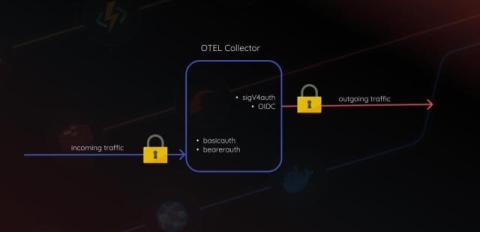
Authentication Model in OpenTelemetry

In any type of software that involves the movement of data or information, there is a pressing need to make the passage of data secure. One way of achieving this is by authentication. You must have experience authenticating API calls or other data streams. In modern systems, where even a small mishap can wreak havoc and you might wake up to a $$$ bill the next day, we should do whatever is within our capacity to secure our systems.

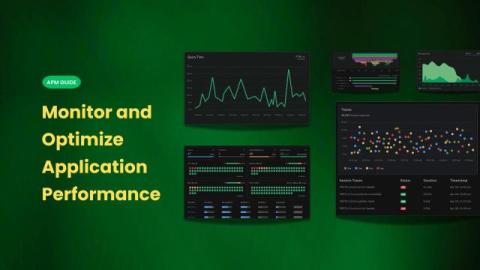
Application Performance Monitoring (APM) Guide: Monitor and Optimize Application Performance

Every millisecond your application takes to respond can decide whether a user stays or leaves. But here’s the catch, you can’t improve what you can’t see. Behind every slow page load, failed API call, or random spike in latency lies a story your application is trying to tell. Application Performance Monitoring (APM) is how you listen to that story.

APM vs Observability: Both-and, not either-or

I'll start this, the third and final entry in my series on APM and Observability, which was originally inspired by my contribution to an APMdigest article, by once again pointing out that APM tools can be built with observability in mind. Many are, in fact. And the ones that aren’t don’t turn into a different type of tool. In my experience, it's more that there's a difference of mindset.

Choosing the Right APM for Go: 11 Tools Worth Your Time

If you’re building high-performance systems, Golang has probably earned a spot in your stack. Its speed, lightweight concurrency, and quick compile times make it ideal for scalable APIs, microservices, and distributed systems. But those same qualities that make Go powerful can make performance monitoring tricky. Goroutines run fast and in parallel, which means a simple CPU or memory graph doesn’t always tell you what’s slowing things down.

Optimize Cloud Costs with Datadog Cloud Cost Management

Datadog Cloud Cost Management unifies observability and cost data so engineering and FinOps teams can drive efficiency together. In this demo, see how you can: Allocate cloud costs across AWS, Azure, Google Cloud, OCI, and SaaS providers with precision Empower engineers by surfacing costs in their daily workflows Automate recommendations to accelerate optimization Monitor your daily Datadog costs - at no additional charge.

15 PHP APM Tools Worth Using in 2025

PHP powers a large swath of the web — from blogs to storefronts to APIs. But with microservices, third-party dependencies, and scaling complexity, performance can slip in subtle ways. Your app might mostly work, but small—noted delays, occasional spikes, or hidden bottlenecks build up. An APM tool helps you see inside the black box: which functions are slow, which DB queries are hogging time, which external calls are failing or stalling.

How to Scale Prometheus APM for Modern Applications

When developers monitor application performance, they pick one of two paths: traditional APM tools with distributed tracing and code profilers, or metrics-driven monitoring with Prometheus. The second approach — Prometheus APM — tracks the signals that matter most: request rates, error rates, latency, and resource utilization. No agents to install, no per-host pricing, just exporters and PromQL. For most teams, Prometheus APM is where monitoring starts.

Datadog vs Splunk: A Side-by-Side Comparison [2025]

Datadog and Splunk are both leading tools for monitoring and observability. Each offers a range of features designed to help you understand and manage your data. Datadog provides tools for tracking application performance and analyzing logs in real-time. Splunk, meanwhile, is known for its powerful log analysis and search capabilities. In this post, we will compare Datadog and Splunk on important aspects like APM, log management, search capabilities, and more.
Sponsored Post

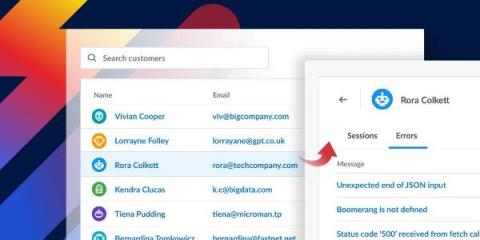
3 secure ways to handle user data in Raygun

You know the feeling: You're right in the middle of cracking a really convoluted coding problem, when an urgent support ticket pops up. It's not just any ticket; it's from a VIP customer with a high-severity issue demanding resolution within an hour. You have to drop what you're doing and scramble, completely context-switching and losing all your momentum.

New Dashboards and Reports for Kubernetes Monitoring

This is just a quick blog to draw attention to some new and enhanced monitoring dashboards and reports we have added to eG Enterprise in our latest release (v7.5) to provide quick and powerful overviews when monitoring a range of Kubernetes technologies. As with all our dashboards, color-coded overlays provide guided drilldown for help desk operators and administrators.