Operations | Monitoring | ITSM | DevOps | Cloud

Top 10 CI/CD Security Risks and Solution

In the realm of Continuous Integration and Continuous Deployment (CI/CD), security is paramount. However, as organizations rapidly adopt CI/CD practices, several security risks emerge. Understanding and mitigating these risks is crucial to maintaining a secure and resilient software delivery pipeline. Below is a detailed exploration of the top 10 CI/CD security risks.

Build and deploy a Dockerized OpenCV application on AWS Lambda

OpenCV is a powerful open source computer vision and machine learning software library for real-time applications. It provides multiple functionalities, including image processing, object detection, and video analysis, making it a fundamental tool for researchers and developers in the field of computer vision. You can deploy your OpenCV applications using AWS Lambda, a serverless compute service that lets you run code without provisioning or managing servers.

Manage Ansible Collections with JFrog Artifactory

If you work with virtual machines or install and configure software on EC2 or leverage dynamic runtimes, chances are you’re also using Ansible. In fact, JFrog has supported installation via Ansible for some time. If they’re not using Red Hat, the way most organizations have managed their Ansible Collections – including Roles – is by storing them in Git repositories.

What are microservices, and how do they relate to DevOps architecture

Microservices are an architectural style that structures an application as a collection of small, loosely coupled, and independently deployable services. Each service in a microservices architecture focuses on a specific business function and communicates with other services through well-defined APIs, typically over HTTP/REST or messaging queues.

Expanding Artifactory's Hugging Face Support with Datasets

When working with ML models, it’s fair to say that a model is only as good as the data it was trained on. Training and testing models on quality datasets of an appropriate size is essential for model performance. Because of the intricate link between a model and the data it was trained on, it’s also important to be able to store datasets and versioned models together.

Integration roundup: Monitoring the health and performance of your container-native CI/CD pipelines

Widespread adoption of containerized infrastructure has been closely followed by an explosion of container-native tools for each layer of the stack, including new solutions for managing CI/CD pipelines in container-based environments, such as the Argo suite, FluxCD, and Tekton. This is because these lightweight solutions make it easier to automate builds, testing, deployments, and more on Kubernetes, as well as other platforms that manage containerized workloads and services.

Core CI/CD Concepts: A Comprehensive Overview

In the fast-paced world of software development, the ability to quickly and reliably deliver software is paramount. This need has led to the evolution of CI/CD—Continuous Integration, Continuous Delivery, and Continuous Deployment—practices that streamline and automate the development lifecycle. Below, we explore these core CI/CD concepts and related automation practices that are transforming the software industry.

Testing and Quality Assurance Within a CI/CD Pipeline

In today’s fast-paced software development landscape, the need to deliver high-quality software rapidly and reliably is paramount. Continuous Integration (CI) and Continuous Delivery/Deployment (CD) have emerged as essential practices that enable development teams to meet these demands. Central to the success of CI/CD pipelines is a robust framework for testing and quality assurance (QA).

Gremlin's API makes it easy to integrate testing in your CI/CD pipeline

Thinking about integrating Gremlin into your existing pipeline? Look no farther than the Gremlin API. "The next step then was to build the right tooling such that the resiliency tests can be run from a pipeline. Gremlin's API first approach made it possible to do this in a very easy manner because everything that we could do from the UI and manually, we could replicate all of that through the API as well.

CI/CD observability: A rich, new opportunity for OpenTelemetry

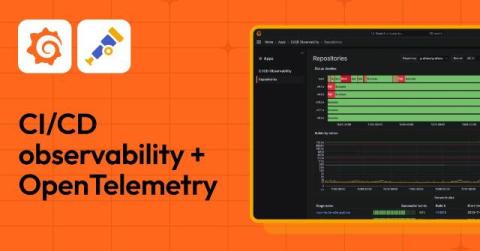
Continuous integration and continuous deployment (CI/CD) are the backbone of modern software delivery, but there’s still limited visibility into their processes. Here’s how that’s changing with OpenTelemetry (OTel), and why those changes are so exciting.

Doing DevOps Your Way On SaaS Solutions: Connecting JFrog CLI to Your JFrog Workers

In our previous blog post, we explored JFrog Workers, a JFrog Cloud Platform service that allows you to create customized workers that can respond to events in the platform. These workers can perform various tasks, from running code to adjusting functions, giving you more flexibility and control over your workflows. Allowing you to automate processes and streamline your development pipeline in a serverless execution environment.

Deploy React to Azure Web Apps

React is an open source JavaScript library known for its simplicity and incredible performance when creating an interactive user interface. React has gained wide adoption from web developers and reputable companies. While there are other frameworks in the JavaScript ecosystem, React is often the first choice when it comes to user interface and frontend business logic.

A Guide to CI/CD Pipeline Performance Monitoring

In the modern software development landscape, Continuous Integration and Continuous Deployment (CI/CD) pipelines have become essential. They automate the process of integrating code changes, running tests, and deploying applications. The efficiency and reliability of these pipelines are critical to the overall success of a software project, and CI/CD pipeline monitoring plays a vital role in maintaining and improving these attributes.