Operations | Monitoring | ITSM | DevOps | Cloud

The latest News and Information on DevOps, CI/CD, Automation and related technologies.

Becoming Hybrid: Operating Your Cloud Environment

It’s a day for celebration! Our migration is complete, and our applications are now running in the cloud environment best suited to their needs. The rest of our application inventory, the ones not cut out for the cloud, remain on-premises where they belong. Actually…we’re not done yet. We still have some work to do to make sure our hybrid environment runs smoothly and delivers the business value we expect. Fortunately, we aren’t the first ones to travel this path.
Let's Dive In: JFrog Unified Platform and Splunk - John Peterson, Senior Partner Engineer, JFrog

In our lightning talking will we cover the JFrog Unified Platform integration with Splunk for a wholistic analytics view into the unified platform logs. Combining the two best of breed applications makes tremendous sense for an enterprise without it valuable data insights are lost as well as any action the business might have taken. We will cover how to setup this integration, valuable data insights that can be gained, and how you can extend this integration to discover all new data insights you will wished you always had.

How To Deploy Artifactory via Operator in Openshift - John Peterson, Senior Partner Engineer, JFrog

In this lightning talk you will learn the basics of k8s operators and how they work in the Openshift environment. We will also go over the Openshift Operator Lifecycle and explain the stages and steps that take place to get the operator from the OperatorHub and deploy it into your Openshift environment. A demonstration will be done showing Artifactory being deployed into a new Openshift cluster to provide a learning experience on how Artifactory can quickly and easily be deployed into Openshift. Finally we will have a Q&A session to help answer any questions you may have about the integration and how you can use it.

I interviewed 200 CTOs from growing startups - here's what came up

Between late 2019 and early 2020, I interviewed more than 200 CTOs of growing US and EU startups on the topics of the Cloud and their working methodologies. I discovered that 86% of these SMB startups use the Cloud and that 48% started their business on Heroku and then migrated to a Cloud provider - especially AWS (Amazon Web Services).

Monitor Hazelcast with Datadog

Hazelcast is a distributed, in-memory computing platform for processing large data sets with extremely low latency. Its in-memory data grid (IMDG) sits entirely in random access memory, which provides significantly faster access to data than disk-based databases. And with high availability and scalability, Hazelcast IMDG is ideal for use cases like fraud detection, payment processing, and IoT applications.

Permissions, access rights, and privileges: Active Directory and Azure Active Directory

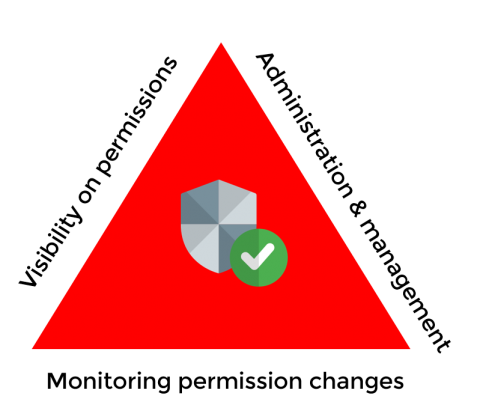
Permissions, access controls, user rights, or privileges define what an identity can see or do in an organization. These terms are often used interchangeably based on context, and essentially perform the same function—granting or denying access to the resources in an enterprise.

Guide to Serverless Information Security

Information security (infosec) is a broad field. Its practitioners behave more like artists than engineers. After all, the mandate for security is not “do X”, but instead “ensure no one can do X, Y, Z, ɑ, β, ɣ, etc.”. The array of possibilities leading to infosec failure are vast. It’s like trying to prove a negative, thus making the task near impossible. On one hand we have an impossible task, on the other we have the affordance of time.

Data science workflows on Kubernetes with Kubeflow pipelines: Part 2

This blog series is part of the joint collaboration between Canonical and Manceps. Visit our AI consulting and delivery services page to know more. Kubeflow Pipelines are a great way to build portable, scalable machine learning workflows. It is a part of the Kubeflow project that aims to reduce the complexity and time involved with training and deploying machine learning models at scale. For more on Kubeflow, read our Kubernetes for data science: meet Kubeflow post.

Encryption at rest with Ceph

Do you have a big data center? Do you have terabytes of confidential data stored in that data center? Are you worried that your data might be exposed to malicious attacks? One of the most prominent security features of storage solutions is encryption at rest. This blog will explain this in more detail and how it is implemented in Charmed Ceph, Canonical’s software-defined storage solution.