Puppet Camp America West: Team Workspaces: Giving Autonomy to Internal Consumers
Puppet Camp America West: Team Workspaces: Giving Autonomy to Internal Consumers with Cat Rayburn, Sr. UX Designer, Puppet.


The latest News and Information on DevOps, CI/CD, Automation and related technologies.
Velocity, much like the pulse rate or oxygen level of an individual, is an important measure of health for your development team. A low velocity score for recent sprints limits your team's options for delivering value. Sustained failure to deliver to stakeholders can erode trust with those stakeholders quickly. But how do you know exactly what your velocity is and how you can improve it?
Many enterprises have already adopted Kubernetes or have a Kubernetes migration plan in place, making it clear that the platform is here to stay. While it provides a lot of benefits to its users, to take advantage of them, you need to thoroughly learn Kubernetes and how it works in production. Typically, the most difficult aspects of Kubernetes are learned through experience solving real-world problems.
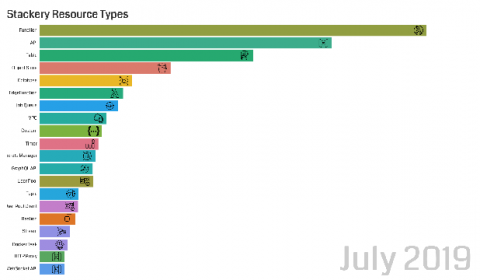
I’m a bit of a data nerd. And like many fortunate people, I’m still working from and generally staying home and have a lot spare time on my hands. So what does that combination result in? Graphs!
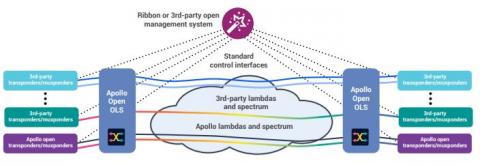
Alien wavelengths are commonplace today. Here a transponder pair from one optical system vendor connects to, and transmits over, the optical line system (OLS) – constituting fixed/reconfigurable multiplexer and amplification elements primarily – from another vendor. (While it can be technically feasible to pair transponders from different vendors, typically this is not done for commercial and operational reasons.)
Machine Learning (and deep learning) applications are quickly gaining in popularity, but keeping the process agile by continuously improving it is getting more and more complex. There are many reasons for this, but primarily, behaviors are complex and difficult to anticipate, making them resistant to proper testing, harder to explain, and thus not easy to improve.