Operations | Monitoring | ITSM | DevOps | Cloud

How we built iOS 27 into StatusIQ: Onscreen awareness, Siri actions through Spotlight, a one-stop widget for key information, and Liquid Glass optimization

When an incident hits at 2am, every second of context switching adds risk. The latest StatusIQ iOS update is built around one principle: Get the right information and the right actions to your team faster, with less friction. With iOS 27 support now live in the StatusIQ mobile app, here's what's changed and why it matters.


SAP Cloud ALM vs Solution Manager: What's Actually Changing

For most SAP customers, Solution Manager has been the system of record for how change happens. It has run ChaRM to control transports, hosted the IT service management queue for incidents and requests, driven test management and process documentation, and provided the monitoring layer for many on premise landscapes. It has done this job, largely unnoticed, for two decades.

eBPF: Correlating rustls Plaintext to TCP Connections Without a File Descriptor

In Under the Hood with Go TLS and eBPF, I left socket tracking as an exercise for later. The example used bpf_get_current_pid_tgid() and explicitly excluded concurrent TLS operations. Capturing plaintext was enough for that post. With rustls, later arrived: I could read the HTTP payload perfectly and still attach it to the wrong TCP connection. That’s a frustratingly convincing failure. The request looks right. The response looks right. The application works.

Shipped: Know what you actually pay per token on OpenAI

Picture two teams running the same million input tokens through the same model. One team’s tokens are cache hits, queued through the batch API. The other team’s are fresh, sent live. On a current-generation OpenAI model, cached input runs about a tenth the price of a fresh token, and batch processing cuts whatever’s left in half. Stack the two: at a list rate of $2 per million tokens, one team’s bill comes to 10 cents, the other’s to two dollars.

Compliance guardrails for regulated delivery

One multinational running on Upsun operates more than 400 websites. Each subsidiary has its own sites, its own team, its own release schedule, and its own local requirements. What they share is one infrastructure control layer: the same access model, the same encryption defaults, the same activity records, the same region and backup policy on every project. Adding the 401st site does not add a 401st set of infrastructure controls for someone to review.

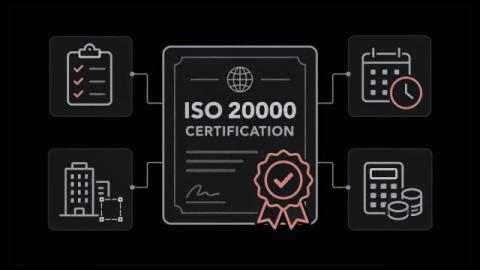
ISO 20000 Certification: Prerequisites, Process, and Cost

ISO 20000 certification means two different things depending on who is asking. One is an audit of your organization against ISO 20000. The other is an exam that one person sits. Search results mix the two together, and teams lose weeks to it. A service desk manager hunting a company certificate lands on a training catalog. They book a course nobody needed. In this blog, you will: You will finish able to scope the project and brief a certification body.

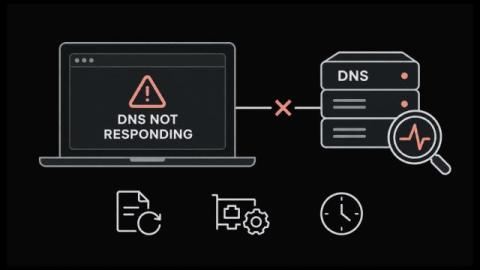
How to Fix DNS Server Not Responding Errors and Keep Users Online

Has your service desk ever filled with "the internet is down" tickets while every switch, firewall and uplink is reporting normal? The connection is usually fine. What has failed is name resolution, and the message your users see says the DNS server is not responding.

The AI Economy Has a Senior Engineer Problem. Here's How to Solve It

According to a 2025 report from Ravio, entry-level hiring (especially in engineering roles) has collapsed by more than 73% due to increasing AI capabilities. That means junior developer jobs are disappearing. At the same time, demand for senior engineers keeps climbing because organizations need more people to manage and optimize their complex AI agents.

From automotive repair to data centres

Blagomir Petrakiev, Data Centre Services Engineer in Maidenhead, made the move from automotive customer service to data centre operations after studying for his Cisco Certified Network Associate (CCNA) certification. In this Q&A, Blagomir shares what it’s like working behind the scenes at Pulsant, from infrastructure checks and remote hands tasks to learning new skills and building a career in digital infrastructure.