The latest News and Information on Observabilty for complex systems and related technologies.
Oh goody, I’m so tickled to get this one. *rubs hands gleefully* Funny story, back in 2016–2017 we thought we were building Honeycomb primarily for DB use cases. The use cases are that killer. I’ve never seen another tool do the kinds of things you can do on the fly with Honeycomb and databases.
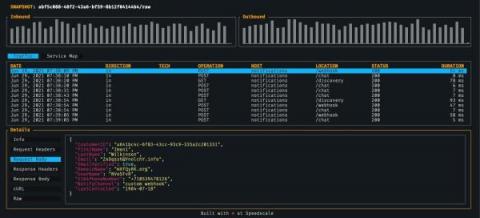
We are excited to announce the launch of Speedscale CLI, a free observability tool that inspects, detects and maps API calls on local applications or containers. The offering underscores the importance of continued and proactive API testing to quickly detect and debug defects within a shifting array of upstream and downstream interdependencies.
What comes first – observability or AIOps? Can you achieve observability without AIOps? Do you need AIOps if you already have an observability solution in place? These are all questions that any team considering AIOps will want to answer in order to determine the real-world value that AIOps tools stand to offer.
Happy New Year 2022! In 2021, Exoprise’s critical focus was on improving its product for monitoring digital experiences and mobilizing internal teams to improve customer adoption and SaaS/network experiences everywhere. As Covid continues to dominate the world, IT and business teams are increasingly looking for solutions like Exoprise Digital Experience Monitoring (DEM) to ensure end-users are productive with a seamless work-from-home experience.
It’s harder to understand and operate production systems in 2021 than it was in 2001. Why is that? Shouldn’t we have gotten better at this in the past two decades? There are valid reasons why it’s harder: The architecture of our systems has gotten a lot more sophisticated and complex over the past 20 years. We’re not running monoliths on a few beefy servers these days.
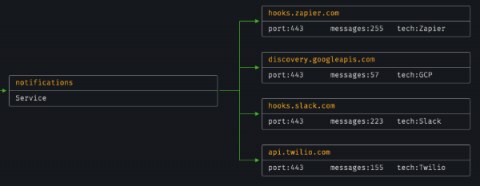
In this blog post we’ll help answer the age old question, “What does this service talk to and what does it say?” We’ll see how to inspect inbound and outbound REST API calls to see what calls are being made and what incoming traffic causes a reaction. This can be pretty handy when you’re taking over maintenance of an existing service, or if your code just isn’t behaving the way you expect.
Ooh, good question! My favorite thing about this part of the year is that work slows down, everybody is on vacation, and those of us not traveling get to work on little projects that we’re too busy to touch most of the year. As Martin Thwaites put it: “The Product Owners are away, the devs will play.” For Martin, this year, “play” means adding tracing to more of their services.