Operations | Monitoring | ITSM | DevOps | Cloud


The latest News and Information on Observabilty for complex systems and related technologies.
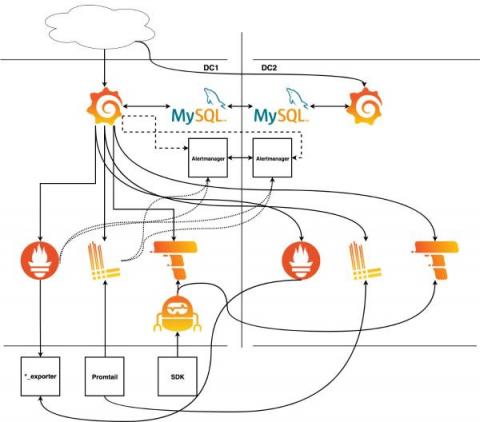
Bootstrapping a cloud native multi-data center observability stack
Bram Vogelaar is a DevOps Cloud Engineer at The Factory, and he recently delivered an intro to observability talk during our Grafana Labs' EMEA meetup. When I talk to customers, they might tell me about how their applications are running in two data centers, but when we probe a little further, it turns out that their observability stack is only available in one of them. This revelation hit close to home last March.

Ask Miss O11y: Making Sense of OpenTelemetry-Tracer and TracerProvider
OpenTelemetry is a strong standard for instrumentation because it is built of careful, well-thought-out abstractions created by experts in the space. OpenTelemetry feels painful to start using because it’s full of abstractions that make sense to experts in the space. For a developer who wants to think about their own software and not spend a month becoming an expert in telemetry, this is hard. For high-level conceptual description, there’s the OpenTelemetry specification.
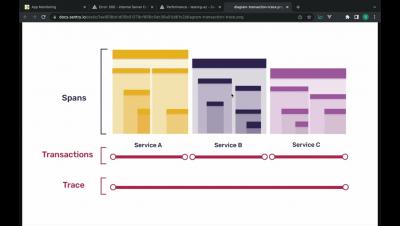
DeveloperWeek 2022: Front-end Code Observability: Errors, Performance, Web Vitals
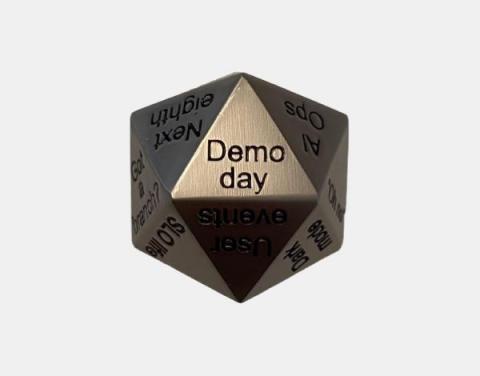
Share Progress and Celebrate Wins With Demo Days
In my last blog post, I talked about the cadence of product planning and delivery at Honeycomb. Tucked away in there was a mention of “demo day”—and I’m back to tell you all about that because it’s a pretty big deal around here, and I want to encourage you to give it a try as a way to see progress on new feature development and get folks excited about what’s on the horizon.
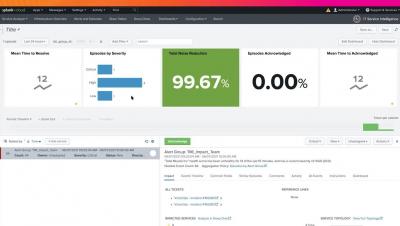
Splunk ITSI and Observability Cloud Demo

The Observability Lake: Total Recall of an Organization's Observability and Security Data
Enterprises are dealing with a deluge of observability data for both IT and security. Worldwide, data is increasing at a 23% CAGR, per IDC. In 5 years, organizations will be dealing with nearly three times the amount of data they have today. There is a fundamental tension between enterprise budgets, growing significantly less than 23% a year, and the staggering growth of data.
From eBPF to CI/CD: 12 emerging trends in observability
As businesses accelerate digital transformations and cloud adoption to better serve customers and employees in the face of the global pandemic, operational complexity has also mounted. To untangle these complexities and enable executive visibility into IT ecosystem , business leaders are increasingly looking to observability solutions as a strategic investment.

Ask Miss O11y: Observability vs BI Tools & Data Warehouses
Yes! While data is data (and tools exist on a continuum, and can and often are reused or repurposed to answer questions outside their natural domain), observability and BI/data warehouses typically exist on opposite ends of the spectrum in terms of time, speed, and accuracy, among others.