Operations | Monitoring | ITSM | DevOps | Cloud

The latest News and Information on IT Networks and related technologies.

12 Top SD-WAN Solutions for Growing Enterprises (2026)

Adding branches, cloud applications, contractors, and connected equipment changes the WAN problem. The network must steer traffic intelligently, preserve application quality during poor link conditions, and apply consistent controls without creating a separate operational stack at every location.

ICMP Port Number: Why Ping Has No Port and What to Open

ICMP has no port number. It is an IP-layer protocol, number 1 in the IP header, that sits beside TCP and UDP rather than on top of them, so ping does not use a port and there is no "ping port" to open. When a firewall form asks for one, select the ICMP protocol and the echo request type instead. This post covers where ICMP sits in the stack, which types and codes you will actually meet, how to allow it through Linux, Windows and cloud firewalls, and when a ping check is the wrong check.

Data Center: More or Less | SolarWinds TechPod

In this episode, Sean and Crystal explore the complex and rapidly evolving landscape of AI, data center impacts, regulation challenges, and societal implications. They discuss the urgency of establishing standards and the lessons from historical industrial revolutions to navigate AI's future responsibly.

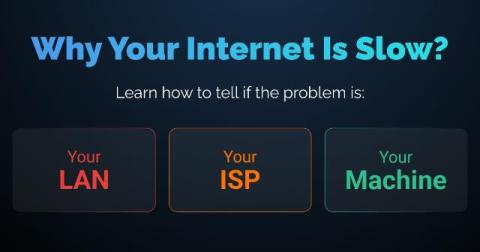
Why Your Internet Is Slow: Is It Your Network, ISP, or Your Machine?

Someone on your team says "the Internet is slow." Twenty minutes later, IT finds out the Internet was never the problem. Maybe it was a laptop with a full RAM disk. Maybe it was an ISP outage two towns over that had nothing to do with your office. Misdiagnosing slow Internet wastes time. It sends you down the wrong fix path, like rebooting a router when the real issue is sitting on someone's desktop.

How Packet Analysis Accelerates Root Cause Analysis for Application Performance Issues

Back when I was a network administrator, one of the most frustrating phrases I would hear was: “The application is slow.” Today, after years of working with customers, not much has changed. The technologies are different, the networks are faster, and the applications are increasingly distributed across data centers, cloud platforms, and SaaS providers, but the troubleshooting challenge is often the same. Users know something is slow. Application teams believe the servers are healthy.

Stop Guessing Where the Network Broke

Modern IT teams invest heavily in monitoring infrastructure, applications, servers, and network devices. Yet when users report that a critical cloud service is slow or a branch office loses connectivity, one question often remains difficult to answer: where is the problem actually occurring? Is the issue inside your network? Is it your ISP? Has a routing change introduced excessive latency? Did an upstream provider experience an outage?

Migrating from Nagios XI to WhatsUp Gold: A Practical Step-by-Step Guide

Monitoring platforms rarely become complex overnight. In many Nagios XI environments, complexity builds gradually through years of useful customizations, custom plugins, one-off fixes, and undocumented operational knowledge. Each addition may have solved a real problem at the time, but over the years the result can become difficult to maintain, explain, and hand over to new administrators.

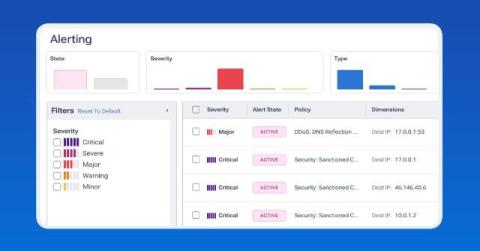
New Alert Policy Templates for Kentik Protect: Security and Compliance Visibility in Minutes

Securing distributed networks and maintaining regulatory compliance is often manual, expertise-heavy work of configuring alert policies. Kentik Protect now includes additional pre-configured, production-ready Alert Policy Templates across three categories: outbound security and DDoS, carpet bombing defense, and geopolitical compliance monitoring.