Operations | Monitoring | ITSM | DevOps | Cloud

AI gross margin: how AI spend hits SaaS profitability

AI gross margin is what remains of SaaS profitability after inference, model routing, and AI infrastructure land in cost of revenue. The numbers have moved. AI products averaged 45% gross margin in 2025 and are projected near 53% in 2026, against the 70% to 85% that SaaS built its valuations on. The compression is real, measurable, and manageable for companies that can see their cost to serve.

What Are Stealth Models?

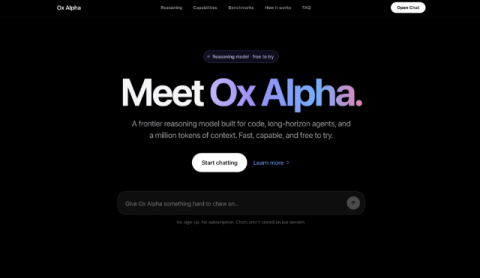
The recent mystery around Ox Alpha last week and the week before was a fun slice of what makes social media fun. The hunt for the model provider and how people did that discovery should be studied. But, this post is more about stealth models in general. You might be wondering what the phrase “stealth model” even means and if you already know, you might still be curious about why companies release stealth models.

S3 Access Denied: AI SRE Agent AURA Finds the Missing Permission

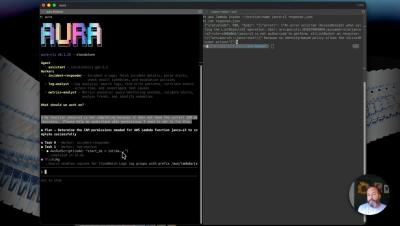
The bucket is right there and the function still cannot read it. AURA reads the failure, names the one missing action, and returns the policy to add. A permissions failure gives you the symptom and not the action name. The usual path is reading the error, guessing which actions the execution role is short, and widening the policy until the call goes through. Greg hands AURA a Lambda function that fails when it tries to reach an S3 bucket. AURA identifies the missing ListBucket permission on that particular bucket and returns the minimum policy needed to allow it.

Canonical joins the Open Secure AI Alliance

Canonical is now part of the Open Secure AI Alliance, announced by NVIDIA with partners across cloud computing, cybersecurity, enterprise software, open source foundations, and AI research. The alliance aims to develop and share open technologies, techniques, and tools to safeguard software and agents in the age of AI.

AI SRE Agent ChatOps: How AURA Runs in a Slack Incident Channel

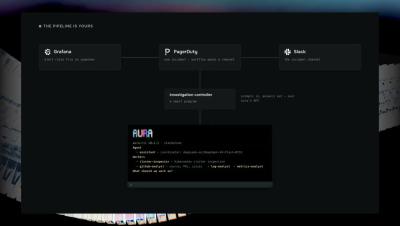
AURA runs as a standalone service and knows nothing about Slack. A separate bridge streams events off its API, which is what makes the chat tool swappable. This is the implementation behind the automated PagerDuty investigation demo. Jeff Vogt walks the whole path an incident takes: a Grafana alert fires PagerDuty, PagerDuty opens a Slack channel and sends a webhook, and a service called AURA Bridge picks it up and calls AURA's API with an investigation prompt.

AI SRE Agent Approval Workflow: Identity Forwarding to MCP Servers

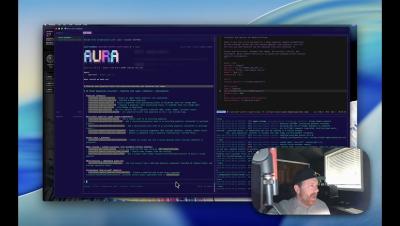
Two engineers can hold the same approve button and still not be allowed to make the same change. The key riding with the approval settles it. AURA's human in the loop config gates the create_pipeline tool on the Mezmo MCP server and sends each request to a webhook for review. A mock UI stands in for the approval system here, and Mike walks through the payload schema so you can point it at your own.

AI SRE Agent MCP Authentication by Header: Keep Keys Out of the Config

Nobody wants an API key sitting in an agent's config file on a shared server. Mike shows how AURA takes the credential off the request instead. AURA can hold your keys in its config file, but it does not have to. Mike Shearer, one of AURA's creators, walks through the alternative: AURA reads named headers off the incoming request and forwards them to the MCP servers it calls, so the credential never has to sit on disk.

Codex vs. Claude Code in 2026: cost, capability, and which one your team should pick

Codex is OpenAI's terminal-based autonomous coding agent, bundled into ChatGPT plans and billed through token-based credits. Claude Code is Anthropic's terminal-based coding agent, sold through Claude subscriptions or the API. Codex is cheaper to enter; Claude Code is stronger on complex work. Both run $100 to $250 per developer monthly at active use.