Operations | Monitoring | ITSM | DevOps | Cloud

Why Modern Enterprises Still Get Blindsided And How Business Process Observability Changes That

Traditional observability misses business failures Modern monitoring tools can show that systems are technically healthy while critical business outcomes are quietly failing. Business Process Observability (BPO) closes this gap by tracking entire business transactions, like orders, payments, and shipments, instead of just infrastructure and application metrics.
Why Shared Context Matters in Hybrid Cloud Operations

The first post in this series explored why traditional observability breaks down in hybrid cloud environments. As infrastructure, applications, and dependencies stretch across on-premises networks and cloud services, isolated monitoring views leave teams with an incomplete understanding of what is happening and why. That challenge raises the next question: what kind of operational model actually works in a hybrid environment?

Why Autonomous IT Is Becoming Essential for the Modern Industry

Autonomous IT shifts enterprises from reactive to proactive operations“By combining AIOps, agentic AI, predictive analytics, and self-healing automation, Autonomous IT helps organizations detect issues early, automate remediation, and prevent downtime before it impacts customers or revenue.

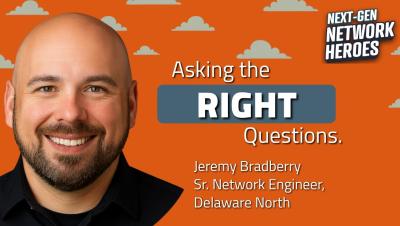
Game On: What Retro Gaming Teaches Us About Modern Networks with Jeremy Bradberry

What can decades of hands-on operational experience teach us about the future of AI-driven networking? In this episode of Next-Gen Network Heroes, host Bob Slevin sits down with Jeremy Bradberry, Senior Network Engineer at Delaware North, for a conversation that spans everything from legacy manufacturing systems and mainframes to modern AI-assisted network operations. Jeremy shares how his early career working in industrial environments shaped the way he approaches networking today, giving him what he calls an “X-ray vision” into how technology connects directly to business operations.

Bridging Bedrock Skills with AI: A Conversation with Jeremy Bradberry

What happens when decades of operational experience meet modern AI-driven networking? In the latest episode of Next-Gen Network Heroes, Bob Slevin sits down with Jeremy Bradberry, Senior Network Engineer at Delaware North, to explore how network engineers can modernize infrastructure without losing sight of the operational realities behind the technology. Jeremy shares lessons learned from working on legacy manufacturing systems, how AI is helping engineers analyze data and automate workflows faster than ever before, and why strong standards still matter in today’s AI era.

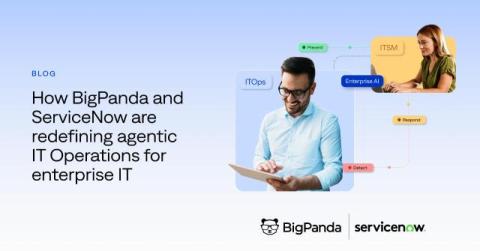
How BigPanda and ServiceNow are redefining agentic IT operations for enterprise IT

Enterprise ITOps leaders are realizing that legacy incident management processes are collapsing under the weight of today’s sprawling, hybrid-cloud enterprise environments. Monitoring and observability tools generate a relentless flood of alerts across cloud platforms, infrastructure, applications, and services. The signals are there, the volume of noise makes it harder than ever to identify what’s urgent.

Building a Defensible AI Compliance Framework

Organizations have moved past theoretical conversations about AI adoption. Models, agents, and autonomous workflows are entering production environments. Business leaders are optimistic about potential gains in efficiency, decision support, and operational scale. Yet beneath this momentum, compliance and risk teams feel a different pressure.

Why Traditional Observability Breaks Down in Hybrid Cloud Environments

Hybrid cloud has reshaped the way enterprises build, run, and troubleshoot digital services. Applications now stretch across on-premises infrastructure, cloud platforms, regional services, interconnects, and distributed dependencies that change constantly. Operational complexity has expanded with that footprint, yet many observability practices still reflect assumptions from an earlier era of simpler architectures and clearer boundaries. That gap shows up fast during an incident.

Episode 11 - Human Choices in an AI Future (Part 1)

What if the biggest risk in the AI era isn't the technology, but waiting for someone else to tell you what to do with it? In this episode of The Intelligent Enterprise, host Tom Stoneman sits down with Karthik Ravindran, General Manager of Enterprise Data and AI at Microsoft, to unpack what it really takes to thrive alongside AI, not in spite of it.

Closing the Evidence Gap

Compliance teams are entering a moment where the expectations placed on them far exceed the visibility tools they have available. AI-driven environments introduce new forms of variance, drift, and distributed decision-making that unfold across infrastructure, models, agents, and services. These patterns do not map cleanly to the evidence structures that compliance processes rely on.

AI Governance vs AI Innovation: Are AI Agents Outrunning Enterprise Oversight?

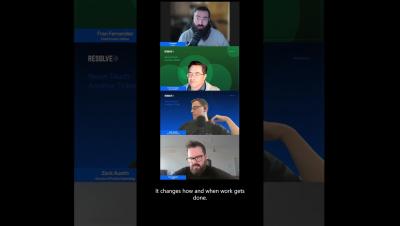
In this special episode of Agents of IT, the team dives into one of the biggest questions shaping enterprise AI right now: Is AI adoption moving faster than governance can keep up? Ari, Fran, Zach, and Ian break down the growing tension between agentic AI, automation, security, and oversight. From AI hallucinations and context overload to GRC challenges, shadow AI, and the future of AI governance roles, the conversation explores what enterprises need to consider as autonomous operations become reality.

Optimizing Team Strengths for Effective Operations

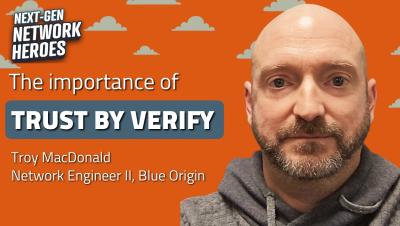
Most people think great network engineers are defined by technical expertise. This episode challenges that idea. Because what Troy McDonald shows is that the real differentiator isn’t just technical skill—it’s the ability to translate complexity into clarity. From military operations to enterprise networks, one lesson keeps showing up.

From Signal Corps to Space: Building Networks That Can't Fail with Troy MacDonald

What does it take to succeed in networking when complexity is constantly increasing, and change never slows down? In this episode of Next-Gen Network Heroes, host Bob Slevin sits down with Troy (David) MacDonald, a network engineer at Blue Origin and former U.S. Army Chief Warrant Officer, to explore a career that spans from infantry beginnings to designing and managing large-scale, mission-critical networks.

How to Build AI Agents for Enterprise Operations | Agent Builder Demo

Episode 4 of Resolve Reels is live! See how Agent Builder helps teams create purpose-built AI agents with the right guardrails, routing logic, and orchestration for enterprise operations. In this episode: Build specialized agents with defined responsibilities Improve routing with conversation starters and guardrails Test and operationalize agentic AI at scale This is how enterprises move toward Autonomous Operations and Zero Ticket IT.

The New Compliance Crisis: AI Is Outrunning Its Controls

Enterprises have spent decades refining compliance frameworks around workflows that were linear, predictable, and well-documented. These frameworks were built for systems that executed actions deterministically and for human operators who made decisions slowly enough for oversight to keep up. In that environment, compliance could function as a retrospective discipline because the evidence required to validate behavior generally existed in complete, stable form.

Why Network Operations Needs Data-Centric AI

The discussion around AI in infrastructure and operations has become increasingly model-centric. Teams want to know what model a platform uses, how current it is, how much reasoning capacity it has, and how quickly it can be updated as the model landscape shifts. Those are reasonable questions, but they tend to arrive too early. In production operations, the more consequential question is what happens to the data before any model is asked to interpret it.

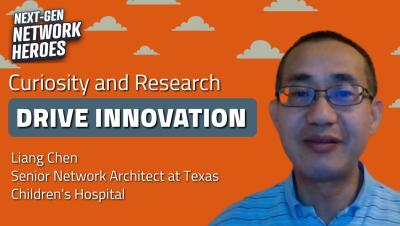
Enhancing Your Search Skills with Liang Chen

What does it take to reinvent network visibility from the ground up? In this episode of Next-Gen Network Heroes, Bob sits down with Liang Chen, Senior Network Architect at Texas Children’s Hospital and creator of a next-generation network traffic analyzer built for real-time, packet-level visibility. Liang shares how he built a platform capable of analyzing traffic at up to 200Gbps with zero packet loss—unlocking deeper network forensics and faster troubleshooting in mission-critical environments.

True Visibility: How Liang Chen is Rethinking Network Monitoring

What happens when deep networking expertise meets low-level programming and a passion for invention? In this episode of Next-Gen Network Heroes, host Bob Slevin sits down with Liang Chen, Senior Network Architect at Texas Children's Hospital and a true innovator in network performance and visibility. With more than 25 years of experience in networking, plus advanced expertise in programming languages like C and Assembly, Liang has built his own next-generation traffic analysis platform from the ground up—designed to provide real-time, packet-level visibility at massive scale.

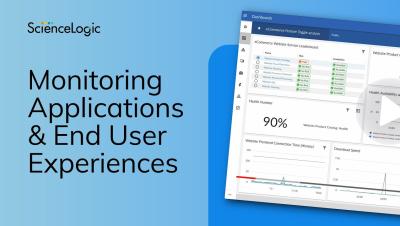
How to Monitor Applications and End User Experiences

In this video, see how Skylar One helps you understand the impact of changes on application performance and the end user experience. By tracking service level metrics across an e commerce environment, you can quickly identify when performance degrades and how it affects user behavior. Explore how Skylar One enables: With Skylar One, teams can quickly connect performance changes to real user impact, helping ensure a consistent and reliable digital experience.

What Leading Engineering Teams Teach Us About Operational Truth

Modern operational environments are intricate ecosystems shaped by distributed architectures, accelerating change cycles, and a constant influx of telemetry. The complexity itself is not the issue. The issue is how teams construct understanding inside that complexity. After years of expansion across cloud, edge, third-party services, and internal modernization efforts, many organizations now have abundant data but limited confidence in the meanings behind it.

How Modern Ops Lost Their Bearings

Modern operations carry a quiet contradiction. Organizations have never had more data, more dashboards, or more instrumentation, yet teams increasingly struggle to gain a reliable sense of what the environment is actually doing. The problem is not the absence of information. It is the absence of bearings. This drift did not happen suddenly. It accumulated across years of transformation.

Operational Intelligence and the Hidden Structure in System Logs

Most IT teams do not suffer from a lack of data. They suffer from the amount of effort required to make sense of it. Every network device, application, cloud service, and infrastructure component generates a constant stream of machine output. Logs capture state changes, failures, retries, warnings, and thousands of other small signals about how systems behave. The problem is that raw logs are hard to use at operational speed.

Resolve's Agents of IT - S2Ep9 - When AI Personalization Gets too Personal

In this episode of Agents of IT, we dive into one of the biggest conversations shaping enterprise AI right now: personalization. From copilots vs autonomous agents to the “creepiness threshold” of hyper-personalized AI, we explore what organizations are getting right, what they’re getting wrong, and why context matters more than ever in the future of IT operations. Topics covered in this episode: The team also breaks down.

Driving Innovation: A Bias Towards Action with Greg Freeman

AI is changing network operations faster than ever. In the latest episode of Next-Gen Network Heroes, Bob sits down with Greg Freeman of Lumen Technologies to talk about what it takes to innovate across one of the world’s largest telecommunications networks. From deterministic workflows to agentic AI, Greg shares how his team is using automation, analytics, and AI to improve network reliability, customer experience, and operational efficiency at scale.

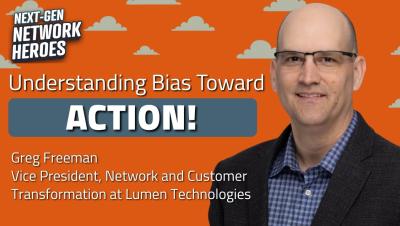
Bias Toward Action: Driving AI Innovation Across Global Networks with Greg Freeman

What does it take to lead innovation across one of the world’s largest telecommunications networks? In this episode of Next-Gen Network Heroes, host Bob Slevin sits down with Greg Freeman, Vice President of Network and Customer Transformation at Lumen Technologies, to explore how AI, automation, and curiosity are reshaping the future of network operations.

The World Beneath The Dashboards

Most people assume the modern enterprise runs cleanly on the dashboards and cloud consoles that dominate today’s digital workspaces. Anyone who operates these environments understands a more complicated truth. The real work happens beneath those surfaces, in systems few people notice until something slips. Across industries, engineers face the same recurring scenario: a routine shift disrupted by signals of degradation somewhere in the environment.

Faster incident investigation with BigPanda and ServiceNow Now Assist

When an incident occurs, an L2/3 engineer or SRE can spend 20–30 minutes investigating across alert consoles, combing through change records, and pinging teams on Slack or Microsoft Teams. When you multiply that time spent across thousands of incidents per year by the cost of an IT outage at $14,056 per minute, the cost is staggering. Enterprises can’t afford to waste time searching across disparate tools.

Resolve Webinar: Introducing AgentLab: The Foundation of the Autonomous Service Desk

Most service desks still operate across fragmented systems. A single ticket can touch 4–7 tools, often more, slowing resolution and increasing cost. Copilots suggest. Traditional automation executes fixed paths. Neither closes the loop. AgentLab changes that. In this webinar, we introduce a new model built on agentic AI and orchestration. One where AI agents don’t just assist. They act, adapt, and resolve.

When Dashboards Start Teaching the System: Why Selector's Natural Language Querying Matters

Operations teams have lived with the same frustrating tradeoff for years: the data exists, but getting to the right answer often takes too much time and too much expertise. Engineers are expected to know platform-specific query languages, navigate layers of dashboards, and understand exactly where the right visualization lives before they can even begin troubleshooting. That approach can work in smaller environments, but as infrastructure grows more distributed and complex, it becomes a bottleneck.