Operations | Monitoring | ITSM | DevOps | Cloud


The latest News and Information on DevOps, CI/CD, Automation and related technologies.
Are you doing SRE wrong? 4 questions to ask
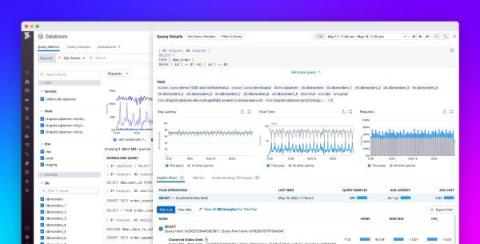
Monitor your Graviton3-powered EC2 instances with Datadog
AWS’s new Graviton3 EC2 instances are built on its third generation of custom Arm-powered processors. These instances promise up to 25 percent better performance over Graviton2 for compute-intensive workloads. This means that, for applications like distributed data analytics, machine learning, video encoding, gaming, and more, migrating to Graviton3 instances can provide better performance, cost savings, and more energy efficiency.
StackState's v5.0 Release Delivers New 4T Monitors and More: Apply the Power of Topology to Transform Traditional IT Monitoring
This week we released v5.0 of StackState’s observability and AIOps platform, which introduces a rich set of new capabilities. Our latest release contains a little something for everyone responsible for reliably running business critical workloads in dynamic environments – SREs, DevOps, central platform teams, even business teams – and for new and existing users alike.

Uncovering the mysteries of on-call
For the vast majority of organisations, some form of round-the-clock cover is critical to successful business operations. On-call is an essential part of an effective incident response process, yet there is no commonly accepted playbook on how to most effectively structure and compensate on-callers. We ran a survey to uncover the mysteries of how on-call works in organisations of different shapes and sizes around the world.

Morph: Database Schema Migrations Made Easy
Morph is a new database migration tool designed to improve Mattermost schema migrations. It can be used programmatically with a library and from a CLI. Morph stores the schema version in a table, where all applied migrations are persisted. It’s a flexible open source library that can be used with a driver interface implementation and a source to read migration scripts from. The engine uses a dependency injection pattern so that any implementation can be used with the library.
How to remote debug an HTTP trigger Azure Functions in Visual Studio 2022
Kubernetes management with Portainer and Civo

7 DevOps practices to improve application performance
Devops is tough, but the choice between faster development and improving reliability shouldn’t be. Consider shifting-left security, better observability, AIops platforms, and more.

How To Prepare for a Site Reliability Engineer (SRE) Interview
Site reliability engineering continues to gain traction in software development and IT. SRE is at the crossroads of software development and IT operations. In Ben Treynor’s words, SRE is “what happens when you ask a software engineer to design an operations function.” Site reliability engineering is a way for developers to actively build services and functions to improve the resilience of people, processes and technical systems.