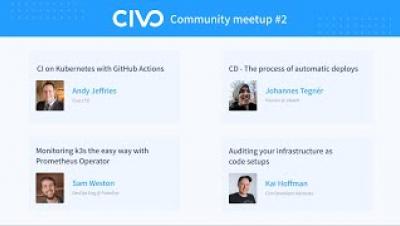
Continuous Integration on Kubernetes with GitHub Actions - Andy Jeffries
Recorded on Wednesday 29th July 2020 By Andy Jeffries


The latest News and Information on DevOps, CI/CD, Automation and related technologies.
Amazon Kinesis Data Firehose is a service for ingesting, processing, and loading data from large, distributed sources such as clickstreams into multiple consumers for storage and real-time analytics. AWS recently launched a new Kinesis feature that allows users to ingest AWS service logs from CloudWatch and stream them directly to a third-party service for further analysis.
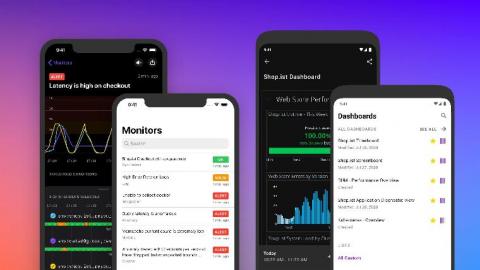
When you’re on call and get paged at an inconvenient time, you need to be able to quickly determine the seriousness of the issue and act decisively to reduce system downtime. But pager notifications often don’t give you the information you need to investigate an issue from your mobile device, meaning that access to a laptop at all times is a must.
Today we released updates for a series of vulnerabilities termed ‘There’s a hole in the boot’ / BootHole in GRUB2 (GRand Unified Bootloader version 2) that could allow an attacker to subvert UEFI Secure Boot. The original vulnerability, CVE-2020-10713, which is a high priority vulnerability was alerted to Canonical in April 2020.
Minimizing costs, reducing risk, and maximizing business value—all at the same time—requires a delicate balancing act. It’s not a new challenge, nor is it unique to IT infrastructures. But when it comes to the cloud, especially in hybrid cloud scenarios, it requires you to understand the performance, risk/compliance, and cost impacts of your current resource allocations and then adjust to maintain the optimal decisions to meet your SLA and budget targets.
I was speaking with a VP of Engineering friend at last year’s KubeCon about how to pitch Kubernetes to the C-Suite. The benefits for innovation were clear - containerized microservices empowered her small teams to deliver more value, more rapidly. As is often the case with Boardroom discussions, though, the question of cost was always next. Sure, they want you to innovate - as long as it’s within the constraints of a budget! But cost discussions around Kubernetes can be difficult.
I’ve recently co-founded a startup, and after working so long in more mature enterprises with diverse toolchains, it was actually massively educational to return to first steps and figure out what our critical needs were, balanced with essentially zero budget. As we’ve grown and raised money, we’ve graduated in some areas to other tools, but I wanted to share what we felt were the absolute can’t-live-without-tools for a team building SaaS software.