Changelog: Alerting, webhook and Prometheus updates.
We just shipped three updates based on customer feedback.


The latest News and Information on Monitoring for Websites, Applications, APIs, Infrastructure, and other technologies.
We just shipped three updates based on customer feedback.
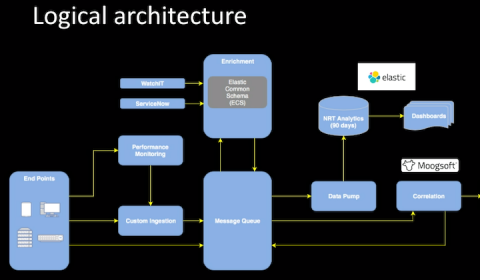
KeyBank is one of the largest banks in the United States. And as the bank has grown, so has their end-to-end monitoring system. With more than 1,100 branches and 1,400 ATMs stretching across 15 states, KeyBank’s infrastructure had evolved into a “Noah’s Ark of design,” says Mick Miller, Senior Product Manager, Cloud Native at KeyBank. In other words, they had two of everything, resulting in 21 different data islands.
My holiday challenge to explain serverless InfluxDB to my family produced a useful Flux script anyone can put to work today. Before we dive into the code, let me outline the high-level approach to gathering and visualizing how long it takes a website to respond to an HTTP request.
Today we announce InfluxDB 2.0 Open Source’s official move to Beta. This represents a huge step forward from where we started out nearly a year ago and is one step closer to general availability. You can download the latest version on our downloads page. Since we announced the first Alpha for InfluxDB 2.0 back in January ‘19, we have been working hard to build out and harden InfluxDB 2.0’s capabilities.
Another one in the books, 2019 is past and it went by fast. In this post, we’ll summarize events and accomplishments for the year and give a peek as to what’s in store for 2020.
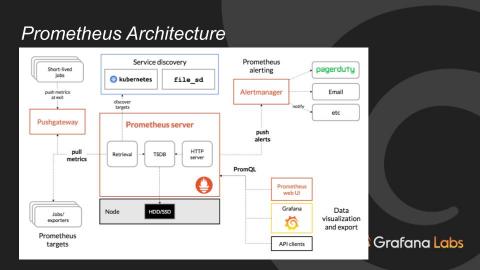
During a lightning talk at PromCon EU last November, Grafana Labs developer Callum Styan, who contributes to Cortex and Prometheus, talked about improvements that have been made to Prometheus remote write – the result of about six months of work.
At Sentry, we pride ourselves on having an open kitchen; everyone can see how we prepare our main dishes as an open-source company. As you may have noticed, we’ve been working hard to bring you a version that’s incredibly easy to set up and maintain: Sentry 10! It’s available today! Before you start hammering PyPI, GitHub, or Docker servers, please read on as there are important changes that need your attention.
AWS Lambda has become the most widely used deployment pattern for serverless applications. It allows developers to set aside worrying about server provisioning, maintenance, idle capacity management and scaling, and instead to focus solely on writing business logic. But that’s not entirely true. Because while Lambda is a self-managed AWS service, it still requires careful design to get the best performance out of the computation capabilities it provides.
Honeycomb now offers SLOs, aka Service Level Objectives. This is the second in a set of of essays on creating SLOs from first principles. Previously, in this series, we created a derived column to show how a back-end service was doing. That column categorized every incoming event as passing, failing, or irrelevant. We then counted up the column over time to see how many events passed and failed. But we had a problem: we were doing far too much math ourselves.