Operations | Monitoring | ITSM | DevOps | Cloud

The latest News and Information on APIs, Mobile, AI, Machine Learning, IoT, Open Source and more!

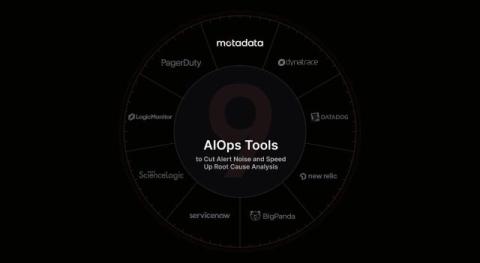
Top 9 AIOps Tools to Cut Alert Noise and Speed Up Root Cause Analysis

During your last major outage, several monitoring tools raised alerts and every one of them was correct. What none of them could say was which alert explained the others, so the opening stretch of the incident went on assembling a picture the systems already held between them. That time shows up in your availability numbers, your SLA credits, and your board report. AIOps platforms close that gap by grouping the alerts caused by the same failure and handing your team one incident with context attached.


When Intelligence Stops Being Scarce

As intelligence becomes increasingly accessible, competitive advantage shifts to the operational capabilities that transform insight into consistent, confident action. As AI makes operational insight easier to generate, competitive advantage is shifting to the platforms, workflows, and operational foundations that turn intelligence into trusted action.

The Safest Place to Run an AI Agent Is On a Cluster That Doesn't Trust It

Every organization running AI agents has already made a hosting decision. Most made it by accident. The sales team switched on the agent built into their CRM. Engineering is piloting a coding agent in a vendor’s cloud. Someone on the data team deployed a LangGraph service to a VM with a database key in an environment variable, and someone else is running an agent framework on a laptop with production credentials in a dotfile. Each of these is a hosting decision.

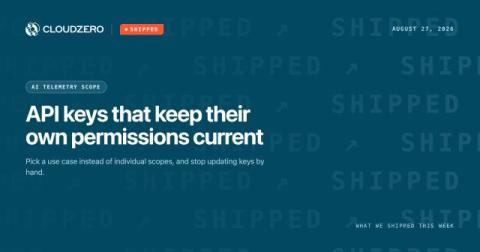
Shipped: API keys that keep their own permissions current

The most common reason to create an API key in CloudZero is to send data, such as AI telemetry or billing exports. Until now, that meant picking individual scopes from a list and hoping you chose the right ones. That works on day one. The problem is day ninety. Permissions on a key have always been a snapshot of the day you created it. A new AI telemetry endpoint ships in October, and a key created in August has no idea it exists.

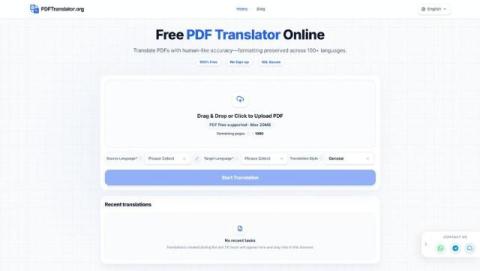
How to Use an AI PDF Translator for Technical Documentation

Technical documents such as runbooks, standard operating procedures, and maintenance manuals help teams work safely across countries. A PDF Translator can give global teams faster access to the same information without rebuilding files manually. Speed is not enough, however. A mistranslated command, warning, or system status can create operational risk. An online PDF translator should therefore be used with terminology management, technical review, and final approval.

Why Website Load Speed Is a Small Business Competitive Advantage

Three seconds. That's your entire budget before nearly half your visitors leave and never come back. For a small business owner, that's not a UX statistic - that's a lost sale, a missed inquiry, a competitor gaining a customer you earned through advertising spend.

How to Select the Right IT Software Outsourcing Company Without Compromising Quality

The first conversations with a software outsourcing company can make the decision look straightforward. The technology stack fits, experienced developers are available and the proposed timeline appears workable. Yet those signals say little about how the relationship will perform when priorities shift or delivery pressure rises. That is why the right software development outsourcing partner should be judged on more than technical capability. The real test is whether the team can take ownership, protect engineering quality and reduce the management burden on your internal leaders.

The Role of Infrastructure and Mobile Proxies in Modern Operational Reliability

For systems architects, IT operations leaders, and DevOps engineers navigating cloud-native complexity, maintaining robust system visibility requires unhindered data collection pipelines. Platforms like opsmatters.com offer essential insights into cloud computing, operational tools, and IT service management, highlighting how modern infrastructure relies on seamless data integration. Operating at scale requires monitoring global endpoints, validating geographically distributed microservices, and parsing public software feeds without running into access limits.