SL1 Eiffel Release: Making IT Work Flow Faster & Easier
Introducing SL1 Eiffel. Designed to expand your ability to see, contextualize, and act in order to accelerate your journey to AIOps.


Introducing SL1 Eiffel. Designed to expand your ability to see, contextualize, and act in order to accelerate your journey to AIOps.
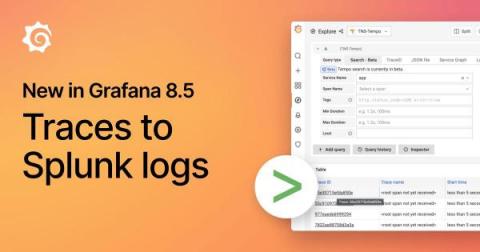
The recent release of Grafana 8.5 marks the start of enabling the jump from traces directly to Splunk logs. It’s a big leap that now allows you to draw a straight line between your traces — whether they are coming from Tempo, Zipkin, or Jaeger — to even more third-party logging data, all from the comfort of your traces view. Previously, the Grafana trace to logs enablement included only Loki logs.
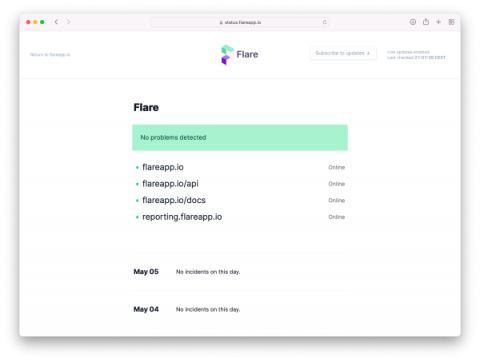
Using Oh Dear you can create beautiful status pages. As from today, you can let your users also subscribe to updates on those status pages. In this blog post we'll tell you all about it.
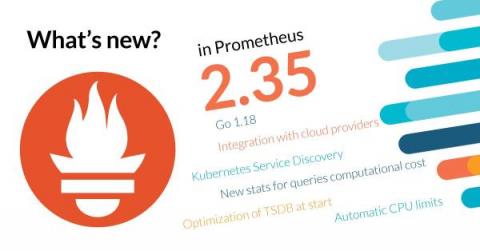
Prometheus 2.35 was released last month, focusing on a better integration with cloud providers. It also improved the service discovery, performance, and resources usage. One key change was the migration to Go v1.18. It has brought some changes in the support for TLS 1.0, 1.1, and certificates signed with the SHA1 hash function. Welcome to this first edition of What’s new in Prometheus. We love Prometheus, the de-facto open source standard monitoring tool!
Today we are happy to announce that we are releasing Icinga for Windows v1.9.0. This release cycle is the biggest one yet, because we are releasing new versions for everything! This includes.
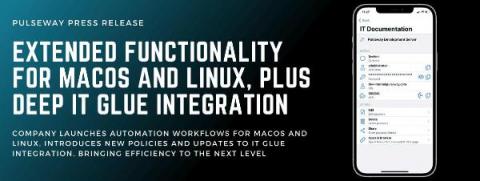
Company launches automation workflows for macOS and Linux, introduces new policies and updates to IT Glue integration, bringing efficiency to the next level Pulseway, a leading provider of mobile-first, cloud-first remote monitoring and management (RMM) software, today announced the launch of new automation workflows for macOS and Linux, extended policies and an updated IT Glue integration, which will further improve customers’ efficiency.
As more organizations adopt cloud-native technologies and microservices-based architectures, application troubleshooting is becoming increasingly complex. With so many moving parts in an environment that is both dynamic and distributed, it is difficult to get the full picture. Yet complete visibility is crucial in order to find and fix issues quickly — especially ones that impact the bottom line.
Let’s check out together the features and improvements related to the new Pandora FMS release: Pandora FMS 761.