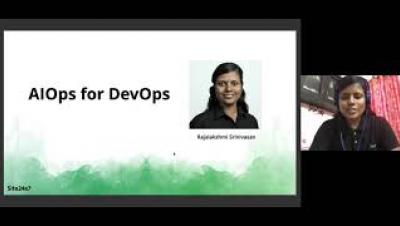
[Webinar] AIOps for DevOps
Learn how AI (artificial intelligence) and ML (machine learning) techniques help DevOps teams with decision making and forecasting.


The latest News and Information on AIOps, alerting in complex systems and related technologies.
This is the first in a two-part blog series deconstructing AIOps for ITOps leaders. If you gave me a dollar for every company that claims that they use “A.I.,” I’d be doing pretty well. But as a marketer, I can’t help but be a little skeptical about those claims. Let me explain.
Fiserv, the Fortune 500 payments and financial technology provider, needed to streamline and automate its IT incident management process to detect and fix issues earlier and more quickly. The incident management workflow was complex, primarily because mergers and acquisitions over the years had made Fiserv’s IT environment very heterogeneous. “The challenges we were facing were enormous,” IT Director Chris Kreps says.
What’s the buzz around AIOps? According to Gartner, “AIOps is the application of machine learning (ML) and data science to IT operations problems.” Though the terms AI and ML conjure images of almost magical capabilities, devoid of connection to the domain in which it’s applied, actually the reality is far different.
Last week I went camping with some friends. One of them did the shopping for all of us, so I sent him my share using a payment app. It took me less than 2 minutes to complete the transaction. A few years ago, a similar transaction would have me going to the bank to complete the task, or at a minimum, calling a bank teller and having him do it. Try to imagine a bank asking its customers to do any of these things today. It would probably lose all its customers in no time.
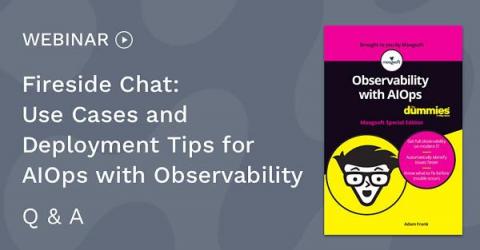
A fireside chat to discuss use cases and deployment tips for AIOps with observability generated a stream of compelling questions from attendees, which the Moogsoft hosts answered with depth and expertise. Combining AIOps analysis with detailed observability data is key for DevOps and SRE teams to attain continuous service assurance, so Moogsoft just published a new ebook about this topic titled “Observability with AIOps For Dummies.”