The latest News and Information on DevOps, CI/CD, Automation and related technologies.
At the start of October, Dinesh Majrekar, CTO, and Mark Boost, CEO at Civo spoke at KubeCrash, about application deployments of old, cloud-native processes of today and edge native deployments of the future. Watch their session below to learn about the challenges we are about to face with an edge-first architecture and what we can do today to be ready. We then took to Detroit for KubeCon + CNC NA 2022 where we hosted an array of talks, workshops, and events.
Both servers and software development use Linux. Today, Linux distributions are used by the vast majority of electronics and embedded systems. Worldwide, Linux servers make up about 90% of all internet servers. Additionally, the Linux kernel is used by around 80% of all smartphones. Today, every system in the world is linked via a network. Information exchange across systems requires network connectivity. Computer networking refers to communication over the internet as well as within a network.
Modern applications are a web of interdependent services. As applications grow in size and complexity, and as more engineering teams adopt service-based architectures like microservices, this web becomes deeper and denser. Eventually, keeping track of the interdependencies between services becomes a complex and time-consuming task in and of itself. In addition, if any of these dependencies fails, it can have cascading impacts on the rest of your services and on the application as a whole.
Docker is one of the most popular tools for containerization, and several tools have been developed by the open-source community to monitor what happens inside of Docker containers. This guide focuses on one tool specifically: cAdvisor.
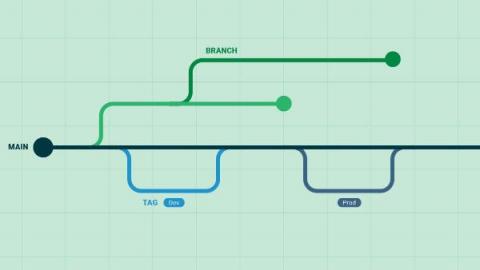
As you might be aware, each team has its own unique workflow based on the project type, size of the company, team preferences, and a number of other factors. The larger the team, the more difficult it is to keep things under control: disputes become more regular, delivery deadlines may postpone, priorities always change - the list may go on and on. Adapting Git is the first step in resolving these challenges, as it can be used in almost any workflow.
Software development and the DevOps lifecycle now requires continuous integration and delivery, also referred to as CI/CD. To help users automate the steps between a developer checking in code and releasing that code into production, open source CI/CD solutions are created.