The latest News and Information on DevOps, CI/CD, Automation and related technologies.
Most sysadmins and developers have at some point used a few of the popular Linux networking commands or their Windows equivalents to answer the common questions of host reachability- that is, whether a host or service is reachable and how fast it responds. One of the simplest, common checks, is to simply ping a host to verify that it’s reachable from where you issue the command, and to see the total time it takes for the host to receive your request.
For DevOps teams looking for insights on how to improve, it’s invaluable to leverage the learnings of others. At the same time, given the wide range of DevOps teams’ expertise, tenure, and organizational dynamics, it’s also clear that one size does not fit all. That’s why efforts like this year’s “Accelerate State of DevOps Report” are so important. We’re proud to be a sponsor of this 2022 edition.
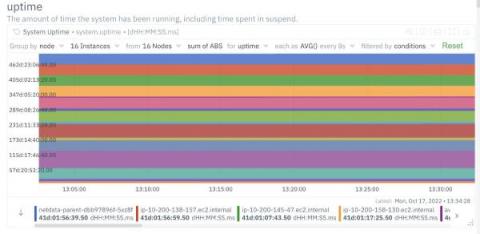
High availability. This is what every monitoring tool needs to ensure that you never compromise on IT infrastructure visibility. On top of high availability, do you really want to enable all available features on your production system? It is important for the monitoring tool to have a low footprint on your CPU consumption and memory usage. Let’s dive deeper into the recommended way of configuring Netdata to ensure high availability and a low resource footprint through data replication.
Like most tech companies, we use an on-call rota and various alerting tools. We do this to respond to incidents before they’re reported. Proactively identifying issues and communicating to customers helps us provide great experiences and fosters trust. Internally, we’ve been using these alerting tools in tandem with our auto-create incidents feature. We’ve found that it’s made responding to the pager much smoother - it’s one less thing to do when you get paged at 2am.
So you’ve decided to take advantage of Site Reliability Engineering by hiring SREs for your company. Now, you have a second decision to make: Exactly how many SREs to hire. Do you need just one or two SREs? Or should you build a sprawling SRE team, with a dozen or more SREs on hand to support your organization’s reliability needs? The answers to these questions will, of course, vary; every business’s needs are different.
We’ve been building incident.io for 12 months and thought it would be a good time to share the constellation of tools that we’re using to power our customer experience.