Operations | Monitoring | ITSM | DevOps | Cloud

The latest News and Information on Incident Management, On-Call, Incident Response and related technologies.

Your On-Call Rotation Has a Single Point of Failure, and It Gets the Flu Every Winter

Most teams design on-call for the failures they can see in a dashboard. A region goes down, a deploy goes sideways, a certificate expires at 2 a.m. The rotation exists so that someone is always there to catch it. Far fewer teams design for the failure that takes out the catcher: the on-call engineer wakes up with a fever, and the plan for that is usually a Slack message and hope. Treat a sick engineer the way you would treat any other dependency outage. It is predictable, it is seasonal, and it has a blast radius that grows with every shortcut in the rotation design.

MTTR Is Not a Time Problem. It Is a Context Problem

Your Mean Time to Resolution (MTTR) has likely stayed flat for three or four quarters. The investment was real: scheduling tools, dispatch optimization, new training modules, and more technicians. Operations reviews still dissect response time, travel time, and wrench time. The metric still refuses to move. Most field service leaders measure MTTR from the start of the repair to the moment the asset returns to service.

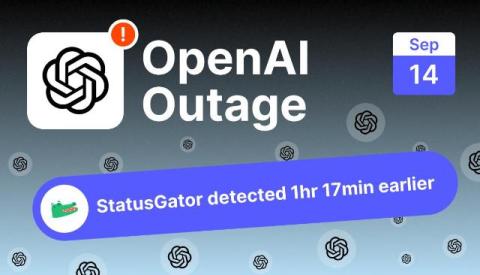
OpenAI outage on September 14, 2026: "some tools are temporarily unavailable" errors hit ChatGPT worldwide

ChatGPT’s tools and workspace features failed for users around the world on September 14, 2026, with the message “Some tools are temporarily unavailable” blocking spreadsheet and document creation, Codex, Projects, file reading, and dictation while core chat largely kept working. StatusGator sent an Early Warning Signal at 14:41 UTC, 1 hour and 17 minutes before OpenAI publicly acknowledged the incident at 15:58 UTC.

The Context Switching Cost of On-Call Work, and How Teams Reduce It

Ask an engineer what on-call costs them and most will describe a page at three in the morning. Those nights are real, and they are also comparatively rare on a healthy rota. Teams plan for them, compensate for them, and talk about them openly. The larger cost is quieter and almost never discussed, because it does not look like an incident. It is what happens to an ordinary Tuesday when you are carrying the pager: work arrives in fragments, nothing deep gets finished, and by Friday you have been busy for five days without being able to say what you built.

Swarm Investigation: Watch AI Agents Resolve Incidents in Minutes | BigPanda

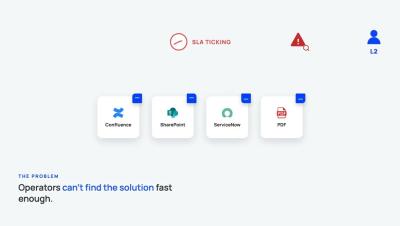
Swarm investigation puts an entire team of AI agents on a major incident at once, cutting root cause discovery from hours to minutes. Every minute of a major incident costs real money, and traditional investigation, whether it's one engineer chasing a hypothesis or a team coordinating across tools, can't keep pace. This video shows how BigPanda's Swarm investigation dispatches AI agents to query systems, compare signals, and validate root cause in real time. See how autonomous incident response turns hours of manual troubleshooting into minutes.

EU AI Act 2026: delay, new deadlines & article 73 reporting

On July 27, 2026, the Digital Omnibus on AI, Regulation (EU) 2026/1744, entered into force and rewrote the EU AI Act's timeline. The high-risk obligations that were due to apply on August 2, 2026, including Article 73 serious-incident reporting, now apply from December 2, 2027 for standalone high-risk systems (Annex III) and August 2, 2028 for AI embedded in regulated products (Annex I). Not everything moved.

Critical Event Management Platforms: What They Are and What They Do

Critical event management platforms help organizations identify, communicate, and respond to critical events that threaten people, operations, facilities, IT systems, or business continuity. Modern critical event management software can combine event management, mass notification, situational awareness, incident response, and operational resilience – but not every platform approaches critical event management in the same way. Some CEM platforms focus on risk intelligence and threat monitoring.

How Pharmacies Can Streamline Call-In Prescription Workflows With OnPage

Pharmacists manage much more than dispensing medications. Throughout the day, they may be processing prescriptions, communicating with healthcare providers, assisting patients and coordinating with other pharmacy staff, all while managing a steady flow of incoming calls. For pharmacies that accept prescriptions by phone, those calls add another important communication workflow to an already busy environment.