Operations | Monitoring | ITSM | DevOps | Cloud

The latest News and Information on DevOps, CI/CD, Automation and related technologies.

Shipped: Stop guessing why that billing connection exists

Every team with more than a few data connections has had this moment: someone opens the connections list, points at one, and asks “what is this for?” The answer lives in a former teammate’s head or in a Slack thread. And cleaning up the wrong connection can break cost ingestion. Now each connection can carry a note that explains why it exists, and anyone who opens the connection sees it.


AI can't correlate what was never standardized

Steve Flanders (Senior Director of Engineering, Splunk) makes the case that AI can't save an observability stack that never agreed on a standard. Mix formats across metrics and logs, and AI stops correlating and starts guessing, which means you either make the wrong call or miss the answer you actually needed. OpenTelemetry is one fix, but Prometheus and Fluentd work too. The standard matters more than which one you pick.

What Is OTN?

The Optical Transport Network (OTN) is a widely deployed industry-standard protocol that provides a comprehensive framework for multiplexing, switching, and transporting diverse digital payloads over optical fiber. Modern service providers face growing pressure to consolidate diverse traffic types. OTN acts as a universal digital wrapper, encapsulating Ethernet, IP, SONET/SDH, and storage (Fibre Channel) traffic into a single, highly efficient transport layer.

Google SecOps (Chronicle) Pricing in 2026: Full Cost Breakdown and How to Cut It

Google SecOps, formerly Chronicle, is sold in three packages priced on ingestion volume, and Google publishes no list prices for any of them. Every quote is built around your data volume, retention needs, and package tier, which makes budgeting hard without a sales conversation. This guide breaks down how the pricing model actually works, what ends up on a real bill. It also covers how to reduce that bill before data reaches the platform. Prefer to jump straight to the numbers?

India's DPDP Act: What it means for where you host your data

India's Digital Personal Data Protection Act, passed in 2023 and enforced through subsequent rules, has reshaped the landscape for data hosting decisions for anyone processing personal data of Indian residents. The Act creates specific obligations that map directly onto infrastructure choices: where data can be stored, how consent has to be managed, what security measures are required, and what happens if things go wrong.

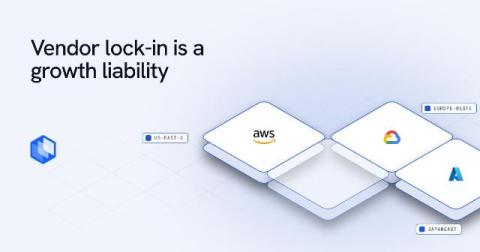
The Case for Multi-Cloud: Why Vendor Lock-In Is a Growth Liability

Multi-cloud architecture protects engineering organizations from three compounding liabilities that single-cloud stacks accumulate silently: a narrowing hiring pool, data residency exposure that surfaces the moment you sign a regulated enterprise customer, and eroded pricing power at exactly the point your cloud spend is accelerating fastest. Redundancy is a side benefit, not the reason to adopt it. The redundancy argument for multi-cloud is the wrong argument to make early.

The MetricFire MCP Server | AI-Powered Monitoring

Monitor your infrastructure using natural language with the new MetricFire Model Context Protocol (MCP) Server. In this video, you'll learn how to connect the MetricFire MCP Server to AI assistants like GitHub Copilot and use simple prompts to search metrics, visualize data, create alerts, and manage your monitoring environment—without writing API calls. In this video, you'll learn how to.

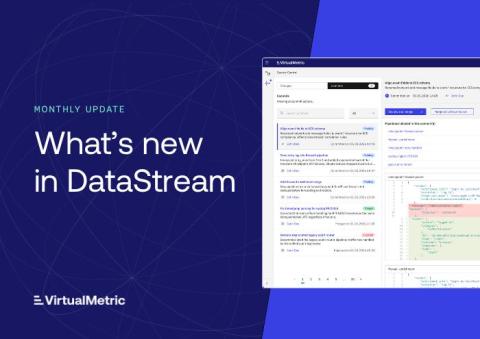
Safer Pipeline Changes, Flexible Deployment, and More

August 5, 2026 The latest VirtualMetric DataStream release focuses on how pipeline changes move from idea to deployment, safely and without slowing teams down. Version 2.1 puts a deliberate step between building a pipeline and shipping it to production, along with new deployment options for Directors and multi-tenant ingestion for teams managing data across many customers. Here’s what’s new.

What Is a ROADM?

A Reconfigurable Optical Add-Drop Multiplexer (ROADM) is a network element that selectively routes specific wavelengths of light across a fiber optic network without converting the signals into the electrical domain, forming the very foundation of modern optical transport networks. It allows operators to manage data traffic dynamically at the photonic layer. Fixed OADMs came first.