Operations | Monitoring | ITSM | DevOps | Cloud

The latest News and Information on DevOps, CI/CD, Automation and related technologies.

AI isn't a black box. It's Pandora's Box.

When CFOs talk about AI budgets, they tend to describe it the same way: it’s a black box, offering little or no transparency. The bill arrives at the end of the month, it’s bigger than last month, and nobody can really explain why. Meanwhile, engineering keeps asking to raise the token budget. I think that framing undersells what’s actually happening out there. If the black box is the bill, the Pandora’s box is what you opened when you brought AI into the company.

Generative AI ROI: benchmarks and how to prove it

Generative AI ROI measures the financial return on generative AI investments relative to their total cost. Benchmarks diverge sharply: Google Cloud's 2025 study found 74% of enterprises see ROI within the first year, while MIT's NANDA initiative found 95% of pilots deliver no measurable P&L impact. The difference is not the AI. It is whether the organization can actually measure cost and outcome at the use case level.

Shipped: Catch the S3 object-tag charge before it scales with you

There’s an S3 charge that stays invisible in a normal storage cost review. AWS bills S3 object tags per tag, per hour, so the cost scales with how many objects you have, not how much data you store. It gets its own line item, which is easy to miss when you’re scanning storage spend. It can sneak up on you. Tags get added in a dev environment to drive lifecycle rules, where object counts are small and the cost is nothing.

GPU Cloud for non-AI workloads: Rendering, simulation, and scientific computing

The GPU cloud conversation over the last three years has been almost entirely captured by AI. Marketing pages talk about training, inference, and foundation models. Vendor announcements focus on which NVIDIA card fits which LLM. Reference customers are AI companies. The infrastructure decisions being made in the market are shaped by AI's specific requirements - high VRAM, fast interconnect, FP8 support, continuous utilization patterns.

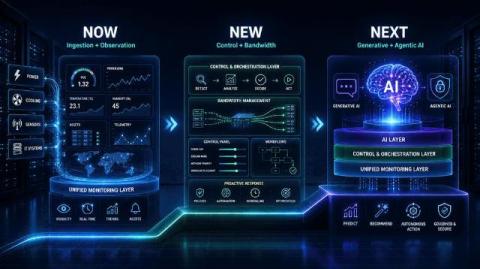
DCIM in the AI Era: The Now, the New, and the Next of Data Center Infrastructure Management

Data Center Infrastructure Management (DCIM) software is evolving in three overlapping stages: Now (a unified ingestion and observation layer across power, cooling, and IT systems), New (expanded control functions, including bandwidth management), and Next (generative and agentic AI built on top of that monitoring foundation). Understanding which stage a platform actually operates in is the single most useful filter for evaluating DCIM vendors in 2026 and beyond.

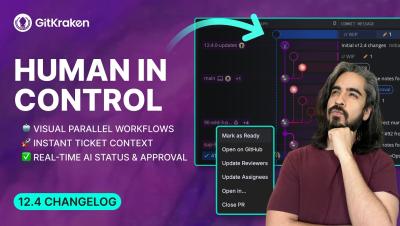
GitKraken Desktop 12.4 Release: Multiple WIPs, Approve/Deny Agents, and more!

What if you could counterspell an agent action? GitKraken Desktop 12.4 pulls the whole AI agent workflow into one place, so you stay in the flow. Back in 12.0 we shipped Agent Sessions, where you kick off AI coding agents right inside the context of your repo. GitKraken 12.4 builds on that. What's new in 12.4: This release is not about handing more of your work to agents. It's about seeing everything they do, and deciding what actually changes.

Cut AI coding defects by 33% #mcpserver #aicoding #aiagents #grafana #aitools

We spend thousands of dollars "token maxing" and running endless debugging cycles just to walk our LLMs through a problem. But is the AI actually failing, or are we just withholding the right environment? Giving your AI assistant its own sandbox to test hypotheses might just be the missing link in your development workflow.

Just ask AI to add OpenTelemetry to your code

OpenTelemetry instrumentation used to mean hours of manual work, wiring up metrics service by service. Now you can just ask for it. Tell an AI agent what you're trying to observe, something like "add OpenTelemetry so I can track this application's performance," and it turns that into an intent specification, then enriches your existing code with instrumentation to match. OpenTelemetry is open source and on GitHub. Pairing it with an AI agent that actually understands your codebase is what turns "add some metrics" into instrumentation that's useful.