A bootstrapped SaaS cost teardown - and the nuance
I post openly about MRR, churn and other SaaS stuff on Twitter. I do this mostly for marketing purposes. Not going to lie. It's also kinda fun. At least when things are growing...


The latest News and Information on Monitoring for Websites, Applications, APIs, Infrastructure, and other technologies.
I post openly about MRR, churn and other SaaS stuff on Twitter. I do this mostly for marketing purposes. Not going to lie. It's also kinda fun. At least when things are growing...
So much goes into making a workplace suitable for employees—flexibility, salary perks, team dynamics, etc.—but sometimes we forget that technology is paramount to allowing people to be productive and engaged. I experienced this first hand years ago during an internship. I worked for an intelligence organization and assumed I’d be surrounded by the latest and greatest in digital devices and tools. I was wrong.
When starting an online business, people are usually not aware of what their targeted audience needs to see and how they will see it. For instance, businesses don’t realize why website visitors don’t convert into paying customers. Well, there could be several issues triggering such an occurrence like unattractive UI, complicated webpage view, or long response time. Tackling such issues and tracking website visitor behavior thus became an area of interest for most organizations.
Transitioning from a Monolith to a Microservices architecture can take years to complete. The internet is full of stories of companies famously making this transformation. But how do you know if it’s right for your organization? Is your organization ready? In this article, we will look at five questions you can ask to see if you’ll benefit from a Microservices architecture. We’ll also discuss five challenges you will face during this transformation.
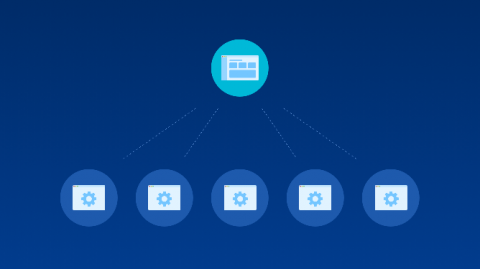
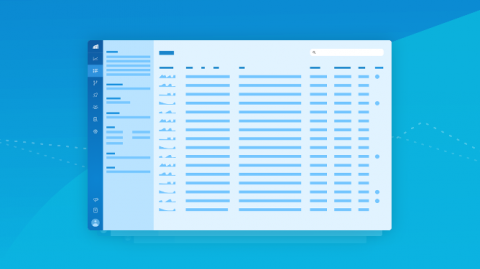
When we first built Rollbar, microservice architectures and continuous delivery practices weren't as common as they are today. Over time, we saw how our customers were setting up different projects for each code repository. As a complex distributed architecture becomes the norm, we want to make sure our core user experience reflects this new normal. Today, we’re introducing the new Rollbar user experience. We hope you like it as much as we have enjoyed building it for you!
Tis’ the season for website downtime. No matter how great your web infrastructure is, many ecommerce sites experience downtime on Black Friday. You’re not alone. New research by Google Cloud says that one out of ten retail executives reported downtime on Black Friday 2018, and four out of ten reported outages during one of the past three years.
We talk a lot about LogicMonitor's flexibility and extensibility, one reason is that our architecture makes it easy to write integrations to other tools' APIs, while our API lets other tools talk to our platform. This also means you can make LogicMonitor talk to itself.
Today on the blog, we feature a conversation with Michael Krigsman, an industry analyst and host of CxOTalk. He has been named a top CIO and IT influencer by several industry organizations. Michael writes extensively on the evolution of customer experience, and why technology is more critical to the delivery of competitive, compelling digital experiences than ever before. MK: Customer experience is a significant driver of revenue over time.
Microsoft Azure DevOps is a leading platform for planning, building, and deploying code. We are excited to announce a new integration with Azure DevOps, which helps organizations see the full picture as they build and deploy dynamic applications. Teams can get new insights into their builds, releases, work items, and code events; understand how deployments impact application performance; and even halt bad updates automatically.
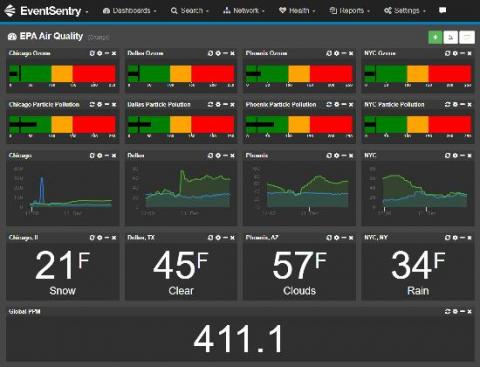
EventSentry v4.1 builds on v4.0 released earlier this year and offers a lot of exciting new & improved features that enhance a variety of different monitoring scenarios.