The latest News and Information on Monitoring for Websites, Applications, APIs, Infrastructure, and other technologies.
Nobody wants to spend hours configuring a product. It should just work. Flowmon’s customers, partners, and distributors are fortunate in having a number of presets at their disposal for speedy configuration, whether during initial deployment, adjusting the product to new circumstances, or a quick product demonstration. There is no laborious setup; the user just chooses a use case, follows a few guided steps, and lets the system set everything up.
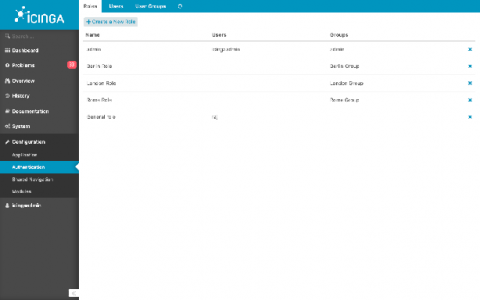
Permissions and restrictions are something used to control how much access is provided to a particular user or user group. Therefore one must first understand what is the role of a user or a group. Here, you will understand permissions and restrictions through configuring users, user groups and roles. They can either be created using configuration files or web interface. When the Icinga Web 2 is installed a default user with admin access is configured.
This is a hands-on course on how to deploy a fully Serverless web app using the AWS CDK. You can use the resources declared in this demo application as a starting point to mix and adapt to your own architectures later, which should save you quite some time.
A while back I talked about how big companies have started using serverless in production and how this is a clear sign that we will see more implementation of the serverless infrastructure in the near future. I’d like to take some time today and talk about one of the companies that are using serverless in production: Coca-cola.
First thing’s first: existing users will be pleased to know that upgrading is easy, so there's no need to be concerned about the upgrade process. In fact, Sensu Go 6 (arriving July 23, 2020) is a drop-in replacement for Sensu Go 5. Sensu was originally designed to be a single-tenant system, relying heavily on configuration management tools to move at the speed of automation — AKA, to keep configuration up to date to accurately reflect the state of things.
A website downtime for any online business can be a time of great concern, anxiety, stress, and panic. So many questions will go through the mind of the website owner, such as; A website downtime is indeed a nervy period for any online business, but most especially for small and medium scale businesses still trying to find their feet in a highly competitive and unforgiving business environment.
A video chat with the developers who bring right-sized cloud costing information in real-time. It all started with a casual conversation about the cloud and infrastructure monitoring among the team at Galileo and our parent company, The ATS Group. From there, it quickly evolved into a discussion on how we can alleviate a source of frustration for many of our customers.
We’re excited about today’s release of Grafana 7.1, which extends Grafana’s built-in InfluxDB datasource to run queries in both the Flux language and InfluxQL. This means it’s super easy to connect Grafana to InfluxDB — whether you use InfluxDB 1.8 or 2.0, Flux or InfluxQL. Because this InfluxDB datasource is built into Grafana 7.1, there is no separate plugin to download and install.