Operations | Monitoring | ITSM | DevOps | Cloud

Zendesk outage: A case for proactive monitoring and faster incident response

On March 20, 2025, starting at 15:43 AM UTC, Zendesk users globally encountered 503 “Service Unavailable” errors and 5xx server-side issues, disrupting access to critical support tools and communication channels. While immediate mitigations stabilized core services, intermittent issues continued for over 24 hours, underscoring the complexity of multi-pod infrastructure failures.

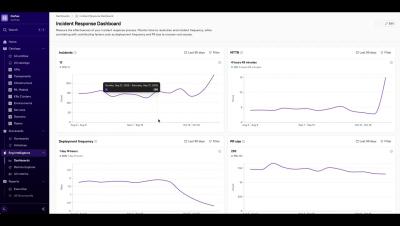
Incident response and on-call management in one app: Introducing Grafana Cloud IRM

At Grafana Labs, we’re always searching for ways to develop products that give our users the best tooling to help in their day-to-day understanding of their systems. We built OnCall and Incident in Grafana Cloud, our fully managed observability platform, to make it easier to respond to and fix incidents — all on top of the Grafana dashboards you know and love.

ScienceLogic Transforms Computacenter's IT Operations, Achieving 50% Reduction in Incident Response Times

Since our inception in 2003, ScienceLogic has been dedicated to empowering our partners with innovative solutions that deliver exceptional visibility and insights into their and their clients’ IT environments. Our mission is to help these organizations navigate complexity, transform inefficiencies into productive outcomes, and achieve and exceed their business goals.

Streamline IT incident response with the latest BigPanda features

Machine-generated data has exceeded human scalability, straining L1 Ops and Service Desk team resources. Fragmented data across tools, teams, and silos hinders situational awareness, delaying each action – from detection to remediation, making prevention increasingly unattainable. The latest BigPanda updates enhance ITOps and ITSM team efficiency throughout the incident lifecycle.

Automated incident response: Why it matters and where it's headed

Incidents happen. Whether it’s a service outage, degraded performance, or an unexpected spike in errors, things will go wrong. The question isn’t if incidents will occur—it’s how quickly and effectively you can respond when they do. For years, incident response has been a mostly manual process: someone gets paged, scrambles to investigate, loops in the right people, and after some firefighting, hopefully resolves the issue before too many customers notice.

Use Cases for Incident Response Automation: From Triage to Full Remediation

In today’s fast-paced IT and network environments, incident response isn’t just about reacting—it’s about responding faster, smarter, and with greater efficiency. Manual processes are no longer enough to handle the complexity and volume of incidents organizations face. That’s where automation comes in. But automation doesn’t always have to mean full end-to-end remediation.

7 Common Cybersecurity Mistakes Businesses Make and How to Avoid Them

Businesses today face a barrage of digital threats that can compromise sensitive information and disrupt operations. Cyberattacks are not a distant possibility but a present concern that demands robust defenses. Organizations of every size must invest time and resources into understanding vulnerabilities and building resilient systems. The rapid evolution of cyber threats means that complacency has severe consequences. Whether through weak authentication measures or outdated software, each oversight can be a gateway for hackers. Awareness and proactive measures remain the cornerstones of a secure environment.

Get One Step Closer to the Dark NOC with Incident Response Automation

Imagine a world where your Network Operations Center (NOC) runs so smoothly that it practically disappears into the background—no manual ticket triaging, no frantic war rooms, no all-nighters spent chasing false alarms. That’s the dream of a Dark NOC—a fully autonomous operations center where automation takes the wheel, reducing human intervention to a bare minimum.

Incident Management vs Incident Response: What You Must Know

In the dynamic world of IT operations and software development, downtime or service disruptions can be costly. As businesses rely more on digital infrastructure, managing and responding to incidents effectively is no longer optional—it’s a critical necessity. However, many organizations struggle to differentiate between incident response and incident management, often using the terms interchangeably.