Runbook Suite Overview
An explainer video of the all the products within the Runbook Suite.


The latest News and Information on DevOps, CI/CD, Automation and related technologies.
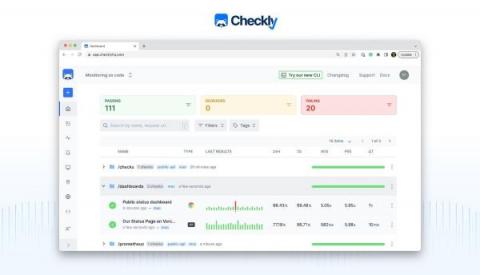
This post will introduce Checkly, the synthetic monitoring solution, and their monitoring as code approach. This guest post was written by Hannes Lenke, the CEO, and co-founder of Checkly. First, thanks to Birol and the ilert team for the opportunity to introduce Checkly. ilert recently announced discontinuing its uptime monitoring feature and worked with us on an integration to ensure that existing customers could migrate seamlessly. So, what is monitoring as code and Checkly?
As the popularity of Windows Subsystem for Linux increases, the Ubuntu development team is committed to delivering a first class experience for Linux developers on Windows. To achieve this we’ve made improvements to our automated testing workflows via the creation of WSL-specific GitHub actions. In this post, Ubuntu WSL engineer Eduard Gómez Escandell talks us through the motivation for this approach and how you can implement these actions for your own CI workflows.
The evolution of information technology is governed by how businesses adapt to ever-increasing amounts of data. Those businesses most able to exploit more data, win. Terms such as ‘speed’ and ‘agility’ refer to how a business handles and uses this data. Given the 2.5 quintillion bytes created every day, there is a huge opportunity for businesses to create unassailable leadership.
Overview of what is high cardinality in the context of monitoring using Prometheus and Grafana.
Looking to share a group of repos with someone? In this update, we’re introducing easier Workspace collaboration along with other power ups for your everyday version control. Let’s dive in and discover what’s new!