Operations | Monitoring | ITSM | DevOps | Cloud

The latest News and Information on DevOps, CI/CD, Automation and related technologies.

Building great developer experience at a startup

At incident.io, our number one priority in engineering is pace. The faster we can build great product, the more feedback we can get and the more value we can deliver for our customers. But pace is a funny thing. If you optimise for pace over a single month, you’ll quickly find yourself slowed down by the weight of your past mistakes.
Kubeflow 1.6 on Kubernetes 1.23 and beyond

Kubeflow is an open-source MLOps platform that runs on top of Kubernetes. Kubeflow 1.6 was released September 7 2022 with Canonical’s official distribution, Charmed Kubeflow, following shortly after. It came with support for Kubernetes 1.22. However, the MLOps landscape evolves quickly and so does Charmed Kubeflow. As of today, Canonical supports the deployment of Charmed Kubeflow 1.6 on Charmed Kubernetes 1.23 and 1.24.

Reimagining nmon Using InfluxDB

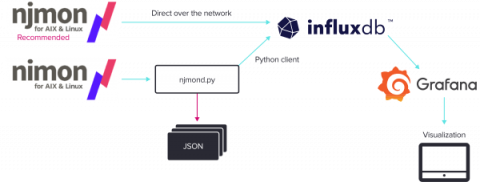
IBM engineer Nigel Griffiths built nmon in the 1990s to monitor operating system performance data for AIX. Since its original launch, Griffiths revisited and revamped nmon. For example, he built an open-source version for Linux. Despite drastic change in the very nature of computing and exponential growth in storage, memory, and compute power, it wasn’t until 2018 that Griffiths sought to completely re-write the tool and bring it into alignment with modern computer systems.

The Monitoring Problem: Too Many Tools + Too Much Time = No Room for Innovation

Continuous availability and unceasing innovation are prerequisites for today’s digital businesses. So it makes sense that business leaders invest heavily in teams and tools to monitor digital apps and services. In theory, these tools should also free up time for engineers to push new functionalities that wow customers. But do these investments actually result in more uptime and customer-delighting innovations?

An Introduction to gRPC

gRPC is an inter-process communication protocol used in high-performance applications in cloud computing, Internet of Things (IoT), mobile computing, and microservices environments. This article examines how gRPC works, how to use it, and how it compares to other popular API architectures. It also discusses a unique use case where gRPC excels.

Meet Epinio: The Application Development Engine for Kubernetes

Epinio is a Kubernetes-powered application development engine. Adding Epinio to your cluster creates your own platform-as-a-service (PaaS) solution in which you can deploy apps without setting up infrastructure yourself. Epinio abstracts away the complexity of Kubernetes so you can get back to writing code. Apps are launched by pushing their source directly to the platform, eliminating complex CD pipelines and Kubernetes YAML files.

Device discovery: The path to total network visibility

For an organization to prevent cyberattacks, it first needs complete visibility into all the events that occur within its network. With this visibility, the organization can analyze risky behavior by users and entities, and take the necessary steps to proactively secure itself. However, if an attack were to still happen, the organization again needs complete visibility to identify how and from where the attacker entered the network.

The top 5 benefits of peering

The internet is a network of networks, and how and where those networks interconnect determines the efficacy of the service. How networks exchange traffic on the internet varies. Broadly speaking there are three different approaches: A direct connection via a transit provider, a private interconnection between two networks, or peering at an internet exchange (IX) point - a co-location hub that enables members of the IX to interconnect.

Making Decisions In The Cloud: Data Vs. Information Vs. Intelligence

Business leaders frequently need to make decisions that could impact the entire future of a company. Armed with pages of data and financial reports, many executives choose to slash costs, double efforts on certain products over others, or otherwise forge ahead with major decisions about cloud usage, spending, and overall business strategy. Great choices could mean huge profits, but unwise choices could spell doom for the business as a whole.