Operations | Monitoring | ITSM | DevOps | Cloud

From Context to Commitment

If service-centric observability provides the control layer, the next question becomes more urgent. What happens when organizations pair context with automation that operates inside clear defined boundaries? During conversations at Nexus Live 2025, leaders did not describe automation as a futuristic aspiration. They described it as a necessary progression. However, the distinction they drew was important. Automation without context accelerates activity.

Agentic ITOps is here. Here's what early movers are doing.

We recently brought together IT operations leaders from across financial services, healthcare, airlines, media, and other industries for BigPanda 26, our annual customer event. The theme that emerged above all others during the event’s conversations is that our industry is no longer debating whether AI belongs in ITOps. The debate now is about how quickly it can be implemented, how to measure it, and who’s accountable when it acts. Here are some key learnings from BigPanda 26.

Digitate Named a Leader in the IDC MarketScape: Worldwide AIOps 2026 Vendor Assessment

SANTA CLARA, Calif. - April 29, 2026 - Digitate, a global provider of agentic AI platforms that enable autonomous IT operations, today announced its recognition as a Leader in the IDC MarketScape: Worldwide AIOps 2026 Vendor Assessment (#US54116226, March 2026). The evaluation assessed vendors across the global AIOps market based on both current capabilities and forward-looking strategy.

Securing the World's Biggest Machine: Critical Infrastructure, AI, and the Ethics of Innovation

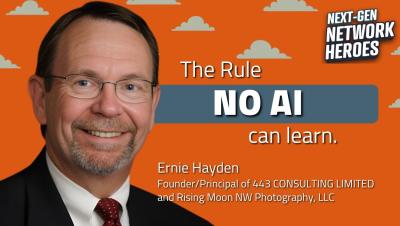
What happens when decades of critical infrastructure experience meet today’s rapidly evolving AI landscape? In this episode, host Bob Slevin sits down with Ernie Hayden, award-winning author, former Navy nuclear officer, ethical hacker, and founder of 443 Consulting, for a deep dive into what it truly takes to secure modern, interconnected systems.

Service-Centric Observability as the Control Layer

If distributed architectures have altered how systems degrade, then the way organizations model operational must evolve accordingly. Threshold monitoring evaluates individual metrics. Correlation clusters related alerts. Neither, on its own, explains how instability in one component alters exposure across an interconnected service landscape. In conversations at Nexus Live 2025, ScienceLogic’s annual customer conference, leaders described this distinction with clarity.

Digitate is Positioned as a Leader in the IDC MarketScape: Worldwide AIOps 2026 Vendor Assessment

IT operations are in a new era – teams are expected to deliver always-on reliability, absorb constant change, manage runaway telemetry volumes, and still prove business impact. The IDC MarketScape: Worldwide AIOps 2026 Vendor Assessment (doc, March 2026) offers ITOps leaders a valuable lens on the AIOps landscape and the providers shaping what comes next.

Demo - Selector Platform Actionable Correlation

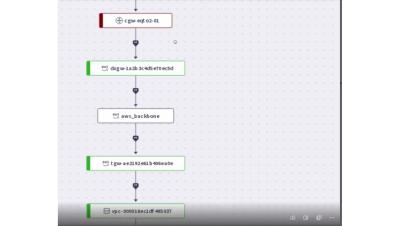
See how Selector turns fragmented alerts into actionable insight through intelligent correlation. In this demo, watch how events from across the environment are automatically connected, reducing noise and revealing the true root cause behind incidents. Instead of chasing isolated alerts, teams get a single, clear view of what’s happening and what to do next - faster. Built for network and operations teams who need to cut through noise and resolve issues with confidence.

Demo - Selector Platform Dashboard Validation

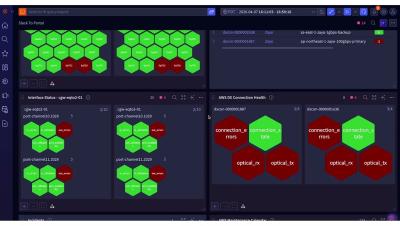
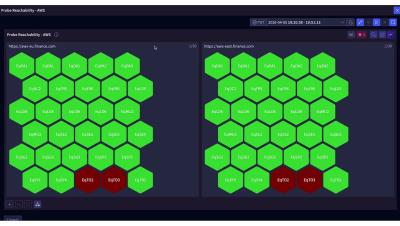
See how Selector enables real-time validation and visibility through customizable dashboards. In this demo, watch how teams can quickly monitor network and system performance, validate changes, and track key metrics - all in one unified view. Instead of piecing together data across tools, Selector delivers clear, actionable insights that help teams stay aligned and make faster decisions. Built for network and operations teams who need instant visibility and confidence in their environment.

Demo - Selector Platform CoPilot Diagnosis

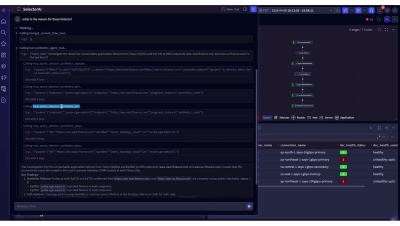
See how Selector’s AI Copilot accelerates issue diagnosis in real time. In this demo, watch how natural language queries and AI-driven insights help teams quickly analyze incidents, surface root cause, and understand impact - without digging through multiple tools. Instead of manual investigation, Selector guides operators to answers faster, reducing noise and speeding up resolution. Built for network and operations teams who need clarity, speed, and smarter troubleshooting.

Demo - Selector Platform NOC Operator Workflow

See how Selector transforms NOC operations in real time. This demo walks through a typical workflow - from ingesting massive volumes of network and system data to automatically detecting anomalies, correlating events, and pinpointing true root cause. Instead of chasing alerts across siloed tools, Selector delivers a single, intelligent view - reducing noise, highlighting impact, and accelerating resolution.
What is IT incident management? How does agentic ITOps help?

Imagine you’re in the middle of a critical project, and suddenly, your system crashes. Or it’s the middle of the night, and your server goes down, affecting countless users. While no enterprise can avoid all IT incidents, how you handle them can significantly reduce their impact. Fast, effective IT incident management is critical, as major incidents are increasingly costly.

A Bettter Way to Run Network Operations: How Actionable Correlation Eliminates Alert Chaos

Anyone who has spent time in a NOC knows how quickly a routine issue can turn into a scramble. A user in a branch office reports that a critical application is unavailable. Slack starts lighting up, dashboards begin to fill with warnings, and before long several teams are trying to answer the same basic question at once: what exactly is broken, where is it broken, and who owns the next move?
Bridging IT and OT: Lessons from the Factory Floor with Steve Goudreau

Everyone’s rushing to AI, but few have the foundation to make it work. In this episode of Next Gen Network Heroes, Bob sits down with Steve Goudreau, Director of IT at Ice Industries, to explore what it really takes to lead in today’s evolving technology landscape. With over three decades of experience, spanning military service, financial services, and manufacturing, Steve brings a grounded, people-first perspective to an industry often obsessed with tools and trends.

Resolve's Agents of IT podcast - Ep. 17 - Agentic Workflows to Performance Intelligence

In this episode of Agents of IT, Ari Stowe sits down with Geoff McQueen, four-time founder and CEO of Ascendius, to unpack what it takes to navigate AI-driven disruption. Geoff shares a clear framework for where automation is headed, from individual AI use to agent-driven workflows to AI embedded across the business. Most organizations are still early. The real opportunity is in making AI work at the business level.

Why Enterprise AI Demands More Than Just Automation

Based on insights from The Intelligent Enterprise podcast, “The Evolution from Automation to Autonomy” Every couple of weeks, The Intelligent Enterprise podcast steps away from the day-to-day noise of enterprise life to explore big ideas from a fresh perspective. In one recent episode, the focus turned to a question many organizations are still grappling with: What does it really take to build an AI-powered enterprise that works with people, not against them?

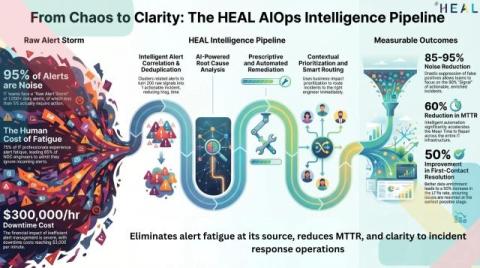
Why Alert Fatigue Is Killing Your MTTR

Every minute counts when production systems go down. Yet the average enterprise NOC team receives over 1,000 alerts per day, according to a 2025 study by OpsRamp. Of those, fewer than 5% require human intervention. The rest? They are noise — redundant, low-priority, or symptomatic signals that bury the genuine incidents demanding immediate attention.

Episode 10 - How I Learned to Stop Worrying and Love AI

Are we still in the first chapter of AI, and mistaking it for the whole story? In this episode of The Intelligent Enterprise, host Tom Stoneman zooms out from the headlines to explore where we really are in the AI journey. He’s joined by journalist and independent analyst Joe McKendrick, who has spent decades documenting how emerging technologies reshape business and society. As co-chair of the AI Summit in New York and a senior contributor to Forbes and ZDNet, Joe brings the perspective of someone who understands how these stories unfold over time.

The New Economics of Enterprise AI: Why Small Models Win Where It Matters

For years, progress in AI was equated with scale. Larger models, broader parameter counts, and increasingly complex cloud architectures were treated as signals of advancement. In enterprise operations, however, scale alone does not determine success. Economics does. As AI becomes embedded in operational workflows, organizations are discovering that model size is less important than cost stability under continuous load. AI-driven operations do not run in bursts. They run constantly.

Why Threshold Monitoring Fails in Distributed Systems

For years, infrastructure stability could be approximated through static limits. If CPU utilization exceeded a defined percentage or response time crossed a fixed boundary, risk was assumed to increase in a predictable way. Monitoring systems were designed around that assumption, and for contained environments, it largely held true.

Building the AI Stack for Modern Network Operations - Surya Nimmagadda

AI is rapidly transforming network operations — but what does it actually take to build an AI stack that works in production? In this session from AI for Network Leaders – Powered by Selector, Surya Nimmagadda breaks down how modern AI systems for network operations are designed, deployed, and used today. He covers: This session is designed for network engineers, architects, and operators looking to move beyond theory and understand how AI is being applied in real production environments.

Frontline Truths: 100+ Network War Stories on the Path to Autonomous Operations - Eric Chou

The path to intelligent network operations isn’t a straight line. In this session from AI for Network Leaders – Powered by Selector, Eric Chou shares hard-earned lessons from over 100 conversations with network engineers and operators navigating automation, complexity, and the shift toward AI-driven operations. He covers: This session is a practical field guide for teams looking to move from reactive firefighting to building an AI-ready network foundation.

You Don't Have an AIOps Problem-You Have a Data Opportunity - Michael Wynston

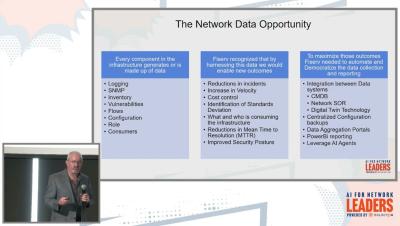
AI can’t fix bad data. In this session from AI for Network Leaders – Powered by Selector, Michael Wynston breaks down a critical truth: the success of AIOps depends on the quality, consistency, and trustworthiness of your network data. Using real-world lessons from Fiserv’s large-scale network transformation, he explores how teams can build a strong data foundation that enables AI to deliver meaningful, low-noise outcomes.

Inside the AI Agents Transforming Network Operations - Joby Rudolph & James Schnebly | Selector

AI agents are becoming a core part of modern network operations — but what does it actually take to build and deploy them effectively? In this session from AI for Network Leaders – Powered by Selector, Joby Rudolph and James Schnebly break down how AI agents are designed, implemented, and applied in real-world network environments. They cover: This session provides a practical look at how AI agents are moving from concept to production — and what it takes to make them work at scale.

From Tools to Teammates: A Practical Framework for AI Agents in Network Operations - Du'An Lightfoot

AI agents are quickly moving from experimentation to real-world deployment in network operations — but how do you adopt them without introducing unnecessary risk? In this session from AI for Network Leaders – Powered by Selector, Du’An Lightfoot shares a practical framework for building and deploying AI agents in production network environments. He covers: This session cuts through the hype and provides a clear, actionable model for teams looking to move from AI as a tool to AI as a teammate.

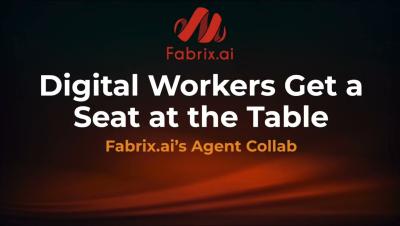
AI Meeting Bots Were Just the Beginning. Meet the AI Collaborator

Why the next era of enterprise AI isn’t about note-taking — it’s about digital workers who actually show up and do the work. There’s a moment every IT operations leader knows well. A critical incident hits at 2 PM on a Tuesday. Within minutes, a war room meeting spins up — a Google Meet or Teams call crowded with network engineers, SRE leads, cloud architects, and storage admins, all staring at dashboards and talking over each other. Someone is manually pulling syslog data.

Modern IT and the Burden of Accountability

The leaders responsible for modern IT environments rarely talk about features first. They talk about responsibility. In conversations at Nexus Live 2025, ScienceLogic’s annual customer conference, executives and architects across healthcare, federal systems, managed services, telecom, and enterprise IT described modernization not as a tooling upgrade, but as an escalation of accountability.

The Shift Toward Autonomous Enterprises

In our previous post, Navigating the Complexities of Scaling AI in Enterprise Operations, we explored the “cost–human conundrum”, balancing the promise of automation and the realities of economics, skills, and governance. That discussion highlighted a critical inflection point: scaling AI is not just a technical challenge, but an organizational one.

The Trust Layer: Why Enterprise AI Needs a Gateway Before It Needs More Models

Enterprise AI does not have a model problem. It has a trust problem. Before organizations invest in larger models or additional agents, they need a control layer that governs how those agents operate inside production systems. Without that layer, autonomy does not scale. If you talk to any enterprise leader right now, you’ll hear the same question.

Introducing the BigPanda L1 Agent: An autonomous L1 operator for your enterprise

Every enterprise IT leader facing the spiraling complexity of modern IT environments has a version of the same conversation. How can we manage the increasing complexity of more services, more dependencies, and more layers of observability and monitoring? Their answer would add headcount to the NOC, sign another Global System Integrator contract, and buy your organization another year.
Sponsored Post

HIMSS 2026: The Future of Healthcare IT Operations Is Increasingly Autonomous

HIMSS 2026 made something clear: healthcare is no longer discussing digital transformation as a future-state goal. It is now dealing with the operational reality of having already become deeply digital. Conversations around HIMSS 2026 consistently pointed back to the same pressure points: AI adoption, cyber resilience, interoperability, and infrastructure modernization. Together, they reflect a healthcare environment managing more systems, more dependencies, and more risk than ever before.

Beyond the Dashboard: Selector's Patented Approach to Conversational Observability

For years, IT operations teams have been trapped in a frustrating paradox: the data they need to solve critical issues is right at their fingertips, yet entirely out of reach. Accessing it requires engineers to master complex, platform-specific query languages, dig through endless layers of dashboards, and hunt for the exact visualization that holds the answer. Under the intense pressures of modern speed, scale, and complexity, this rigid model is breaking down.

The Path to AI-Ready Operations Begins with Truth

Enterprises expect AI to improve how they operate, yet many underestimate the level of clarity required for intelligent systems to perform reliably. AI-assisted operations demand input signals that are accurate, consistent, and interpretable. They require a unified understanding of how services behave, how disruptions originate, and how decisions influence downstream outcomes. This level of coherence is impossible without operational truth.

Episode 9 - AI, Enterprises, and the Law

In this episode of The Intelligent Enterprise, host Tom Stoneman takes us inside the different ways that AI is being utilized in the practice of law. In this episode, Tom is joined by Vintee Mishra, an attorney who’s currently part of the Commercial Contracting Organization at Navy Federal Credit Union, and has previously occupied supporting roles at Tata Consultancy Services, Cisco, First Technology Credit Union, and Moody’s Analytics.

Resolve's Agents of IT podcast - Ep. 16 - Can AI Fix Broken Work Without Breaking Security?

In this episode of Agents of IT, host Ari Stowe sits down with producer Ian Coppock for a fast-paced, no-filter discussion on one of the hottest topics in enterprise tech: AI, security, and the reality of modern work. Is AI introducing new security risks, or just exposing the ones that were already there? The answer is both. From overprivileged access to machine identities, Ari and Ian break down what’s actually changing and what isn’t. They challenge the idea that AI alone will fix broken workflows and explore why intentional design, guardrails, and orchestration matter more than ever.

Traditional Automation vs. AIOps vs. Self-Healing Ops vs. Autonomous IT Explained

Autonomous IT becomes real when teams move from insight to governed action. Most IT teams still operate on an alert-first, human-coordinated model. When something breaks, alerts fire across multiple tools, engineers get pulled in, and the first part of the response goes to figuring out who owns the problem, which signals matter, and how far the impact has spread. Containment comes after that. That sequence made sense in slower, more isolated environments.

The Next Phase of Agentic AI

The Enterprise AI Survey conducted by Digitate in collaboration with Sapio Research states that the journey of enterprise automation and AI adoption has evolved significantly. The initial waves focused primarily on improving accuracy, efficiency, and reducing costs. Now, the next phase, Agentic AI, is transforming this shift from mere automation to dynamic collaboration.

The Cost of Operating Without Truth

Enterprises have reached a point where the pace of modernization no longer depends on the number of tools they deploy or the volume of telemetry they collect. Progress depends on whether teams can form a consistent and verifiable understanding of what is happening inside the environment. Many organizations do not realize that the single greatest barrier to modernization is the absence of operational truth.

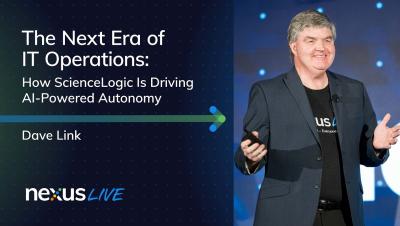
How AI Is Powering the Next Era of IT Operations

AI is redefining the future of IT. In this Nexus Live 2025 keynote, ScienceLogic CEO and Founder Dave Link shares the vision behind Skylar AI, why the industry is shifting toward autonomous operations, and how organizations can move faster, smarter, and more proactively than ever before. In this session you’ll see.

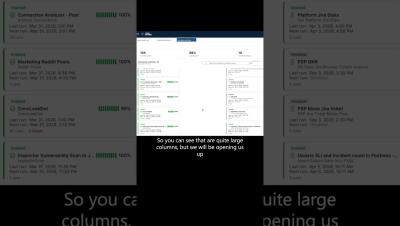
Resolve Reels - Ep. 2 - Scheduled Jobs Dashboard LI

Episode 2 of Resolve Reels is here. In this walkthrough, we introduce the new Scheduled Workflows Dashboard in Resolve Actions. Get a centralized view of every scheduled automation across your environment. Track execution status, monitor success and failure rates, and quickly drill into workflow performance. See how teams can: This is how modern IT teams move from reactive oversight to proactive control. With Resolve, automation is not just executed. It is continuously monitored, optimized, and scaled.

The Business Case for AI-Driven Observability in Network Operations

Modern network operations generate an extraordinary amount of telemetry. Metrics, logs, events, topology data, cloud signals, and service context all contribute to a richer picture of system behavior. As environments expand across cloud, data center, edge, and SaaS, the opportunity for operations teams is clear: when that telemetry is unified and understood in context, it becomes a powerful source of resilience, efficiency, and business insight.

Operational Truth: The KPI Every C-Suite Will Rely On Next

C-suite leaders are redefining how they measure digital performance. Reliability, customer experience, resilience, and cost efficiency still matter, yet these indicators only hold value when they reflect what is actually unfolding inside the environment. Digital ecosystems have reached a level of complexity where small deviations influence outcomes, and leaders increasingly recognize that traditional metrics cannot be trusted without contextual grounding.

The Agent Runtime Needs an Enterprise Brain: Why Fabrix.ai Completes the NemoClaw / DefenseClaw Stack

The agentic AI security stack is taking shape , fast. At GTC 2026, NVIDIA unveiled NemoClaw, an open-source stack that wraps OpenClaw with enterprise-grade privacy controls, local inference via Nemotron models, and the OpenShell sandboxed runtime. Days later at RSAC 2026, Cisco launched DefenseClaw, an open-source governance framework that scans every agent skill, MCP server, and plugin before admission , and enforces block/allow policies at runtime with sub-two-second enforcement.

Resolve Webinar: ITSM is Not Your Orchestration Platform

Is your ITSM platform quietly limiting your automation strategy? In this webinar, Resolve breaks down a critical misconception in modern IT operations: why ITSM systems were never designed to serve as orchestration engines, and what it’s costing your organization when they do. You’ll learn.