What Is a DNS Prefetch?
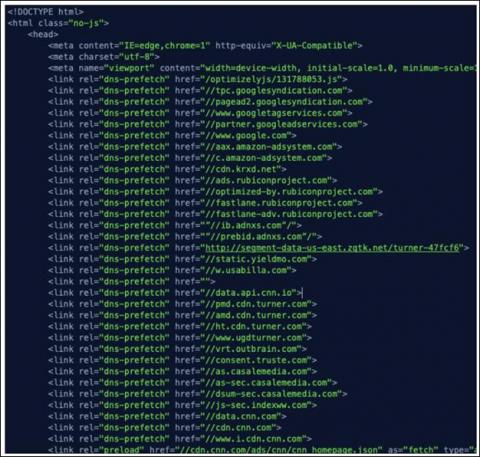
This article helps you understand DNS prefetching, one type of resource hint, including what they are, why and how to use them, and best practices for auditing and scaling them.


This article helps you understand DNS prefetching, one type of resource hint, including what they are, why and how to use them, and best practices for auditing and scaling them.
Whenever an online service goes down, you're likely to hear three words: "it was DNS!" Blaming DNS might be a running joke among network admins and engineers, but it's one rooted in experience. DNS problems are known for causing massive, Internet-wide outages such as the 2021 Akamai outage that temporarily made the websites for Delta Air Lines, American Express, Airbnb, and others unreachable.
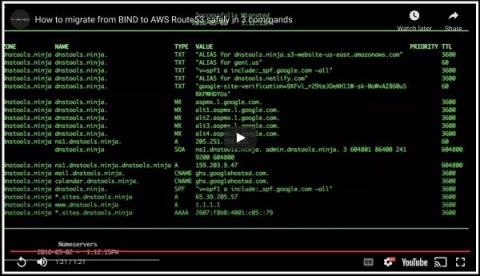
Migrating your DNS to a cloud provider like Amazon’s Route53 service can be a daunting task. Thankfully, with dns-tools you can test your DNS records before and after the migration to ensure that everything made it across in one-piece. This is the three steps we follow when migrating to Route 53: Follow along below and in just 10 minutes you’ll know if everything will migrate smoothly for you.
While MSPs have been making significant investments in security and offering services, it is a challenge to keep up with the frequency and evolving sophistication of today’s cybersecurity threats. Defense in Depth (DiD) is the foundation on which most MSPs have built a layered security approach for dealing with them.
We’ve all been there. After countless hours of development, you’re ready to take that app that works awesome on “localhost” live to production, but production services will only interface over https. Or maybe, your DNS is managed on Cycle, but some third-party app you want under the same domain requires a TLS certificate.
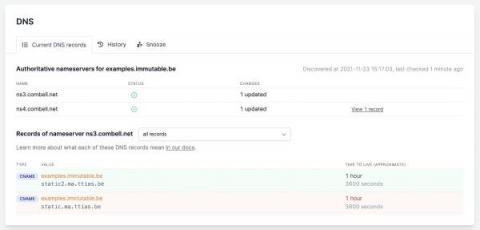
We can now notify you of changing DNS records and let you know when we've detected a problem with your domain nameservers. Woohoo! 🥳
NS1 is an intelligent DNS and traffic management platform that helps optimize the performance of your network infrastructure and speed application delivery to your end users. Since even a small increase in service latency can lead to churn and revenue loss, it’s critical to remove any inefficiencies embedded in basic network functions. NS1 helps ensure high performance for name resolution and routing through support for the edns0-client-subnet (ECS) DNS extension and for Filter Chain technology.