Get started with Gremlin's Chaos Engineering tools to safely, securely, and simply inject failure into your systems to find weaknesses before they cause customer-facing issues. Think back to the last time you wanted to purchase software for your organization. The software solves real problems and makes your team’s life easier. Then, finance delays or rejects your proposal. What’s going on?
Today, we are excited to announce a new integration - PagerTree Forms! PagerTree Forms are simple (PagerTree hosted) forms that can be made public so your customers can quickly create an alert outside the PagerTree ecosystem. PagerTree Forms also support custom CNAMES so you can host them on your own domain (ex: https://support.example.com). The CNAME option is secured via HTTPS using self signed Let’s Encrypt certificates.
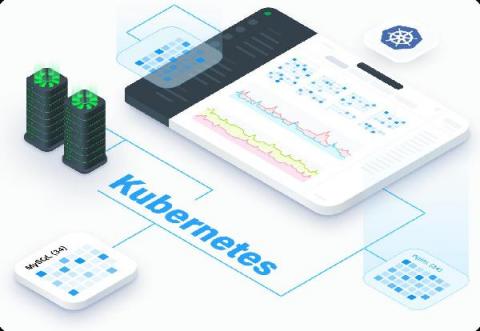
With massive adoption of Kubernetes at enterprises worldwide, we are seeing Kubernetes going to new extremes. On the one hand, Kubernetes is being adopted for workloads at the edge and delivering value beyond the data center. On the other hand, Kubernetes is being used to drive Machine Learning (ML) and high-quality, high-speed data analysis capabilities.
This article is part 2 of a four-part series of articles about Elasticsearch performance monitoring. Part 1 explains what Elasticsearch is and how it works, while in this part, we’re going to look at Elasticsearch’s capabilities and potential use cases, and how to check its status. We’ll identify key metrics that you need to monitor to maintain the health and performance of your Elasticsearch cluster.
Breaking down larger, monolithic software, services, and applications into microservices has become a standard practice for developers. While this solves many issues, it also creates new ones. Architectures composed of microservices create their own unique challenges. In this article, we are going to break down some of the most common. More specifically, we are going to assess how observability-based solutions can overcome many of these obstacles.