FireHydrant incident management demo
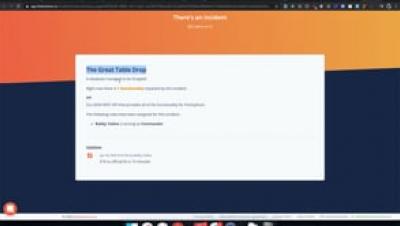
Take a quick tour of our product with me. We'll create an incident, see our SEV1 runbook kick off, and triage and eventually create a retrospective report.


The latest News and Information on Incident Management, On-Call, Incident Response and related technologies.
As the Coronavirus crisis unfolds and all of us struggle to understand its implications and to adapt, many thoughts come to mind on many different levels – personal, business related, philosophical. This event is definitely a game changer, in the near future for sure – and many say in the long run as well.
The coronavirus (COVID-19) pandemic has transformed the global workforce — and your enterprise is no exception. Enterprises are increasingly allowing staff to work remotely during this difficult time. Yet, many enterprises are still learning how to use remote workforce technology to effectively engage workers in real-time. AlertOps can connect your teams, regardless of location. It several features to power your remote workforce.
Moogsoft Enterprise consolidates visibility and control of monitoring tools to help entire IT Ops and DevOps teams reduce noise, prioritize incidents, reduce escalations and ensure uptime. Working from anywhere, users can easily find and resolve the root cause of incidents before they become outages.
Today, the customer experience drives IT on all levels. In our digitally transformed world, we do everything online — transact, interact, purchase and more. This mandates constant change and zero downtime. Ironically, as enterprises adopt IT innovations, IT environments get harder to manage and impact the productivity and agility of DevOps and SRE teams — and as a result, the customer experience suffers.
DevOps has become the go-to-approach for IT to accelerate their ability to achieve business requirements and ensure the quality of the customer experience. Today’s economy and the customer experience drives IT across the entire stack. Our world has become digitally dependent, which mandates an ever-evolving IT environment that’s on-demand and always available.
Failover Conf was held on April 21, 2020, online. The folks at Gremlin came up with the idea of a virtual conference about reliability after many in-person conferences started being postponed or canceled due to COVID-19. The conference was a lot of fun to attend. I’ll be sharing some of my thoughts on the event and the talks I was able to catch. The videos for the talks haven’t been posted yet, but I’ll update this post with links to them when they are.
By abruptly forcing most people to work from home, and by triggering an economic crisis, the global pandemic has upended business operations. Not only must business leaders facilitate remote work among their employees, but they must also accommodate new ways of interacting with suppliers, partners and customers. Meanwhile, businesses’ digital channels and infrastructure, already critical prior to the crisis, have become even more essential, and yet harder to monitor and manage.
At times like these when the world has been forced to adapt and go almost entirely digital, it’s imperative that our systems and platforms stay up and operational—all the times. We are going to great lengths to make sure that the hardware and software in our application stacks are reliable and responsive. Hardware is set up to have redundant backups and new code is tested and reviewed to make sure it doesn’t introduce any bugs into the system.