Operations | Monitoring | ITSM | DevOps | Cloud

Critical System Alerts via SIGNL4

I recently had a call with a long-term customer who had been using Enterprise Alert for years without any major incidents. But in light of a recent proactive monitoring project, he also revisited Enterprise Alert and reached out to me to ask for my opinion on how he could improve the monitoring of Enterprise Alert from within the solution.

Sponsored Post

Operations Management Is More Than Incident Management

To many, incident management and operations management may seem similar though they differ significantly. This difference, which lies in their end goals, also suggests that operations management is much more than incident management. To better understand why, it helps to look at the purpose of each one.

Sponsored Post

Incident Management for Digital Service Providers

Digital service providers (DSP) are valued for their ability to provide access to digital content on demand. A high-quality customer experience and instant access to digital services are the greatest expectations of consumers and vital aspects of successful DSPs. Therefore, it's crucial that incidents, when they occur, don't impact your operations. With a robust incident management strategy, DSPs can provide their teams with tools for automating, coordinating, and quickly resolving issues without-or with minimal-service interruptions.

Webinar: 2023 ITOps budgeting to win: use new research-based outage cost data

It’s no secret that the digital transformation essentially broke IT operations. With the rise in technology came a rise in outages capable of bringing organizations to a screeching halt. Those outages are expensive, and for years, the same number was thrown around as the authority on how much an outage cost (around $5,600 per minute). This number took off and was used in presentations, sales decks and other resources for years. But how could this number have stayed the same year over year?

Automation Seasons Freezings Wrap Up and New Year's Resolutions

It’s that time of year where you may feel pressured to pick your New Year’s resolutions. Well, we went ahead and tried to give you a head start. 2023 is the year we tame toil so we can focus on the fun stuff like engineering and innovation. Hopefully you have had the chance to follow along with us for the month of December for Seasons Freezings, the time of year you are locked out of production, so you have time to explore new ideas like automation 🙂.

Alarm optimization - what SIGNL4 has to offer

Having all relevant information pertaining to a critical incident is vital for quickly identifying the issue and prioritize its importance. SIGNL4 optimizes the perception, response and handling of incidents through customizable alerts with enriched parameters, images, sounds files, links to tickets or PDFs, as well as maps with geo-location information.

Best Practices for API Versioning

As your experience and knowledge of a system grow, change becomes inevitable. Your application requirements change, your bug fixes require code changes, and your APIs evolve. A key challenge in the software ecosystem is managing changes—especially when they concern APIs. Because you’re likely using APIs in multiple applications, you must document all updates and changes made to your APIs. This is where API versioning becomes crucial.

Why AIOps is the Connector Between Monitoring, Observability and Incident Management

Over the years, as companies have moved from monolith to cloud-native architectures, maintaining high availability has become more challenging. After all, today’s IT ecosystems are complex, distributed and ephemeral, making it increasingly difficult (and, in many cases, downright impossible) for DevOps practitioners and SREs to identify and fix issues manually.

Incident management vs. event management

As you explore IT event management and IT incident management, they may look and even sound similar, but it’s essential to understand how they differ. Your IT management team needs to know what to look for, both in an event and an incident, so they can resolve any red-flag issues and return your system to normalcy. But why is it so important to recognize the difference?

Goodbye, 2022. Hello, 2023 - reflecting on a year of change, progress and incidents

Let’s get one thing out of the way: we’re going into 2023 on a high-note. We’ve closed deals with some of the most respected companies in both the UK and US, we’ve hired in the double-digits, expanded into New York, and revenue is growing steadily. But we aren’t hanging up our football boots just yet. Yes, we can take some time to celebrate our wins, but we’re all hands on deck for 2023 planning.

The Critical Role of Intrusion Prevention Systems in Network Security

An Intrusion Prevention System (IPS) is a network security and threat prevention tool. Its goal is to create a proactive approach to cybersecurity, making it possible to identify potential threats and respond quickly. IPS can inspect network traffic, detect malware and prevent exploits. IPS is used to identify malicious activity, log detected threats, report detected threats, and take precautions to prevent threats from harming users.

11 unique insights into SLOs and reliability management

A quarter has passed since we launched our Reliability Management capabilities that help developers focus on defining, monitoring and managing Service Level Objectives (SLOs) to drive great digital experiences. Reducing alert fatigue and balancing innovation with reliability are common outcomes that customers expect from Reliability Management. If you are new to SLOs, these insights from our customers capture common practices among peer developers.

Public Demo - How to respond to incidents faster with ilert

In this public demo, you can get a first overview of how our incident response platform works. Our CEO, Birol, will show you how to manage on-call, respond to incidents and communicate them via status pages using a single application. Learn how ilert helps you to increase service uptime and become an uptime hero.

Tickets Make Operations Unnecessarily Miserable

IT Operations has always been difficult. There is always too much work to do—and not enough time to do it. The frequent interruptions and high levels of toil certainly don’t help. Moreover, there is relentless pressure from executives that question why everything takes too long, breaks too often, and costs too much. In search of improvement, we have repeatedly bet on new tools to improve our work.

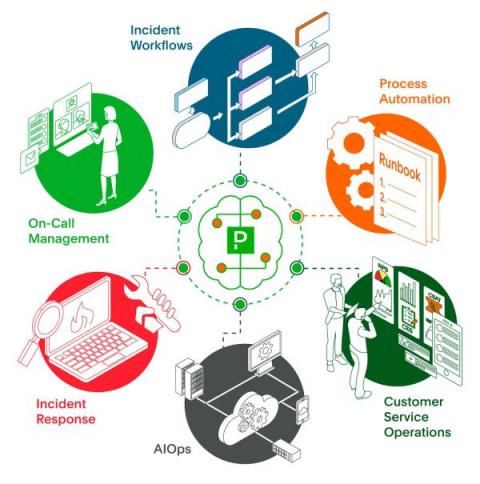
Doing More with Less: Building Greater Operational Efficiency with PagerDuty

How many of us can say with confidence that we know a tool inside and out? If you’re like most, you probably use just a small fraction of a product’s features. When it comes to feature-rich software like Microsoft Word or Excel, it’s a safe bet that most users are aware of less than half of the features, and use even less on a regular basis. And the longer we’ve been using a piece of software, the more likely we fall into this trap of feature underutilization.

What is an Incident Commander in ITSM?

Incident Commanders play a crucial role in the successful operation of IT service management (ITSM) teams. By applying best practices, they can ensure that incidents are handled quickly and efficiently, so that downtime for end users is kept to a minimum. ‍ This article provides an overview of the requirements for an effective Incident Commander in ITSM. It discusses the skills and competencies needed for effective incident management, and highlights some best practices for this role.

Kubernetes Lens: Improving Operational Awareness of Kubernetes Clusters

Kubernetes Lens is an integrated development environment (IDE) that allows users to connect and manage multiple Kubernetes clusters on Mac, Windows, and Linux platforms. It is an intuitive graphical interface that allows users to deploy and manage clusters directly from the console. It provides dashboards that display key metrics and insights into everything running on a cluster, including deployments, configurations, networking, storage, and access control.

Recapping this year's AWS re:Invent 2022

Amazon recently concluded their five-day long conference, AWS re:Invent 2022. This year’s conference was hybrid with the company streaming a significant portion of their in-person conference for free. For ten years now, the event has seen attendees across the cloud continuum come together to learn, share and get inspired. This year was no different as we saw some of the biggest names in cloud computing make their presence felt at the conference in Las Vegas.

Taking incident management to the next level with an internal developer portal

There is no denying that incident management is one of the most crucial processes concerning the service and business aspects of software deployment. Not having a robust system in place to address and remedy unfortunate incidents can lead to user dissatisfaction, which can ultimately take a toll on your business metrics. A suboptimal management system can also have adverse impacts internally if it prioritizes efficiency and speed of recovery to the point of neglecting employee well-being.

PagerDuty App for ServiceNow: Extend ITSM with Real-Time Digital Operations

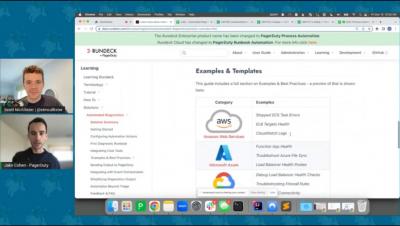
Watch this demo to learn about extending your ITSM solution with Real-Time Digital Operations via the PagerDuty App for ServiceNow. You'll learn about what you will get out of the box and will see the integration in action.
Sponsored Post

Outages ITOps professionals are thankful to avoid

As we settle into the time of year when we reflect on what we're thankful for, we tend to focus on important basics such as health, family and friends. But on a professional level, IT operations (ITOps) practitioners are thankful to avoid disastrous outages that can cause confusion, frustration, lost revenue and damaged reputations. The very last thing ITOps, network operations center (NOC) or site reliability engineering (SRE) teams want while eating their turkey and enjoying time with family is to get paged about an outage. These can be extremely costly - $12,913 per minute, in fact, and up to $1.5 million per hour for larger organizations.


How to choose an incident management software

The ITIL definition of an incident is “an unplanned interruption to or a quality reduction of an IT service”. In your IT ecosystem, an incident may be caused due to a malfunctioning asset, or a network failure. Common incidents include issues with the printer, Wi-Fi connectivity, application locks, email service, laptop, file sharing, unresponsive servers, or even authentication errors.

Best practices for on-call scheduling and management

An on-call schedule forms the backbone of your incident response system in the event of an outage or when an issue is raised. This type of schedule does not keep end-users waiting and helps maintain the reliability and availability of your software. However, on-call management practices often induce worry and anxiety in team members. In extreme cases, it can even be a contributing factor in employee burnout.

5 tips for a more modern and efficient on-call management

‍ On-call management is one of the most important aspects of seamless IT service. Its aim is to ensure that the right person is notified in the case of an incident, so that they can react accordingly as quickly as possible. In certain cases, many people have to be notified. To achieve this as efficiently as possible, it is vital to have an up-to-date and smoothly functioning system.

ITIL and CI/CD

In the world of IT, there are two main approaches to managing changes—the information technology infrastructure library (ITIL) and continuous integration and continuous delivery/deployment (CI/CD). Both have their own benefits and drawbacks, so it’s important to understand the difference between them before deciding which one is right for your organization. In this article, learn about the difference between CI/CD and ITIL, and find out which approach is best for your needs.

Toil: Still Plaguing Engineering Teams

Our industry has always had localized expressions for work that was necessary but didn’t move the company forward. The SRE movement calls this type of work “toil.” The concept of toil is a unifying force because it provides an impartial framework for identifying — then containing — the work that takes up our time, blocks people from fulfilling their engineering potential, and doesn’t move the company forward.

Cyber, incident, downtime: Three words that chill the board, and how to tame them

There are three words that every member around a boardroom table fears when they hear them strung together: "Cyber... incident... downtime". They are never the precursor to a good meeting! Technology incidents can leave the business in the dark and bring the wheels of industry grinding to a halt. With no operational systems, a Gartner report found that companies can lose up to half a million dollars per hour from severe incidents based on losses and remediation.

DERDACK SIGNL4 for Microsoft Sentinel, Defender for Cloud and more

Doreen talks us through the value-add of SIGNL4 for MSPs and enterprise customers of Microsoft Security products and how SIGNL4 facilitates an automated and seamless 24/7 oncall management experience. Derdack SIGNL4 is a member of the Microsoft Intelligent Security Alliance (MISA).