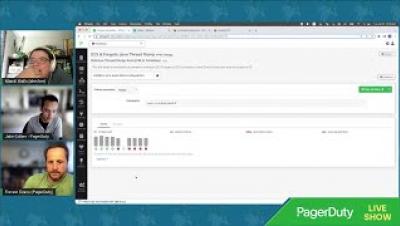
Introducing Signl4 Remote Actions
A brief walkthrough and description of using Remote Actions inside of the Signl4 App.


Following another successful PagerDuty Summit, development continues across several areas of the product. We’re excited to announce a new set of updates and enhancements to the PagerDuty Operations Cloud. Recent updates from the product team include Incident Response, PagerDuty® Process Automation and PagerDuty® Runbook Automation, Partner Integrations & Ecosystem, as well as Community & Advocacy Events updates.
Small confession: we currently use the term 'post-mortem' in incident.io despite preferring the term 'incident debrief'. Unless you have particularly serious incidents, the link to death here really isn’t helping anyone. However, we're optimising for familiarity, so we're sticking to the term 'post-mortem' here. Ask any engineer and they’ll tell you that a post-mortem is a positive thing (despite the scary name).
Zero trust is a security model to help secure IT systems and environments. The core principle of this model is to never trust and always verify. It means never trusting devices by default, even those connected to a managed network or previously verified devices. Modern enterprise environments include networks consisting of numerous interconnected segments, services, and infrastructure, with connections to and from remote cloud environments, mobile devices, and Internet of Things (IoT) devices.
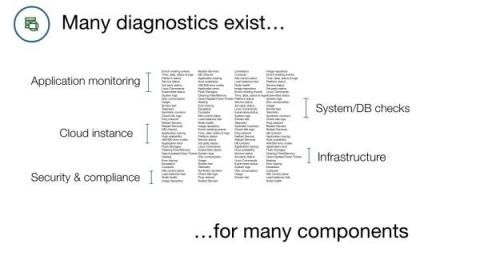
This is the second piece in a series about automated diagnostics, a common use case for the PagerDuty Process Automation portfolio. In the last piece, we talked about the basics around automated diagnostics and how teams can use the solution to reduce escalations to specialists and empower responders to take action faster. In this blog, we’re going to talk about some basic diagnostics examples for components that are most relevant to our users.
The Software Development Lifecycle (SDLC) framework defines the entire process required to plan, design, build, release, maintain and update software applications, including the final stages of replacing and decommissioning an application when needed. A Secure SDLC (SSDC) builds on this process, integrating security at all stages of the lifecycle. When migrating to DevSecOps (collaboration between Development, Security, and Operations teams), teams typically implement an SSDLC.
SIGNL4 supports the remote execution of automated tasks or workflows in IT or IoT systems using Remote Actions. These remote actions offer a wide range of applications. You can execute remote actions in response to an alert to trigger some kind of remediation action. But there are many more possible use cases. This article provides some examples and ideas about what is possible.
People make mistakes, technology breaks down, and processes aren’t infallible. But, when incidents happen, what can we do about it? What can we learn? As with all things, learning isn’t a binary action, it’s a process. And, when an incident occurs, organizations typically conduct a post-mortem analysis and generate a post-incident review to uncover what went wrong and why.
Imagine being part of an overactive group chat that causes your phone to buzz every few minutes. In the beginning, you open every message but soon realize that most of them aren't important-or at least are not relevant to you. So, what do you do next? Maybe you let the messages pile up and check them later. Or perhaps, you mute the group chat and ignore the incoming messages altogether. You can blame this tendency to ignore or avoid incoming messages or notifications on one culprit: alert fatigue.
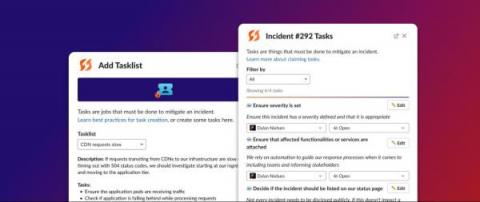
An incident has been declared and your runbook has fired. Everyone is gathered in your Slack channel, the tickets are opened, and roles are assigned. Now what? This is when most teams manually update status pages and kickoff investigation streams using a patchwork of tribal knowledge and supporting playbook documents.
Reliability and chaos might seem like opposite ideas. But, as Netflix learned in 2010, introducing a bit of chaos—and carefully measuring the results of that chaos—can be a great recipe for reliability. Although most software is created in a tightly controlled environment and carefully tested before release, the production environment is harsher and much less controlled.
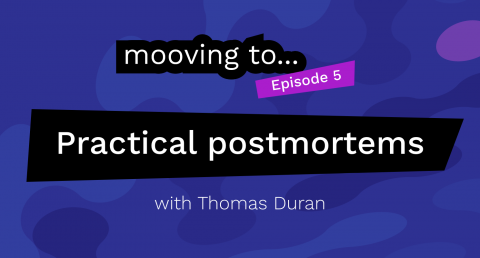
Episode 5, Mooving to… Practical Postmortems covers how to leverage postmortems to effectively learn from failure. Postmortems are a commonplace reference and are now considered a best practice in most modern engineering teams. However, there’s still a lot of confusion on what postmortems should be – and more importantly, what they should NOT be. Thom Duran, Senior Manager of Productivity from Panther walks us through all that and more in the latest Mooving To.. episode!
Two categories a software organization should always strive to improve in are: Data analysis is one way that your organization can improve the efficiency of incident management and overall application quality. However, the questions remain – which metrics should be collected? How can analysis of these metrics facilitate these improvements? Read on to hear about five key metrics essential to incident response.
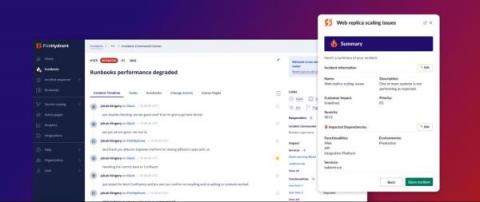
Today we’re releasing fully redesigned Slack and Command Center experiences for FireHydrant so anyone on your team can intuitively navigate the incident response process — in the app or on the web. There are many things you can do ahead of an incident to help things run smoothly: design and document your process, automate predictable steps, train the team, and run drills.
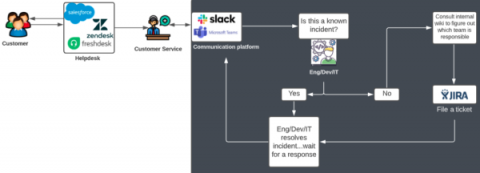
“Customer service software has evolved so much these past ten years, but they all seem to be solving the same problems!” This was a statement made by a Customer Service leader in a recent brainstorming conversation around decreasing overall Response Times and Resolution Times.
The world is increasingly digital. The U.S. Census Bureau estimates e-commerce grew 14.2% from 2020 to 2021, for a total of $870.8 billion in sales. And just look at the trends in remote work. According to a FlexJob and Global Workplace Analytics report, remote work has grown 44% over the last five years and an astonishing 159% over the last 12. Indeed, much of America relies on a slew of digital apps and services to get business done every day. So what does this mean for businesses?
There are a common set of key performance indicators for incident management, such as MTTR and MTTA. What do these metrics mean, and why are they important?
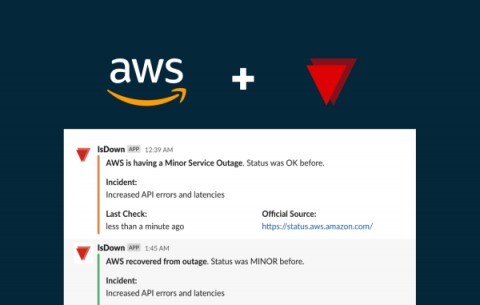
Amazon Web Services (AWS) needs no introduction. It's one of the most popular services in the world. Or actually, the most popular cloud infrastructure provider (34%) according to this study. Like in any other service, there are outages. For people running their infrastructures, there's a good chance that outages have impacted your business in the past. And the reality for AWS (or any other service) is that there's a good chance it will happen again.
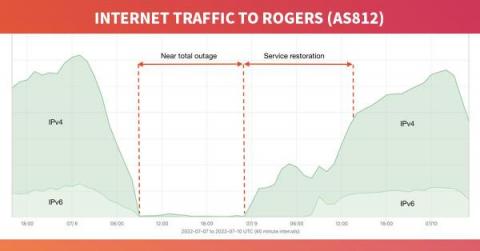
Beginning at 8:44 UTC (4:44am EDT) on July 8, 2022, Canadian telecommunications giant Rogers Communications suffered a catastrophic outage taking down nearly all services for its 11 million customers in what is arguably the largest internet outage in Canadian history. Internet services began to return after 15 hours of downtime and were still being restored throughout the following day.
We are halfway through 2022 and one thing is certain – downtime is here to stay. In fact, trends are showing the frequency of downtime is increasing, along with the severity and wide-spread impact. Consumers and businesses are more interconnected and reliant on technology and software than ever, from remote business communication to simply listening to your favorite podcast on your way to work.
TL;DR: We’ve raised $34M to bring increased resilience to organisations around the world. With this latest round of investment we’re expanding internationally in the US, accelerating our product plans, and growing our amazing team 🎉 As technology becomes more complicated and runs an ever greater part of our lives, failure becomes more inevitable, and more costly.
Despite the best efforts of individuals to protect their own data, they cannot always account for the cybersecurity shortcomings of larger organizations such as their employers, financial institutions, and healthcare providers entrusted with their personal information. Hotels should also be added to this list of vulnerable entities, as was made painfully apparent in the most recent Marriott data breach.
If you have been following the financial news lately, you have surely become all too familiar with the challenging economic conditions that have emerged in 2022. As rising inflationary concerns put pressure on the bottom line, decision makers within businesses of all sizes are suddenly having to re-evaluate strategies, forecasts, and expenses. This pivot to a more conservative outlook is not unlike the approach adopted by businesses at the onset of COVID-19.
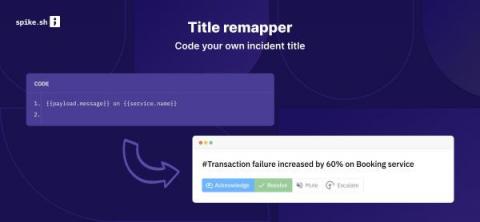
Over the last few months, a number of our users have asked if we can add more context to their alerts. We spoke with them on our live chat on dashboard and brainstormed the idea of Title Remapper.
We’re constantly looking for new ways to help DevOps, SREs, and operations teams automate operations workflows, secure infrastructure and applications, and rapidly deliver their products at scale. This commitment to our customers — and yours! — led us to redesign the way you experience groups in xMatters.
A few years ago I’d just moved to London and started out at my first software job. I was having a great time building things and making new friends, and one evening a friend and I decided there was a new problem we wanted to solve: we really didn’t like the expenses software. We thought it was confusing and over-complex, and decided we could do better.
Our July update ships a very powerful new feature – remote actions. Remote actions are available for execution – once configured – in the SIGNL4 mobile app and allow you to quickly perform remediation actions without having to fire up a notebook and VPN or without using a desktop PC. So, genuine anywhere remediation comes true. As always, you can find all the details in this blog article.
2020 revolutionized how we work. Many went from full-time office work to 100% remote overnight. And now that in-office is once again on the horizon, companies are thinking of ways to continue to work flexibly. However, this comes with increased challenges, and a need for tools that match this working style. The PagerDuty mobile application is well recognized, with a 4.8 stars rating on the App Store and Google Play.
At incident.io, we’re continually building out our integrations to work with all the tools you already know and love. Next on the list, is our first bug tracker, Sentry. Try posting a Sentry link on your next incident to check it out.
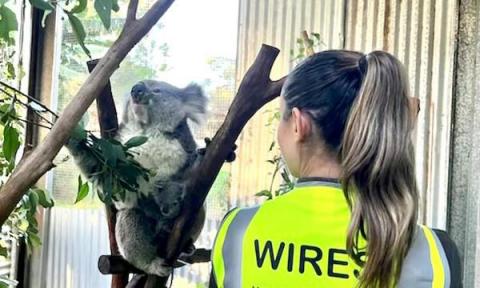
Everbridge’s xMatters Digital Service Availability Platform is Improving Animal Rescue Response Times through WIRES in Australia.
A few weeks ago we had a major incident. We were releasing our Practical Guide to Incident Management, and after posting about it online an incident.io employee noticed that the page wasn’t loading. Just to set the scene, I’ve been at incident.io for 3 months and don’t have any experience of incidents in my previous role. When the team got paged I expected this to be one of those “follow along and learn how the wizards work their magic” exercises.