Operations | Monitoring | ITSM | DevOps | Cloud

Why AI Agent Orchestration Needs Runtime Context Between Agents

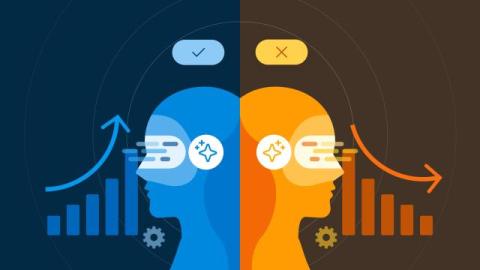
Every multi-agent system depends on one agent handing its output to the next, and nothing in the architecture confirms that the handoff carried what it should have. Orchestration adds a failure surface that single-agent architecture doesn’t have: a point between every two agents where one has to trust that the other passed along everything it needed, unverified.

Run Playwright Tests with Harness AI Test Automation | CI/CD + AI Failure Analysis

End-to-end testing should not slow your delivery pipeline down. But for many teams, Playwright test suites still live in disconnected jobs, produce noisy failures, and make it hard to tell whether a failed test is a real regression, a flaky test, or just another false positive. In this walkthrough, Shibam Dhar, DevRel Engineer at Harness, shows how Harness AI Test Automation helps teams run, analyse, and trigger Playwright tests directly from their software delivery workflows.

AI finds vulnerabilities faster than you can fix them

If an AI model can find a vulnerability for an attacker, the same model should help a defender fix it. In practice, the math doesn't favor the defender. This quick video digs into the real asymmetry AI-powered vulnerability discovery creates: The goal is models acting as tools for defenders, not weapons for attackers. Getting there means rethinking how much ground your team can realistically cover on its own.

AI cost governance: policies to control AI spend

AI cost governance is the set of policies and controls that keep AI spend predictable and attributable: budget caps and token quotas set before deployment, prompt caching to cut repeat token costs, hard limits on reasoning steps and tool calls, and unified allocation so every dollar maps to a team, feature, or customer. Governance fails when it's advisory. It works when the caps are enforced in the platform and someone owns the number.

Recurring Office Hours with the AI SRE Agent Team Behind AURA

Building an agent and not sure how to approach something? Bring it. AURA office hours are recurring working sessions with the people who build it. The team has been talking to people trying out AURA and hearing the same good questions come up more than once. Office hours are the answer to that: a standing slot on a schedule, rather than one conversation at a time. The format is deliberately loose. Nobody is arriving with thirty slides to spend an hour talking at you. The session goes wherever the questions go.

Dataset Bias in Computer Vision: How to Audit Human Image Data

Dataset bias in computer vision cannot be evaluated from one demographic percentage. The distribution available to a model is shaped by where images came from, how subjects entered the collection, which examples were retained, how labels were defined, what visual conditions were represented and how evaluation data was constructed. A useful dataset bias audit therefore examines the complete data pipeline.

How AI Is Turning Job Search Into an End-to-End Digital Workflow

Job searching used to be a loose collection of tasks: a few bookmarked roles, a resume file named "final_FINAL," and a handful of half-finished applications spread across tabs. Now, it's starting to look more like an actual workflow-one with inputs, outputs, checkpoints, and iteration. That shift is partly driven by AI tools that help candidates move from "I should apply" to "application sent" with fewer dropped steps. Platforms like ResumeCoach are part of that wider trend: not just creating documents, but helping people build a repeatable process they can run again and again.

AI Norms & Values, Part 1 of 3: How We Do Business at Honeycomb

It's been almost exactly one year since we issued our AI mandate here at Honeycomb, and we've been doing some reflection. When we issued our mandate, it's not like we hadn't been using AI. We were the first in the industry to bake a feature powered by AI into our product, way back in May of 2024. Many of us had been experimenting and using these tools in our spare time. But we believe that software is the killer app for AI.

MCP vs API: How they work together and when to use each

Summary: An API defines how software interacts with a service. MCP defines a standard way for AI applications to discover and invoke tools exposed by a service. They usually work together: an MCP server can sit in front of APIs you already run, turning low-level operations into capabilities an agent can find and use at runtime. Your API may already expose everything an AI agent needs. The harder problem is helping the agent figure out which operations matter for the task it has been given.

Don't Break the Agent: Lessons in Token Optimization

This one is for the curious souls who wonder how somebody actually builds a harness optimizer — and, more to the point, how they know it works. When we launched JFrog Boost into public preview, we told the story of the bill that broke us and the 100 billion tokens we clawed back across JFrog R&D. What that post didn’t cover is the question that consumed most of our engineering time: how do you measure any of this?